You will find in this Chapter:
Textbooks (characteristics and comparative content and methodologies)
Online language courses
Apps
Audiovisual content
Online directories
Downloadable activities
Self-created materials
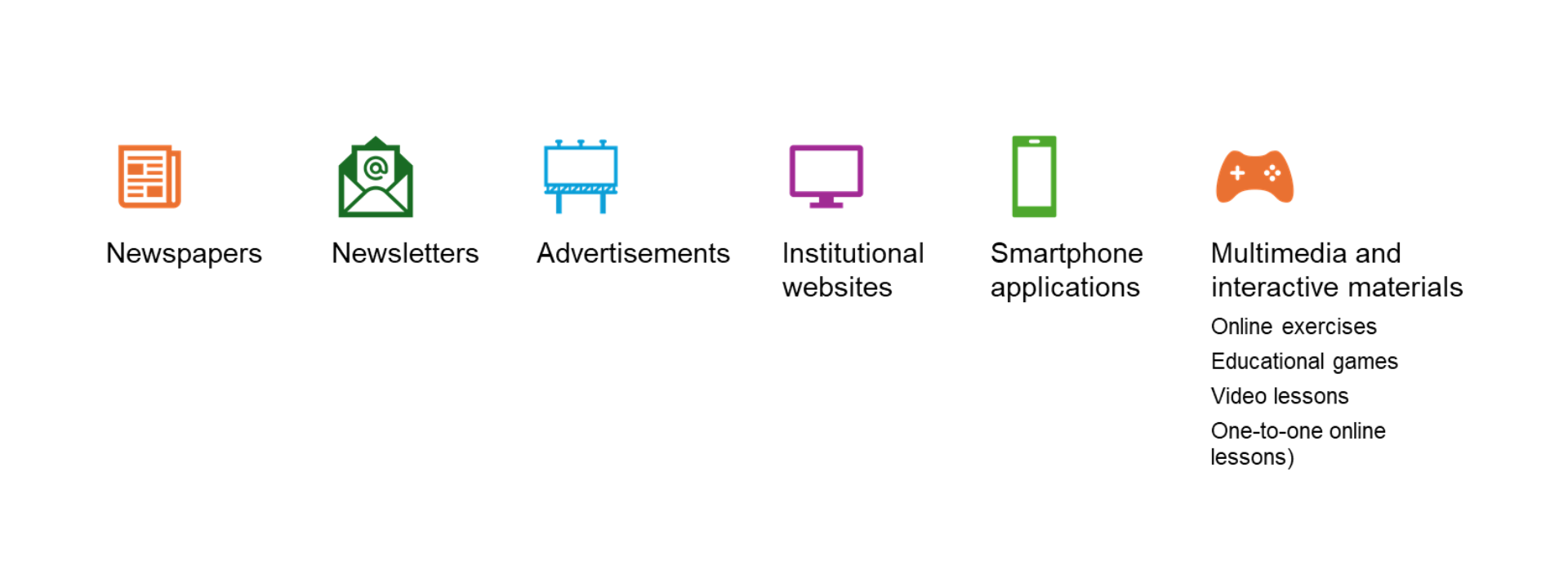
Here is a list of types of teaching materials that can be effective in a class of migrant pupils learning the language of the host country:
It should be remembered that any type of teaching material loses its effectiveness the moment the teacher’s role is removed. It is the teacher who is the key figure in the learning process, the one who through observation of learners can construct lessons through a combination of methodologies, approaches and activities aimed at making the learning environment a safe place in which to grow and strengthen the learner’s sense of identity within the new socio-cultural context.
Textbooks (characteristics and comparative content and methodologies)
In foreign language courses conducted in the classroom, the textbook represents the main bridge of communication between teacher and learners; it is not just a compendium of rules and exercises: it is the guide in which the very essence of the course is condensed, the concrete representation of the ideal path towards its objectives.
Having a language manual at one’s disposal means structuring the course according to a logical order in which progressively more complex concepts and notions are introduced at a pace that avoids the learner feeling overwhelmed by the workload and, therefore, expressing frustration. The contents are organised to develop all language skills (writing, reading, listening, speaking) homogeneously through teaching units that include listenable dialogues, readings, exercises and group activities. Through the support of the manual, the learner obtains clear explanations of grammatical rules and gradually builds up a rich and articulate vocabulary. The exercises offered allow them to put what they have learned into practice and have direct feedback on their improvements.
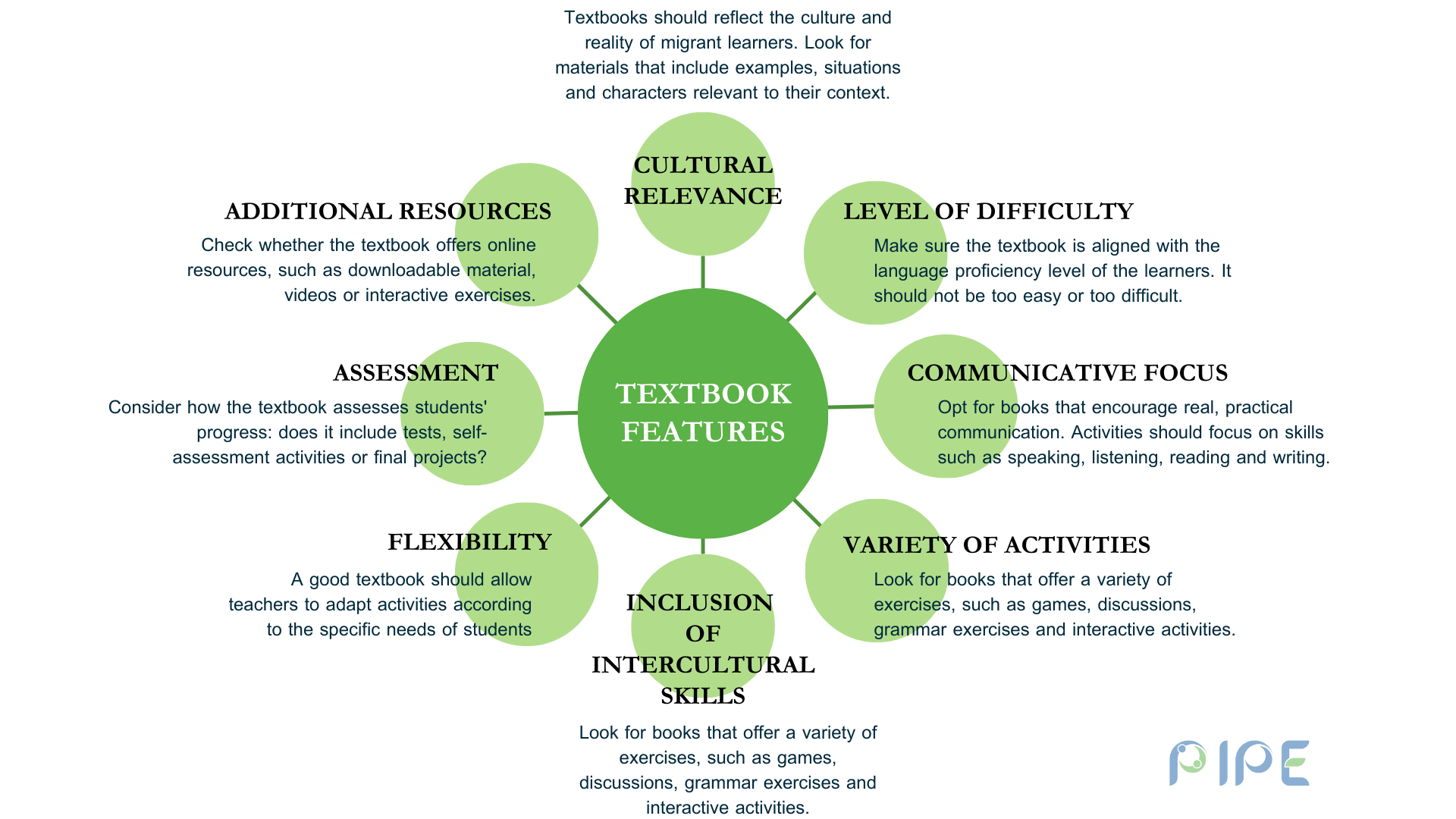
The textbook for a foreign language course should be chosen because of the information obtained on the learner’s profile.
As a first step, it is advisable to choose a textbook that suits the general level of the class. For a course aimed at beginners, a text should be chosen that facilitates the learning of grammatical and communicative notions through the presentation of pictures, basic vocabulary and elementary dialogue forms. The level of grammatical and communicative complexity may increase if the target group has elementary or intermediate skills, while learners with advanced language skills may opt for textbooks that include authentic literary excerpts, newspaper articles and other more complex activities in the units to enhance both linguistic and cultural skills and knowledge.
Based on the course objectives, it should be determined whether the handbook to be chosen bases its activities on real-life everyday situations that may help the migrant pupil find their way around the host country’s bureaucracy (accessing health services, opening an account, looking for a house, a job, etc.). Or, if the course aims to foster social integration and understanding of the cultural context, it is preferable to choose a textbook oriented toward the country’s history and traditions. Finally, in contexts where it is intended to offer the learner specific language skills (law, medicine, economics, etc.) an effective textbook should focus on specialised language.
A third factor to be considered in the choice concerns the type of teaching approach to be adopted. Wanting to construct a course based on mediation and interculturality presupposes the need to adopt manuals that are themselves oriented towards reflection and confrontation, both linguistic and cultural. On the other hand, a more communication-oriented approach may be desirable, in which it is preferable to choose materials that encourage interaction and conversational activities, perhaps through role-playing.
Some texts are organised by progressive thematic units and intended to be approached in order of presentation; others leave it to the teacher (or to the learner who is studying independently) to decide on the course (see the manuals published by Cambridge, English Grammar in Use, by Raymond Murphy). The essential element remains that of clarity: the topics proposed during the lessons and through the units should lead the learner towards a progressive learning path that gratifies them and does not make them feel overwhelmed by notions beyond their grasp.
Finally, it is good to reflect on the role that the textbook takes on within a language course: it is not only a didactic tool but a true travelling companion for both learner and teacher. Not wanting to neglect the affective aspect, it is good to pay attention to the graphic quality of the book, which should be eye-catching and easy to decipher, full of effective images and readings that can remain imprinted. After all, the eyes and heart also want their share.
Online language courses
Studying online is nowadays an increasingly adopted and appreciated solution as it undoubtedly brings with it a number of significant advantages, first and foremost that of flexibility: distance courses, free from spatial constraints, offer the learner the freedom to participate in study sessions without the need to be present in the classroom as the only requirement is to have a good Internet connection. Online language courses, whether interactive or recorded, are usually more affordable than standard courses. This for a migrant with limited financial means is an appreciable advantage. Moreover, today’s vast offer allows for maximum customisation of the learning experience, thus satisfying needs in terms of content and objectives, such as the need to acquire technical-scientific vocabulary.
On the other hand, it is evident that the online approach has certain disadvantages that are alien to classroom-based courses. Going beyond the mere technical problem, such as a malfunctioning software or Internet connection, studying online offers less language immersion, as learners are not physically surrounded by an environment where only the studied language is spoken. This aspect, combined with the lack of face-to-face interaction with teachers and other learners, impoverishes the learning experience from a human point of view, thus sabotaging the socio-cultural inclusion goals the migrant needs to feel part of the host country. In general, the possible pitfalls of the online mode can be a cause of demotivation and subsequent abandonment of study. Here is a list of web platforms that offer online foreign language courses.
Apps
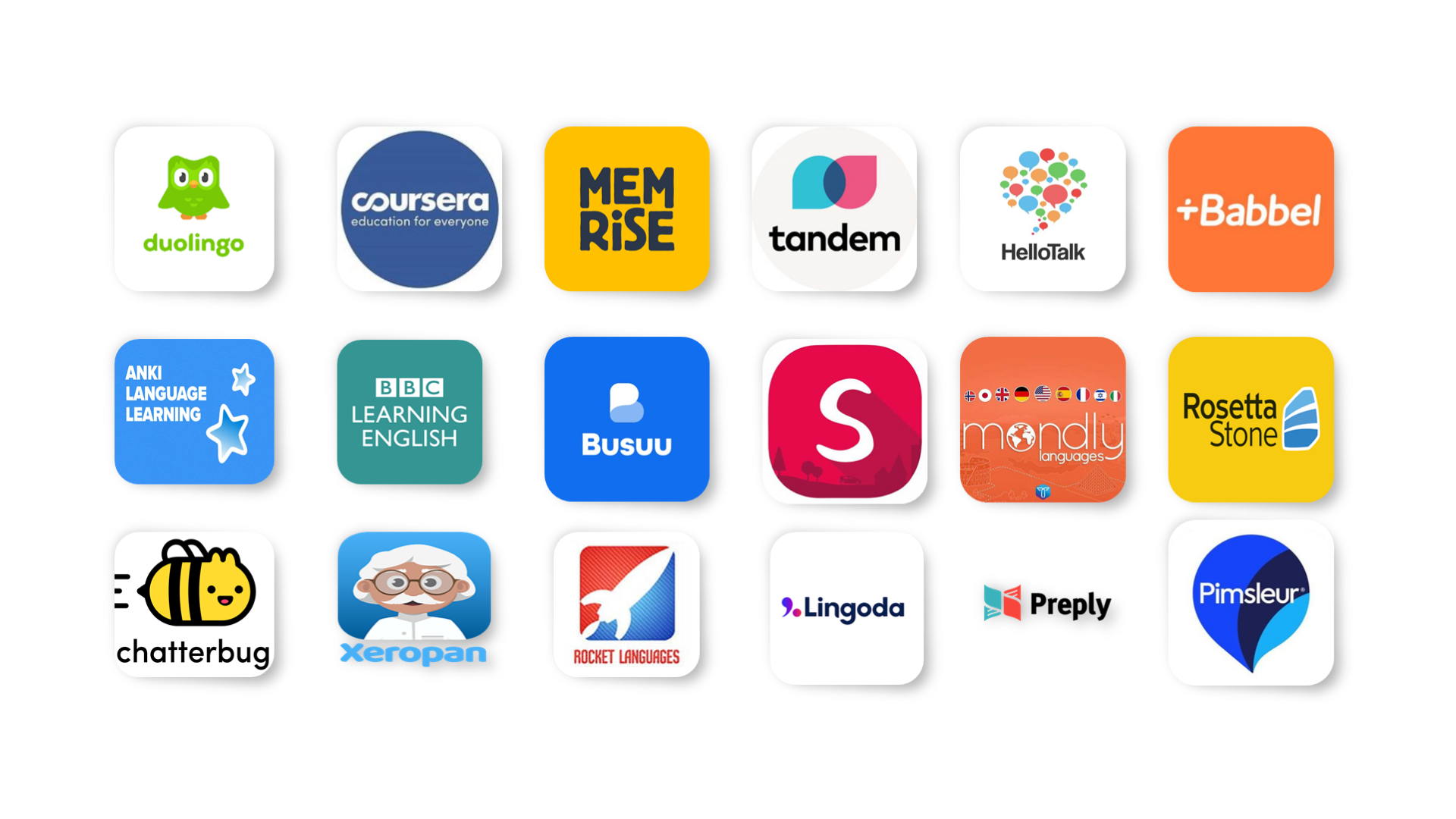
A further innovative way of language learning is represented by the world of apps, which allow studying via smartphone or tablet with even very short sessions that do not interfere with the daily routine. Learner involvement and motivation are reinforced by a strong gamification component, through the classic mechanics of rewards following a successfully completed mission.
The orientation of the app can vary according to content and propose vocabulary or grammar exercises. Some are oriented towards the development of communicative skills and therefore feature dialogues and stories, as well as exercises designed to improve pronunciation through voice recognition functions that provide feedback.
The panorama of apps is extremely accessible as most are free of charge, with the possibility of extending the programme by paying significantly less than for online or classroom courses.
However, it would be incomplete to emphasise that such apps should be used as a study support tool and not as a substitute for a structured language course. The typical shortcomings of online learning (lack of human rapport, limited support, not always verifiable quality) are even more pronounced in these cases.
Audiovisual content
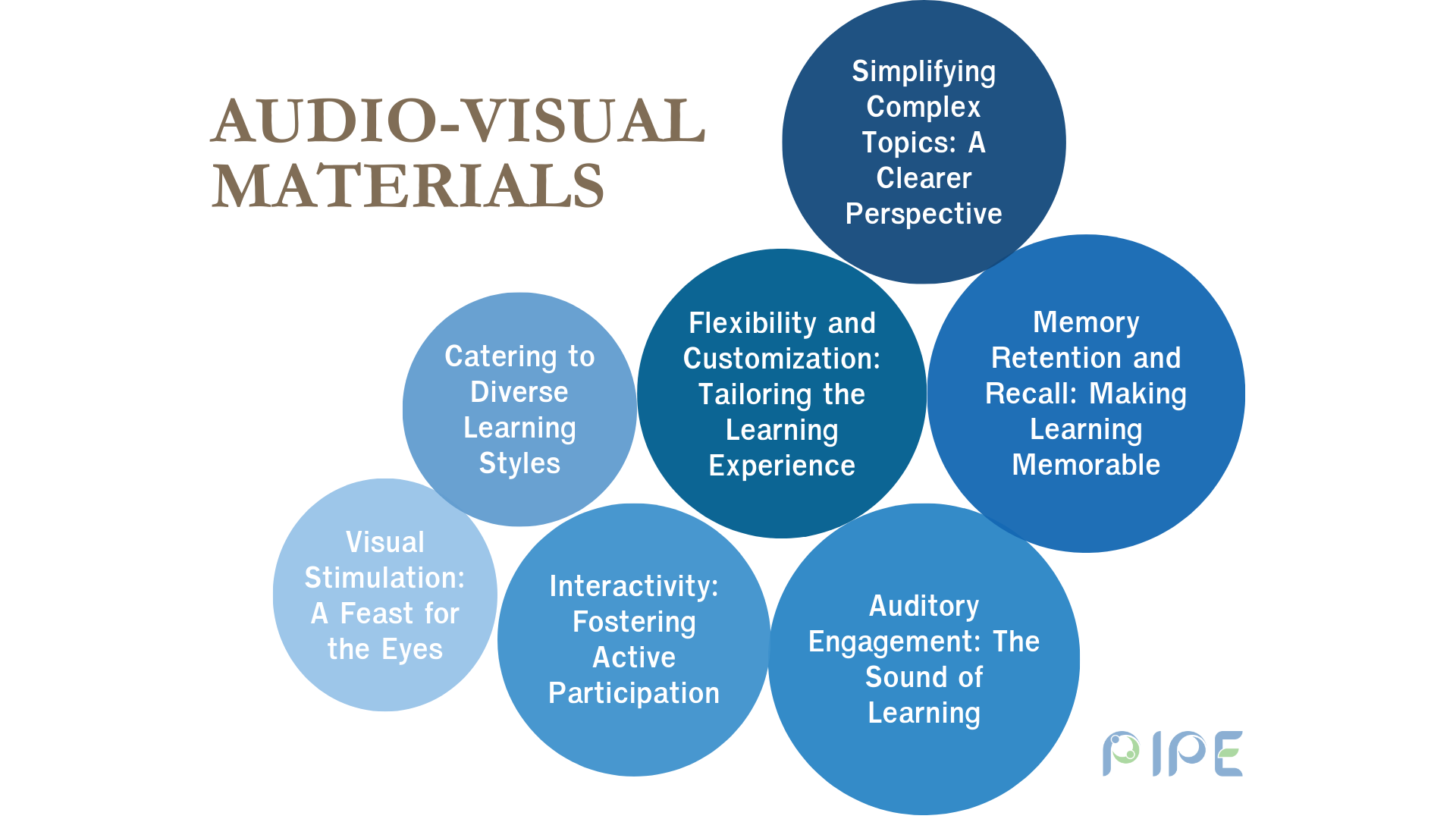
The use of films and TV series, such as instructional videos or YouTube, is an engaging approach to language learning for migrants, as it offers numerous benefits both from the point of view of language immersion, as it makes the experience authentic and close to the real world, and from the point of view of learning a natural and culturally contextualised language.
Audiovisual content is engaging, captures learners’ attention and makes learning enjoyable and stimulating, as well as being a material that is easily customisable to the level, objectives and tastes of the class.
The learning conveyed by this type of material can be exploited both for collective guided viewing sessions, during which the teacher can propose discussion activities on the selected films or videos, but also for autonomous practice activities, with the possible support of subtitles either in the language studied or in the mother tongue.
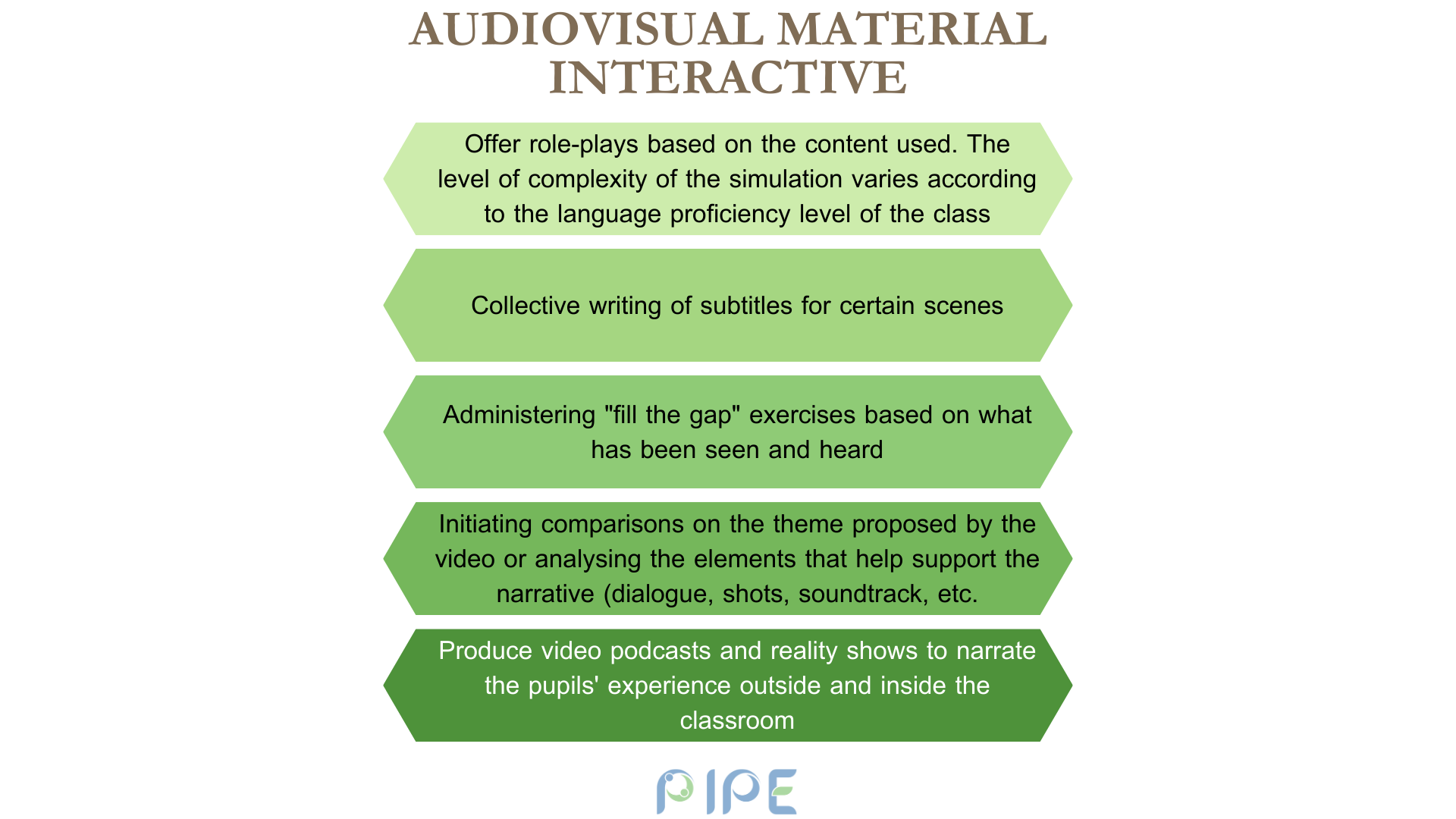
The audiovisual content can become interactive material when learners are given the opportunity to make videos themselves (presentations, interviews, reflections) and thus use the studied language creatively.
If an activity involving the use of audio-visual material is to be included in the teaching unit, it would always be appropriate to end with a follow-up session that provides an opportunity to check understanding and encourage an exchange of views.
Here are some ideas on how to make the experience provided using audiovisual material interactive:
Some examples of audiovisual content useful for language learning:
- Films and TV series originating in the country of the language to be learned.
- Foreign and popular films and TV series, known to the learners and enjoyed in the language to be learnt with the support of subtitles.
- Educational YouTube channels.
- Podcasts and video blogs.
- Audio books.
Online directories
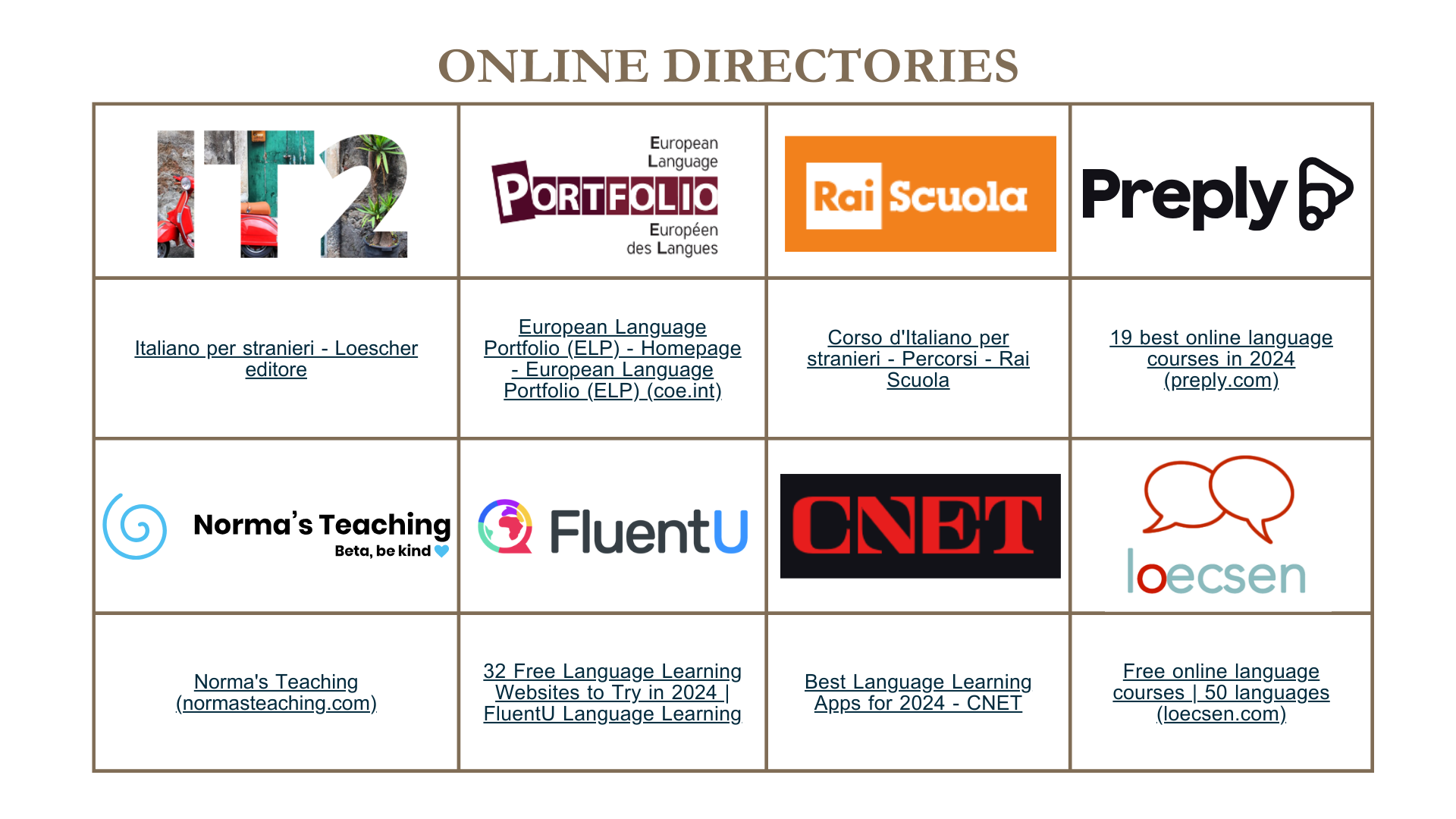
Resources for language learning, with a focus on Italian and English:
Downloadable activities
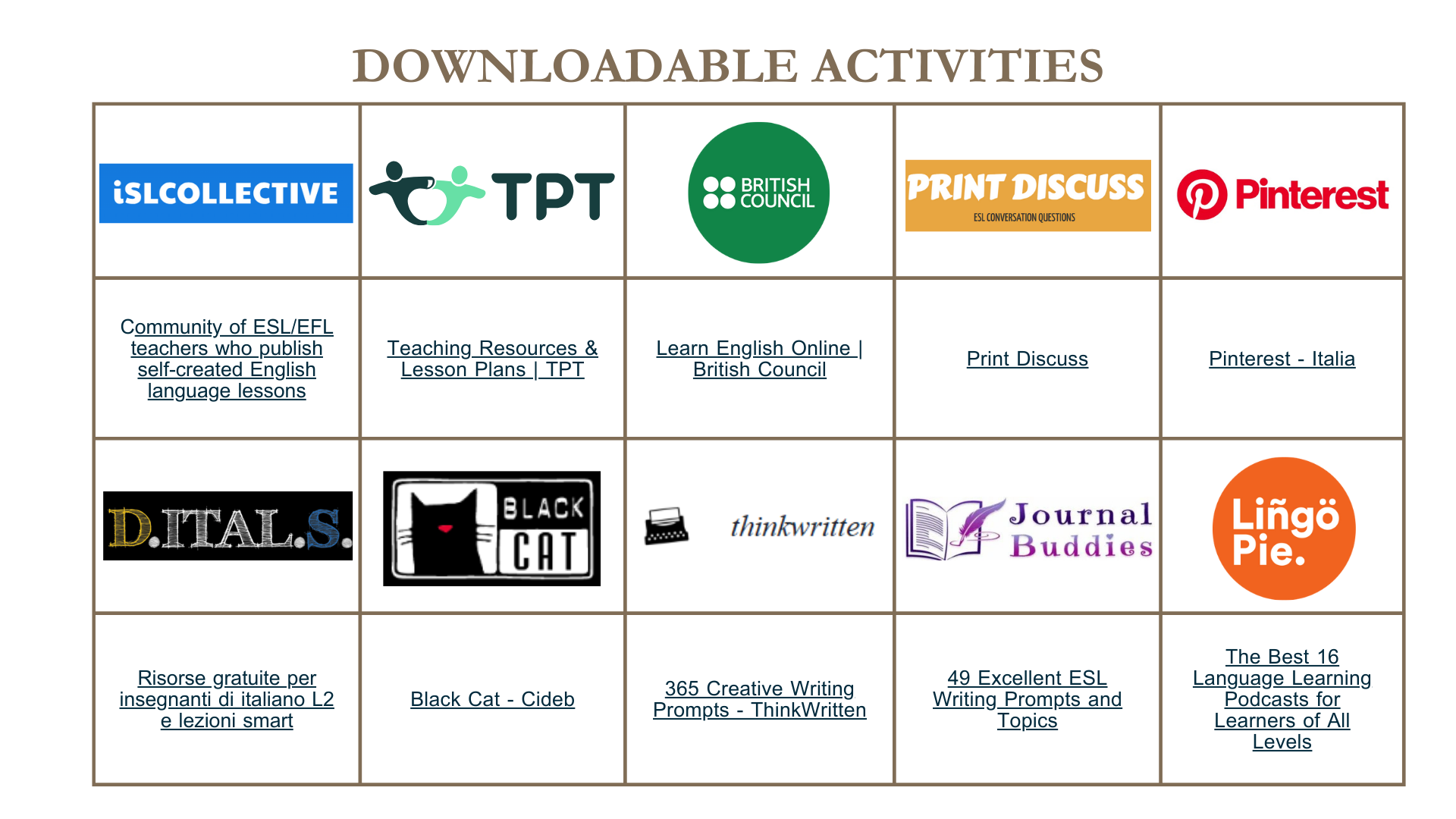
References on where to find free or paid downloadable teaching material (reference languages: Italian and English):
Self-created materials
Below are some steps for creating your own teaching material.
- Define the objective, target audience and starting language proficiency level.
- Choose the content according to the interest shown by the class in certain topics, in order to keep participation alive.
- Organise sections of the material logically and sequentially, providing clear and concise instructions.
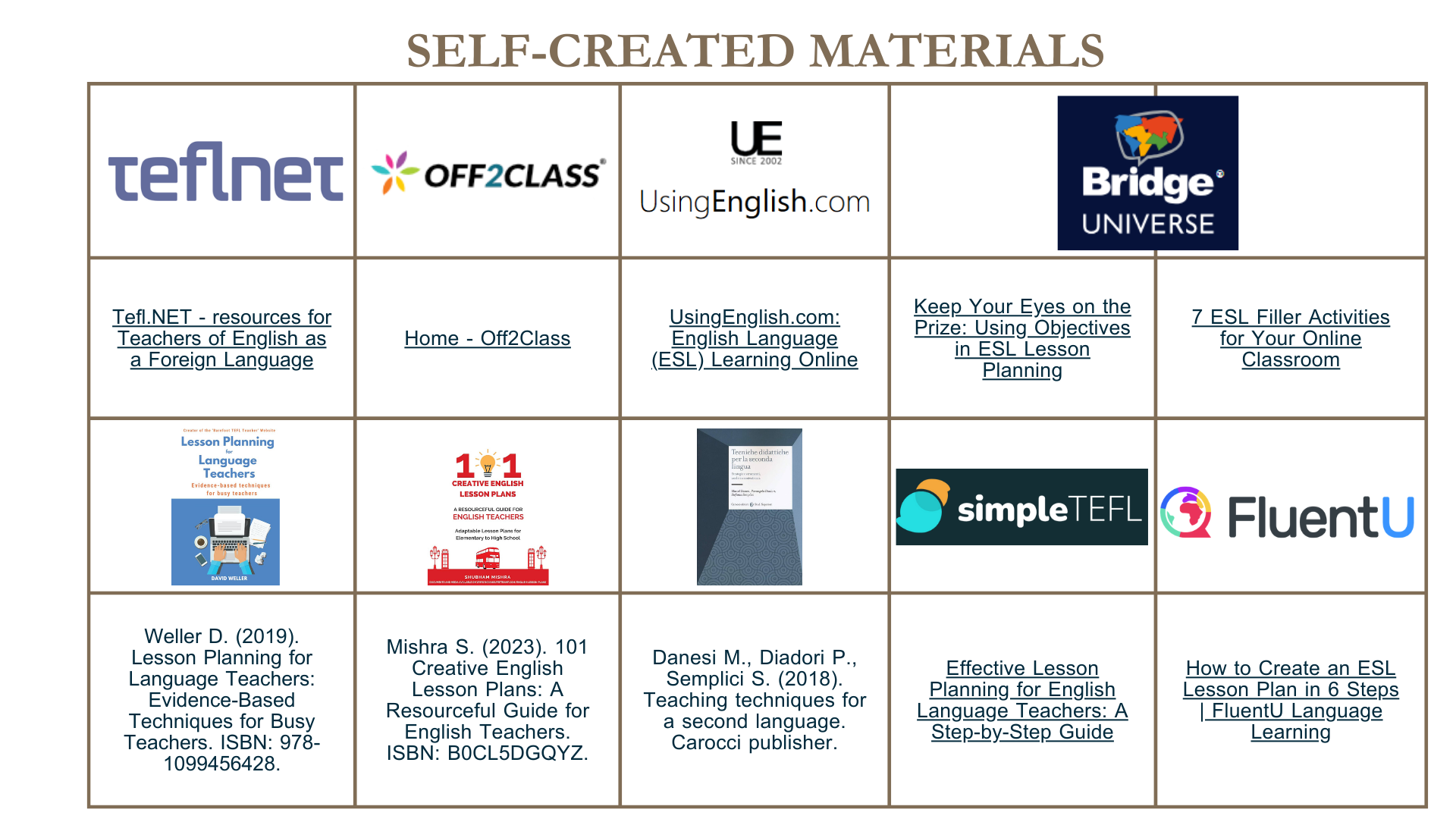
Here are some manuals available online on how to create materials and plan engaging lessons:
In conclusion, there is no magic spell capable of creating the perfect teaching material for every occasion. Rather than hoping for miracles, it is more productive to accept that in the world of education, what works wonderfully with some students may fail miserably with others. The only way to hit the bull’s eye is… to aim well.
So, teachers, study your audience, find out who your students are, take note of their interests and motivations that made them seek you out to learn the new language. What experiences have marked their history as migrants? How do they learn most profitably? Feed their curiosity with living material, be relevant to their future. Be clear in your instructions, because understanding breeds confidence. Try, explore, dare. Remind students that the classroom is a safe place where they can make mistakes and improve. But above all, play, because in learning, as in life’s challenges, enthusiasm is contagious and having fun is the key to success.