Bubble question
How can the teaching of the host language, which belongs to a broader culture than the European one, contribute to the empowerment of immigrants to actively participate in society, promoting integration, intercultural dialogue and the construction of a more cohesive, just and supportive community?
Migration in Europe has been a central issue in recent decades, driven by conflict, economic inequalities and climate change. This constant flow of people presents a set of challenges and opportunities that require an approach based on human rights, hospitality and respect for human dignity – and all that this represents. The human rights framework seeks to protect migrants, but its effective implementation is influenced by the complexity of the legal system that regulates these rights. In this context, linguistic rights and the promotion of interculturality play a crucial role, and although they seem like theoretical dimensions, they influence the day-to-day life of every migrant.
Human rights are inherent to all individuals, regardless of their nationality or migration status. International documents such as the Universal Declaration of Human Rights (UDHR) and the Convention on the Protection of the Rights of All Migrant Workers and Members of Their Families state that all migrants should be treated with dignity and respect. These instruments recognise essential rights such as the right to life, security of person, non-discrimination and equality before the law.
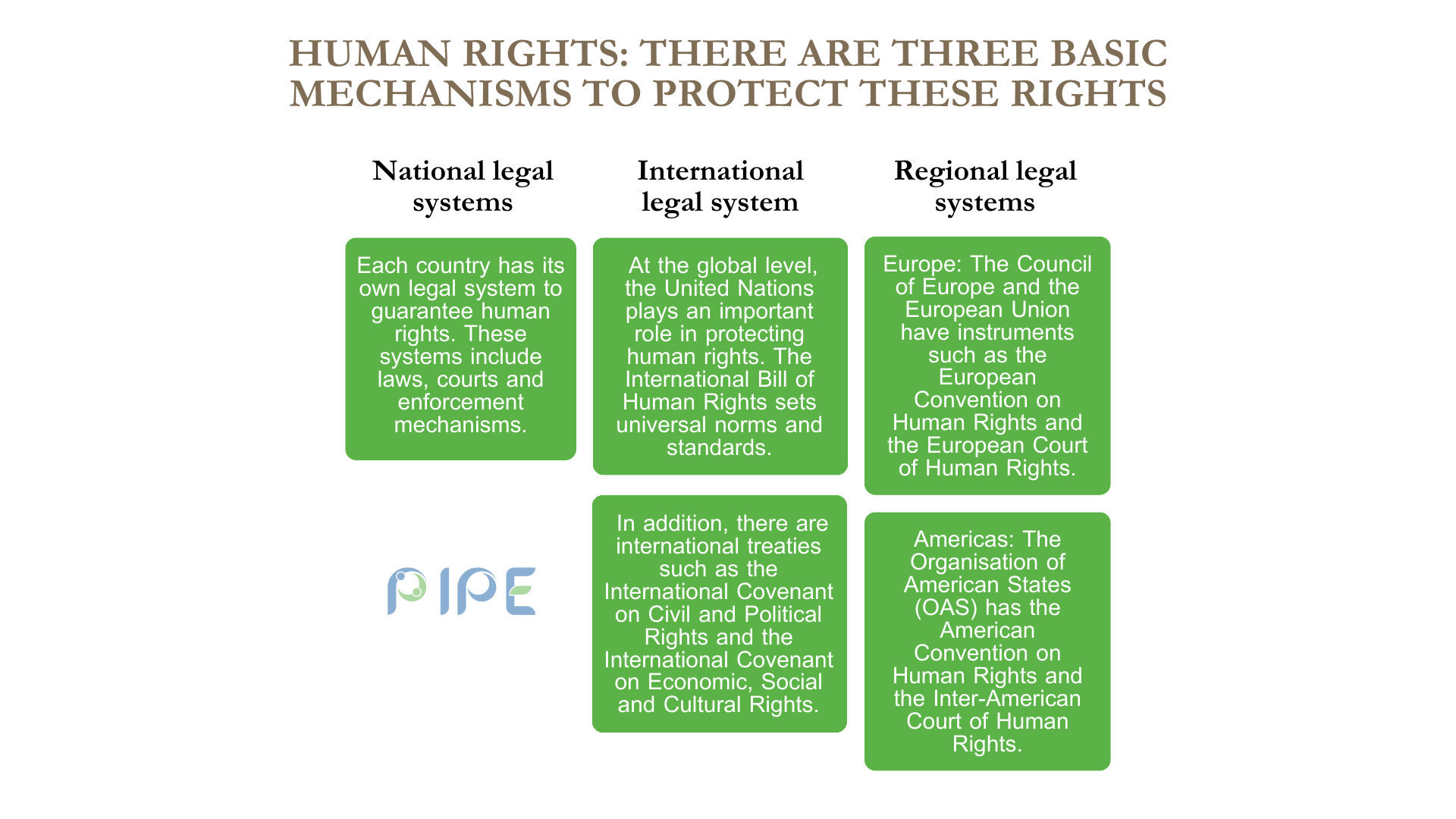
The creation of institutional frameworks in the context of globalisation and the strengthening of international law is a multifaceted process. Over time, these structures have been consolidated as a complex network of exchanges, equivalences, blockages and opportunities. This network, composed of international treaties, conventions and agreements, seeks to establish common rules and promote cooperation between nations. However, their implementation and effectiveness depend to a large extent on the political will and dynamics of the democratic systems that underpin them.
This is why it is crucial to distinguish between the concept of human rights and that of a legal system. Human rights are essential, non-transferable and unique to the human condition, irrespective of geographical, ethnic or ideological differentiating features. On the other hand, legal systems are human constructs, changeable and conditional. While human rights represent universal and timeless ideals, legal systems are mechanisms that vary according to context and are subject to modification based on political and social decisions, the set of institutions and procedures that implement and safeguard these norms.
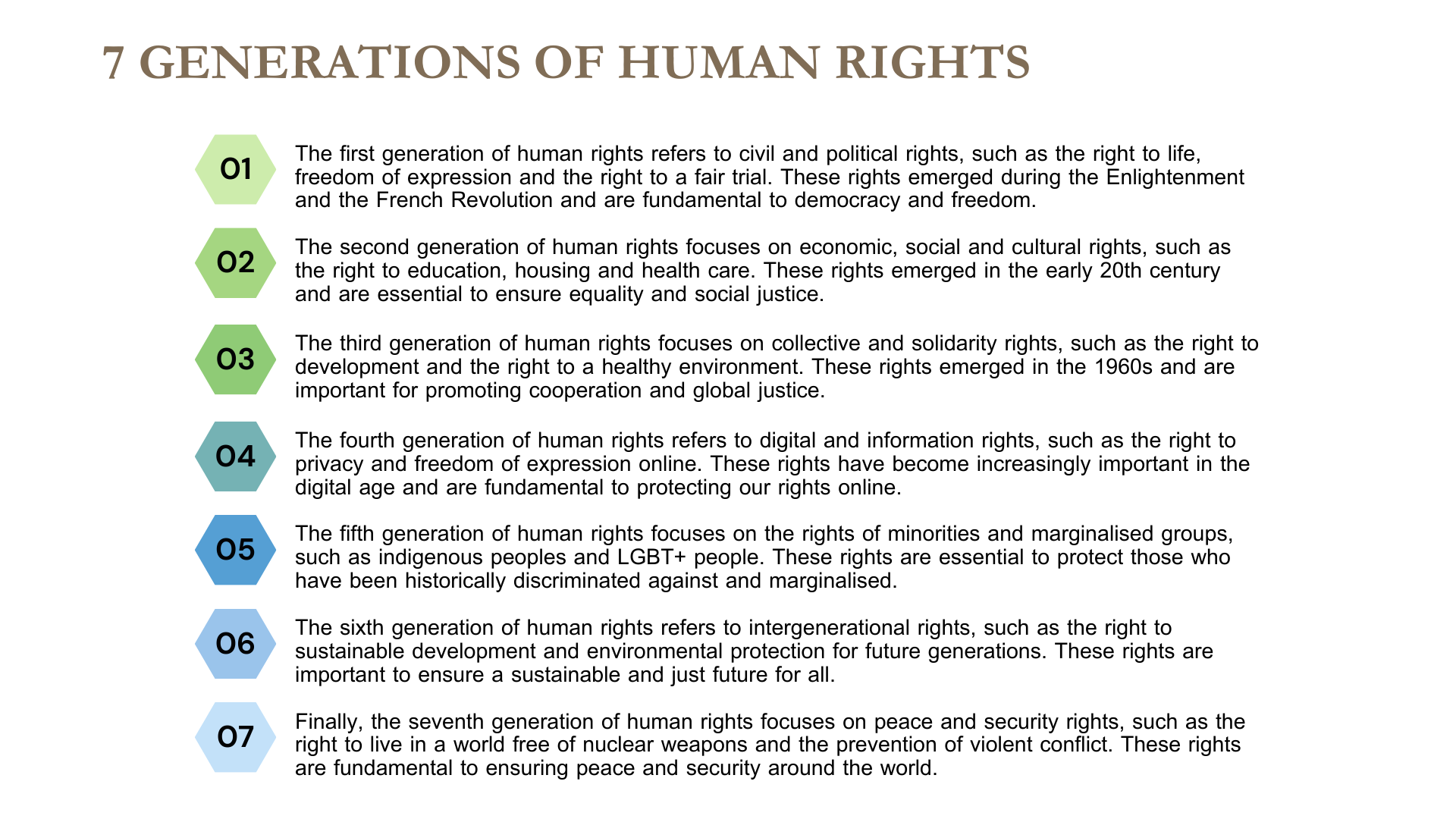
Modern legal systems have been embracing, recognising, incorporating and developing citizen and social ideals, shaping a catalogue of rights and obligations, which can be seen in the consideration of “generations of rights“, the 1st generation being composed of all vital rights, and the current 6th generation of rights linked to the digital spheres. What is relevant is to understand that these systems – national and international – make decisions about which “legal goods” will get the most protection from their system, as well as the limits that will define the applicability of their administrative and institutional force. This process recognises legacies of more authoritarian or absolute models, but since the installation of democratic structures, debate and the formulation of negotiations and consensus on what rights to include and when to include them has developed. However, this does not mean that all rights are “born” with their formal recognition, especially those linked to human dignity, which are inherent – natural – to human existence itself.
Modernity, with its ideals of “liberty, equality and fraternity,” proclaimed during the Enlightenment and enshrined in historical events such as the French Revolution, was built on the promise of constructing more just, equitable and rational societies. These fundamental principles translated into the elaboration of universal human rights and the creation of democratic political systems designed to ensure citizen participation and the protection of individual rights. However, it can be argued that this promise has been largely unfulfilled.
Despite the technological and scientific advances that have characterised modernity, power structures and social and economic inequalities have not only persisted, but in some contexts have worsened. Global power dynamics, driven by capitalism and globalisation, have generated unequal benefits, concentrating wealth in the hands of a few while large populations remain in poverty. This phenomenon has challenged the ideals of equality and social justice, revealing a significant gap between theory and practice.
Moreover, the political systems that emerged under the banner of modernity, often shaped by interests and hegemonic power dynamics, have failed to guarantee the rights and dignity of all people. States, in many cases, prioritise economic stability and national security over social justice, resulting in policies that marginalise vulnerable groups and perpetuate structural inequalities. This utilitarian approach contrasts with the enlightened promise to protect freedom and equality for all citizens.
The current situation reflects a profound dissonance between the universal principles of modernity and practical reality. Persistent conflicts, racial and gender discrimination, migration crises and climate change bear witness to the limits and challenges humanity faces in its quest for truly global justice and equity. Thus, the promise of modernity remains an aspirational ideal, a constant reminder of the need to reform and reassess our social, political and economic structures in order to close the gap between ideal and reality.
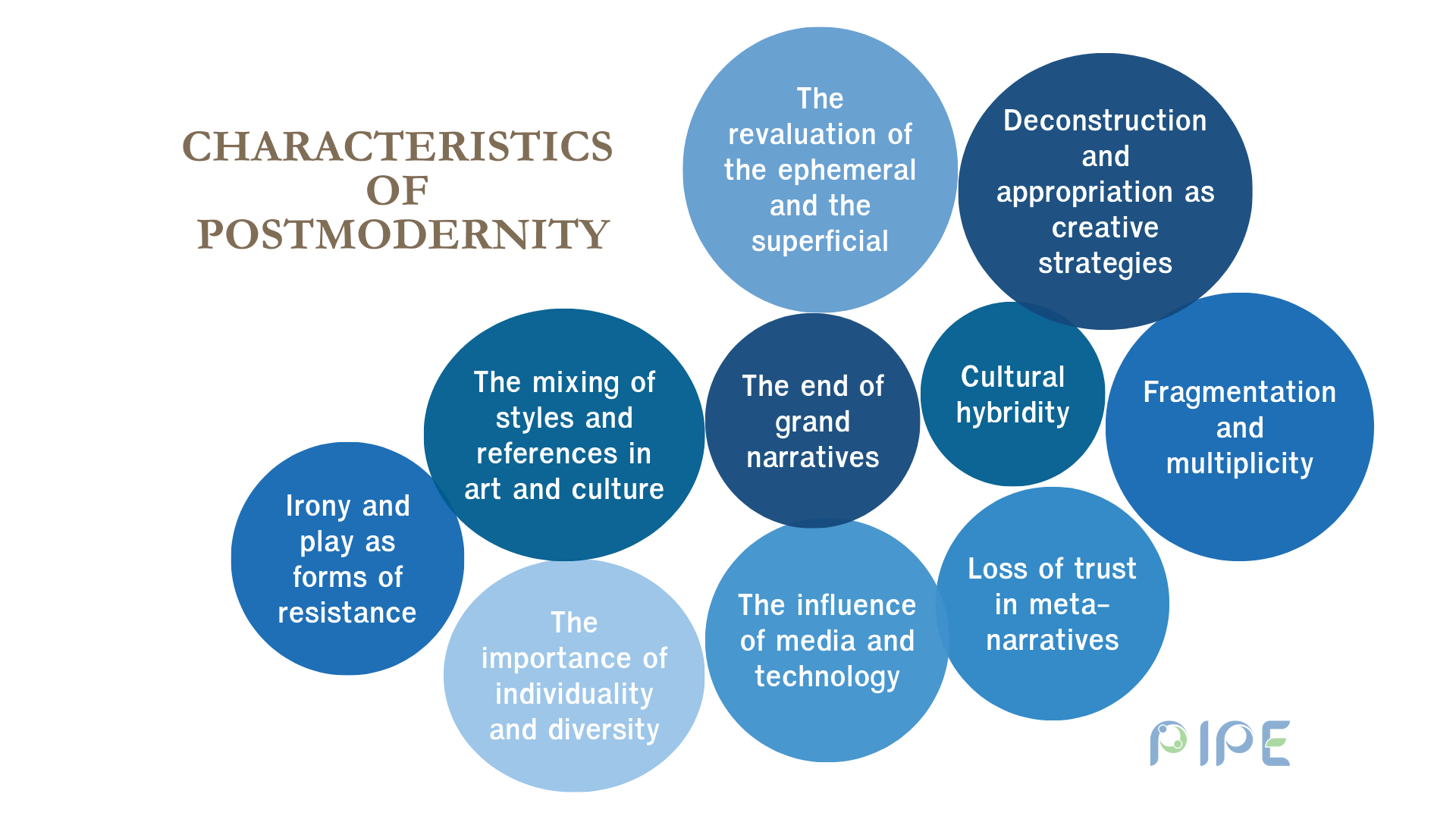
In the postmodern era, characterised by globalisation and hyper-connectivity, we are faced with the task of realising this promise. Institutional frameworks must adapt and respond to the new challenges and realities of an interdependent world. International cooperation and political will are essential to transform these frameworks into effective instruments of action, ensuring that human rights are not just an aspirational ideal, but a tangible reality for all.
“Where, after all, do universal human rights begin? In small places, close to home; so close and so small that they cannot be seen on any map of the world. Yet they are the world of the individual person; the neighbourhood in which he or she lives; the school or university he or she attends; the factory, farm or office where he or she works. Such are the places where every man, woman and child seek equal justice, equal opportunity, equal dignity without discrimination. Unless these rights have meaning there, they have little meaning anywhere else. Without concerted citizen action to keep them close to home, we shall look in vain for progress in the larger world”. (Eleanor Roosevelt, extract from speech to the United Nations General Assembly, 28 September 1958)
Now, this point cannot be addressed without entering the dilemma between individual impact in the classroom and the broader goals of society, as it is certainly a major challenge in the critical paradigm of education. Language teaching is fundamental both to the understanding of these normative frameworks, and to the defence of one’s own right or the right of others. It enables access to crucial information, such as legal rights, social services, health care, and available educational and employment opportunities, promoting decision-making and more active participation in society, increasing the possibilities for interaction and dialogue with neighbours, colleagues, teachers and local authorities, which can provide spaces for social and cultural integration. It also increases the possibilities to participate in civic and political activities, to negotiate working conditions, to access legal services.
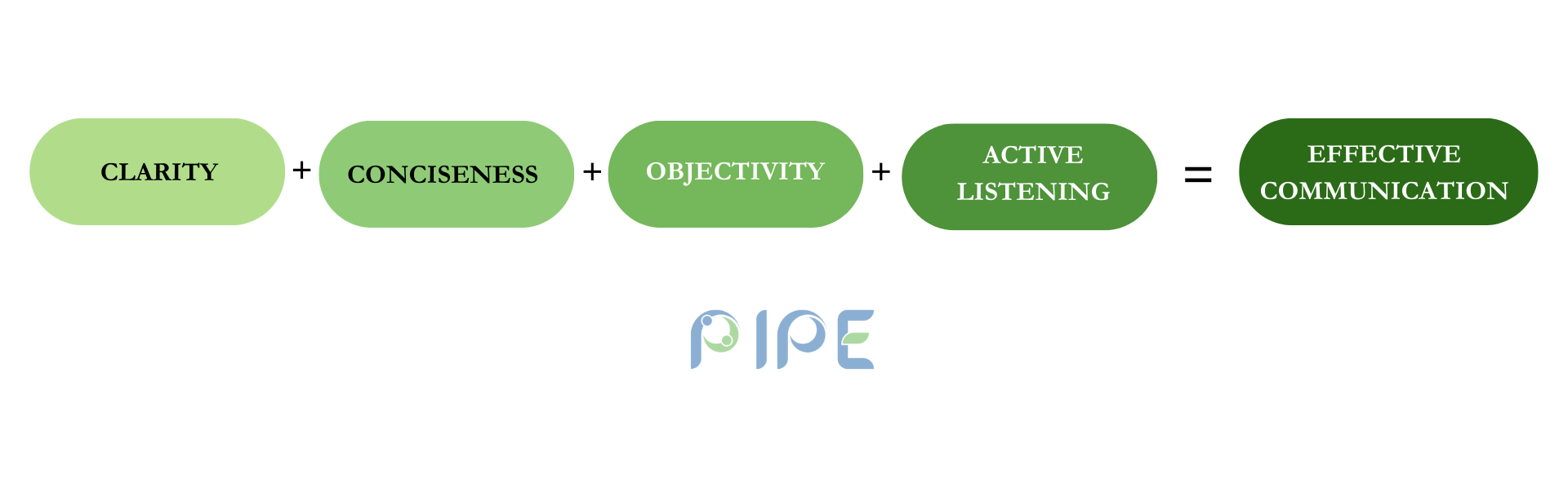
The answer reaffirms what we already know… Effective communication promotes mutual understanding, reduces prejudice and strengthens social bonds. Effective communication often requires a common language, a shared field of expression, meaningful signifiers and meanings. However, decision-making processes, the critical conception of reality, the positioning of the defense of one’s own rights or those of others require much more than the teaching of language and the handling of communicative codes.
What has already been pointed out in previous sections, and what will continue to be pointed out in subsequent sections, is developed here. The importance of understanding teaching processes as a bidirectional, even multidirectional reality; diverse by nature and therefore in need of a sharing born in subjectivity. This requires questions, spaces, notions that welcome ways of life, and not only give presentations of a single model. It requires social openness to interculturality, which overcomes the idea of static grouping of cultures, of mere tolerances.
The two principles of justice are as follows: a. Each person has an equal right to demand a fully appropriate scheme of basic and equal rights and liberties, a scheme which is compatible with the same scheme for all; (…) b. Social and economic inequalities are justified only by two conditions: first, they will be connected with positions and offices open to all (…); second, these positions and offices must be exercised to the maximum benefit of the least privileged members of society (Rawls, 1995, p. 31).
From these lines, it is understood that it is possible to overcome this duality by adopting a holistic and systemic approach that recognises the interconnection between individual action and social change at the collective level. Starting from critical reflection on teaching practice, educators should be encouraged to reflect critically on their role in promoting social change and equity in education. This involves questioning assumptions, examining implicit biases and constantly seeking ways to improve and adapt teaching practice to more effectively address social and cultural challenges. It is distilling the data that shapes the dominant narrative from real and current information. It is about integrating collective action into the curriculum so that, from a communal vision of the same class group, the identification and tackling of palpable social and community problems is jointly addressed. This not only fosters the development of collaborative and teamwork skills, but also teaches students the importance of collective action for meaningful change.
Culture is neither an overstepping nor a neutralisation of transcendence; it consists of ethical responsibility and obligation towards one’s neighbour, a relationship to transcendence as transcendence. We can call it love. It is ordered by the face of the other person, which is not a datum of experience and does not come from the world. Penetration of the human into the barbarism of being, even if no philosophy of history can guarantee the non-return of barbarism (Levinas, 2011, p. 61).
Gradually, educational action will build partnerships with the host community (community organisations, activist groups and other change agents) to identify needs and opportunities for joint action. This can help to extend the impact of teaching and learning beyond the classroom and create meaningful connections between the school and the community. It is to use a strategy from partnership with the immediate to the collective and common. It is to create a community that influences, creates and supports personal and social transformation. It is to start from the recognition that social change (of opinion, action, politics, etc.) begins at the individual level, in this case, of and with educators and their students. Of course, this strategic objective must fit in with an approach to language teaching based on sensitivity to the linguistic and cultural diversity of each immigrant and underline some important aspects from a didactic point of view, but the fundamentals cannot be lost sight of.
In the end, we have a personal and collective goal while combining a multitude of subjective and singular facts that make up a classroom, ten classrooms, a hundred classrooms and a lot of migrants belonging to a shared time and space to make a common future.
The demand for recognition becomes compelling because of the supposed links between recognition and identity, where the latter term designates something equivalent to a person’s interpretation of his or her defining characteristics as a human being. The thesis is that our identity is shaped in part by recognition or lack thereof (Taylor, 1993, p. 43).
Linguistic rights are a fundamental aspect of human rights, as they are closely related to cultural identity, social inclusion and equal opportunities. However, the boundaries of these rights for groups that have migrated to another territory are blurred and often depend on the “particular” rights of the host society. The host’s fear of losing an identity is pitted against the fear of losing the memory of those who have moved. It is an unequal struggle that has a very difficult outcome, if not a solution.
We almost always focus on the teaching of the mother tongue as a facilitator of the integration of migrants into the territory, generating a real acculturation of migrants. Often this language training is not even bilingual, much less in the recognition of minority or foreign languages, which would be “typical” strategies of a state that protects the languages existing in its territories.
“Recognition’ has become a key word of our time. This idea, a venerable category of Hegelian philosophy, recently revived by political theorists, is proving central to work to conceptualise current debates about identity and difference. Whether it is indigenous land claims, women’s welfare work, queer labour or Muslim headscarves, moral philosophers increasingly use the term ‘recognition’ to uncover the normative bases of political claims (Fraser and Honneth, 2006, p.13).
The preservation, development and expression of cultural and linguistic reality and heritage is, in turn, the expression and maintenance of one’s own identity. The teaching of the language of the host country should not only facilitate their integration into the new society, but also respect and value their previous cultural and linguistic identity. Two-way language learning recognises that the integration process is not a one-way process but involves a dynamic interaction between migrants and the host society. Migrants bring their unique experience, knowledge and perspectives, thus enriching the cultural and linguistic fabric of the host community. At the same time, learning the language of the host country enables migrants to participate fully in the social, economic and political life of their new community, thus exercising their right to self-determination in an intercultural context.
To close this section we come to the practical dilemma of National Language teaching and the crucial role played by the teacher and how essential it is for the development of each person to recognise their mother tongue. It is a continuous pulse between the promotion of integration in a society, access to educational and employment opportunities and the generation of a cultural identity of one’s own, shaping integral persons and ratified by endless legislation and international treaties.
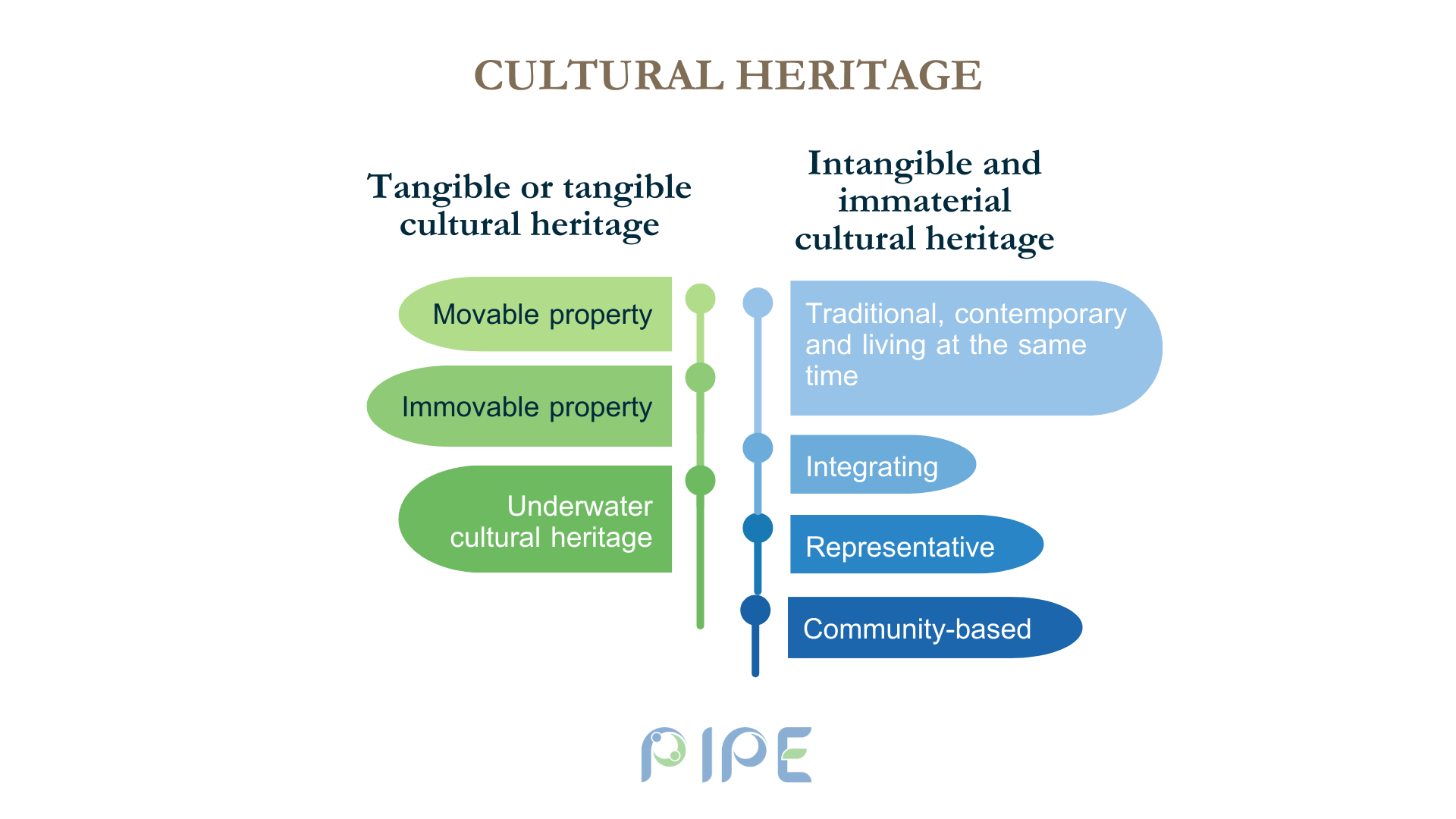
It is to present the typical programming of bilingual education and its benefits but also its deficits when the culture “left behind” is seen as surpassed, both by cultural aspects of the destination, as well as by the personal histories of the people?
In the end, teachers focus on improving “digital competence” and focus on a multitude of pedagogical and didactic strategies that often, even when they achieve an inclusive, respectful and safe environment, fail to highlight the value of linguistic diversity due to the pressure of an environment that is always hostile to foreigners.
The very lack of a home where the direct hostility of the environment is dissipated in close relationships, spaces of respite from total immersion while not opening places in educational institutions to allow and even encourage the use of the mother tongue makes the work of migrants and their teachers a difficult mountain to climb.
Spaces need to be found in which the challenges faced by teachers, such as lack of training in intercultural education, limited resources, or restrictive education policies, can be discussed. Spaces in which to complain and at the same time explore opportunities to improve language education, such as in-service teacher training, the development of inclusive teaching materials and collaboration with language communities.