You will find in this Chapter:
Situations of vulnerability associated with reasons for leaving the country of origin
Situations of vulnerability associated with the situations experienced by migrants during their migrant’s experience during their journey and at their destination
Situations of vulnerability related to a person’s identity, status, or circumstances status or circumstances of a person
Empathy and understanding help us see the world through the eyes of others and build bridges instead of walls. Empathy is about standing in someone else’s shoes and feeling with his or her heart. Not only is empathy hard to outsource and automate, but it also makes the world a better place
Daniel. H. Pink
Forced displacement of people has been occurring for centuries (Campbell et al., 2018) and as a phenomenon has existed in every historical period of humanity. The reasons why people migrate from place to place, and the ways they do so, are many and varied, hiding a different history behind them (European Commission, 2015). However, the most common causes of the migration/refugee issue are war, poverty, human rights violations, and poor treatment towards minorities (Abdel Maksoud, 2016).
The wave of migration (refugees, economic migrants, asylum seekers), in the EU countries has increased considerably since the mid-2010s (Kasimatis &, Panagiotopoulou, 2018). In 2015, Europe faced an unprecedented refugee crisis (U.N.H.C.R, 2015), which led on the one hand to the creation of fences to stop migrants from crossing borders to the death of people transported by unseaworthy boats, and to disagreement among EU leaders on a common European asylum system. On the other hand, there is a surge of compassion and solidarity in and around Europe to human suffering (Refugee Studies Centre, 2016). Over one million refugees from Afghanistan, Iraq, and Syria have arrived in Southern Europe. Most arrivals, totalling at least 850,000 people, entered Greece from Turkey (UNHCR, 2015).
Situations of vulnerability associated with reasons for leaving the country of origin
84% of the refugees come from three different countries affected by ongoing wars in the Middle East: 49% from Syria, 21% from Afghanistan, and 9% from Iraq (Language Support for adult Refugees, A Council of Europe Toolkit, 2015). Others come from various African countries, the majority of which are from Nigeria, Eritrea, Somalia, and the Gambia. Additionally, refugees originate from several other countries, including Pakistan, Iran, Egypt, and countries from Eastern and South-Eastern Europe (Council of Europe, 2024). This part of the toolkit offers detailed information on the primary countries of origin for most refugees, the routes they use to reach their destinations, and an overview of their rights and legal status.
Migration flows due to instability are a challenge for the European Union. Wars and armed conflicts, ethnic tensions, systemic human rights violations, natural disasters, and lack of appropriate economic and democratic structures are the main reasons for migration flows (European Parliament, 2011).
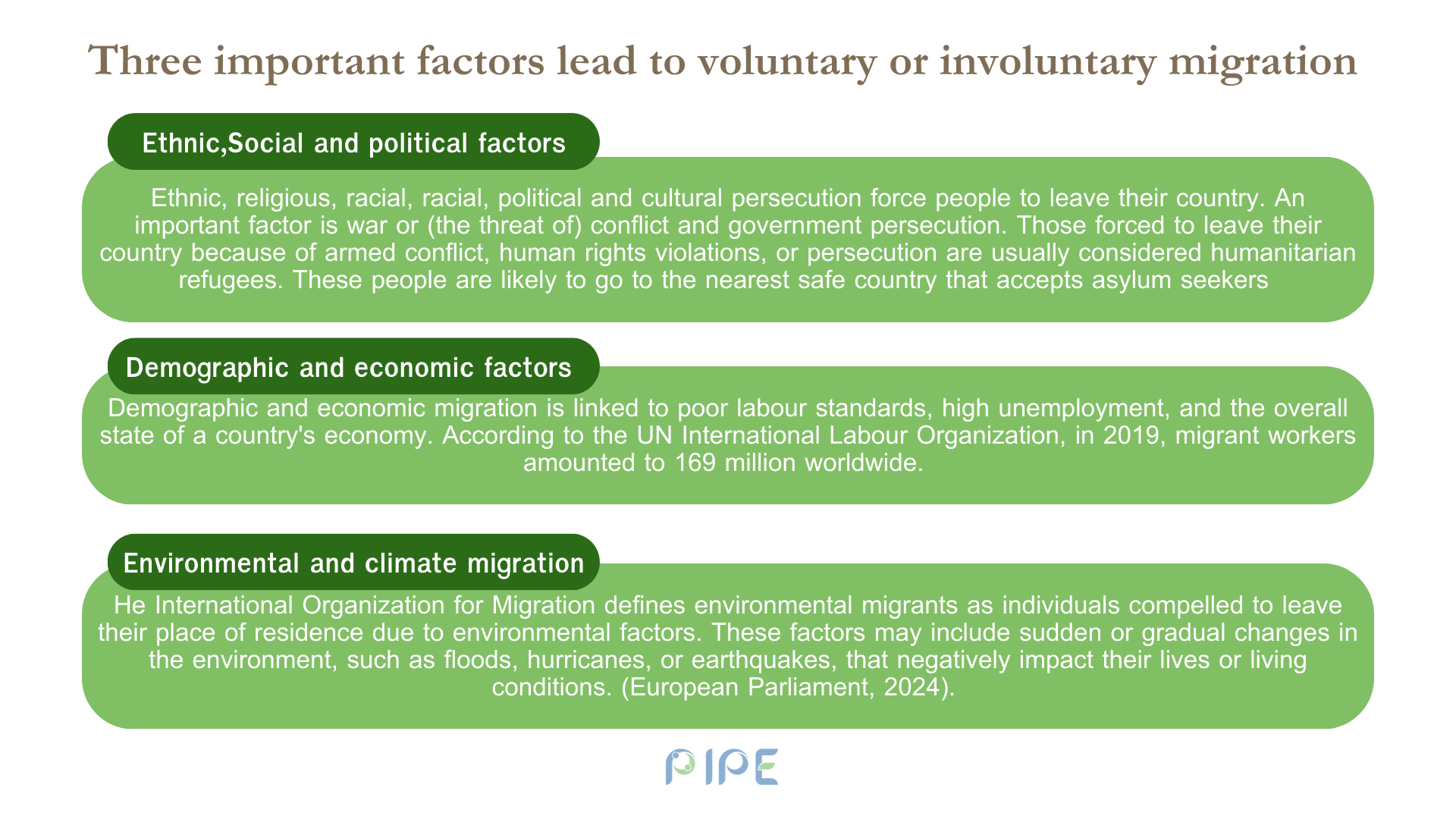
For a multitude of reasons, people across the globe are endeavouring to rebuild their lives in a foreign land. Some of them choose to leave their country in search of employment or educational opportunities. In addition, individuals are compelled to depart their homeland and native country because of persecution or human rights violations, including torture. Children, women, and men flee because of violence, war, hunger, extreme poverty, their sexual orientation or gender, or the effects of climate change or other natural disasters. They often face a combination of these difficult situations. However, some people leave their country of origin for another country either because they believe they will have a better chance of finding work or because they want to reunite with their families or friends already living in a country abroad (Amnesty International, 2019).
Situations of vulnerability associated with the situations experienced by migrants during their migrant’s experience during their journey and at their destination
As stated by Lee (1966: 49) “Every act of migration involves an origin, a destination, and an intervening set of obstacles”. Refugee migration, from the journey of uprooting and its hardships to the wait for resettlement and the final settlement and adaptation of refugees to a new environment, creates a context of chronic stress and insecurity (Tsaknakis, 2016).
Migrants may find Migrants often face vulnerable situations during their journey, requiring protection and support both while in transit and upon arrival at their destination, as they attempt to build a new life in an unfamiliar environment and themselves in vulnerable situations requiring protection and assistance during their journey, both in transit and upon arrival at the destination or when trying to make a life in a new environment and a new country (UNHCR b, 2017).
Migrants often face severe human rights violations during their journeys, which begin with hopes for a better future but are often marked by fear and danger (IOM, 2024). They are at risk of trafficking and exploitation (Amnesty International, 2019), and may encounter death, trafficking rings, inadequate protection, criminalization, arbitrary detention, and barriers to accessing health, education, and justice. Migrants can also suffer from xenophobic and discriminatory actions based on their nationality, ethnic origin, and economic status. Vulnerable and unequal conditions in their countries of origin exacerbate these challenges, leading to increased inequalities during transit and at their destination. Vulnerability is not inherent but arises from circumstances and personal situations (IOM, 2024).
Many refugees arriving in Europe have spent years in camps in Turkey, Lebanon, and Ethiopia, facing poor living conditions and lack of prospects. These conditions compel them to risk their lives to reach Europe, frequently traveling via the Central Mediterranean or Balkan routes. The Central Mediterranean route, used by migrants from sub-Saharan Africa since Libya’s civil war in 2013, is frequently traveling via the Central Mediterranean or Balkan routes due to the country’s instability and lack of law, which enables illegal trafficking. Refugees are compelled to pay substantial sums to traffickers to cross borders or secure passage on boats. It is estimated that thousands of refugees have lost their lives at sea, making the Libya to Europe route the deadliest (Council of Europe, 2024; UNHCR, 2018).
In 2015, more than 3,500 people drowned or went missing while trying to cross the Mediterranean and the Aegean Sea, trying to reach the safety of Europe. Many were those who experienced forced displacement and hardship in transit countries and made dangerous journeys. Lack of information, uncertainty about the migration status, the hostile treatment they often receive, the constant changing of policies, and undignified and prolonged detention are situations that exacerbate stress. (Ventevogel et al., 2015).
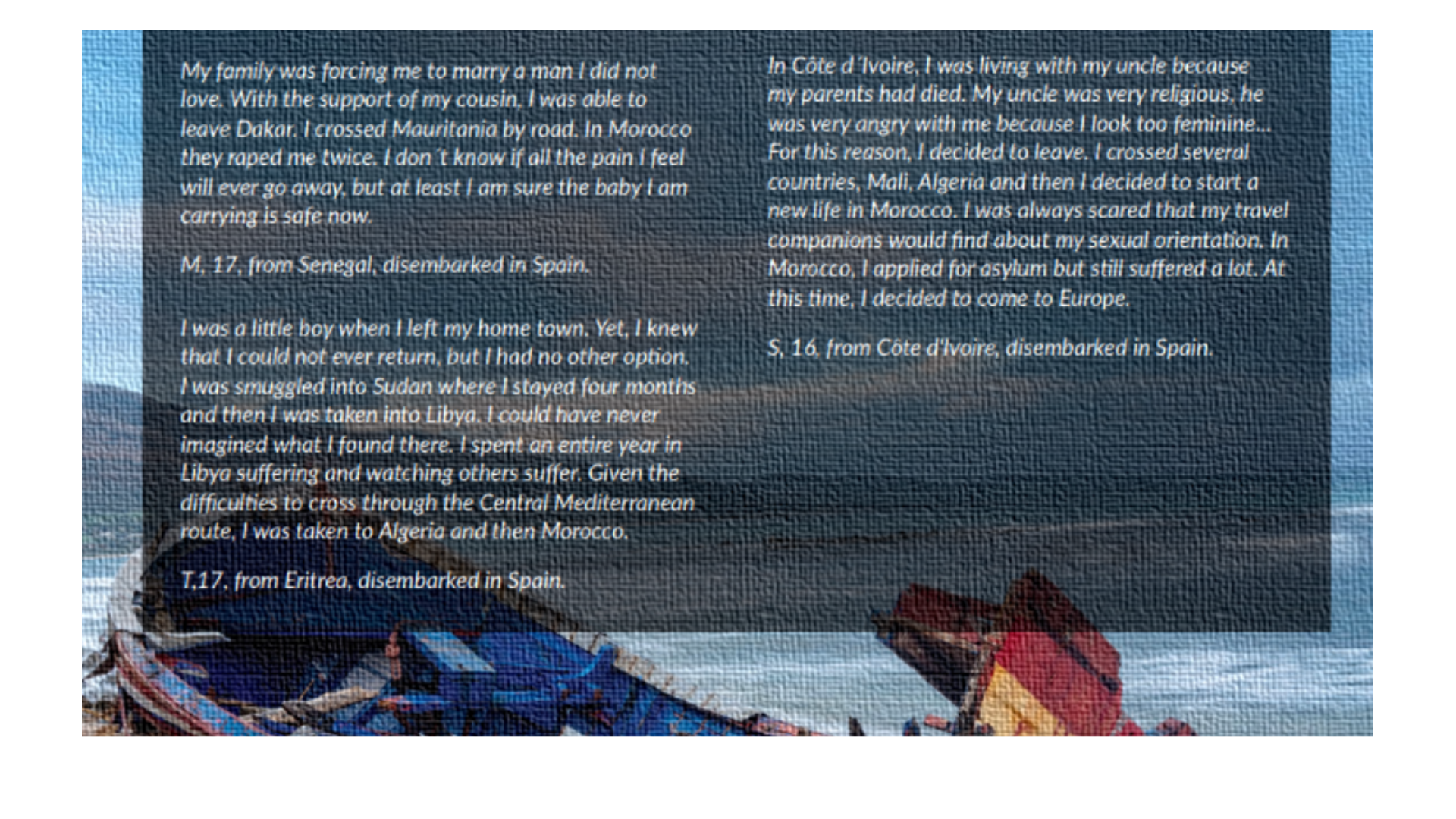
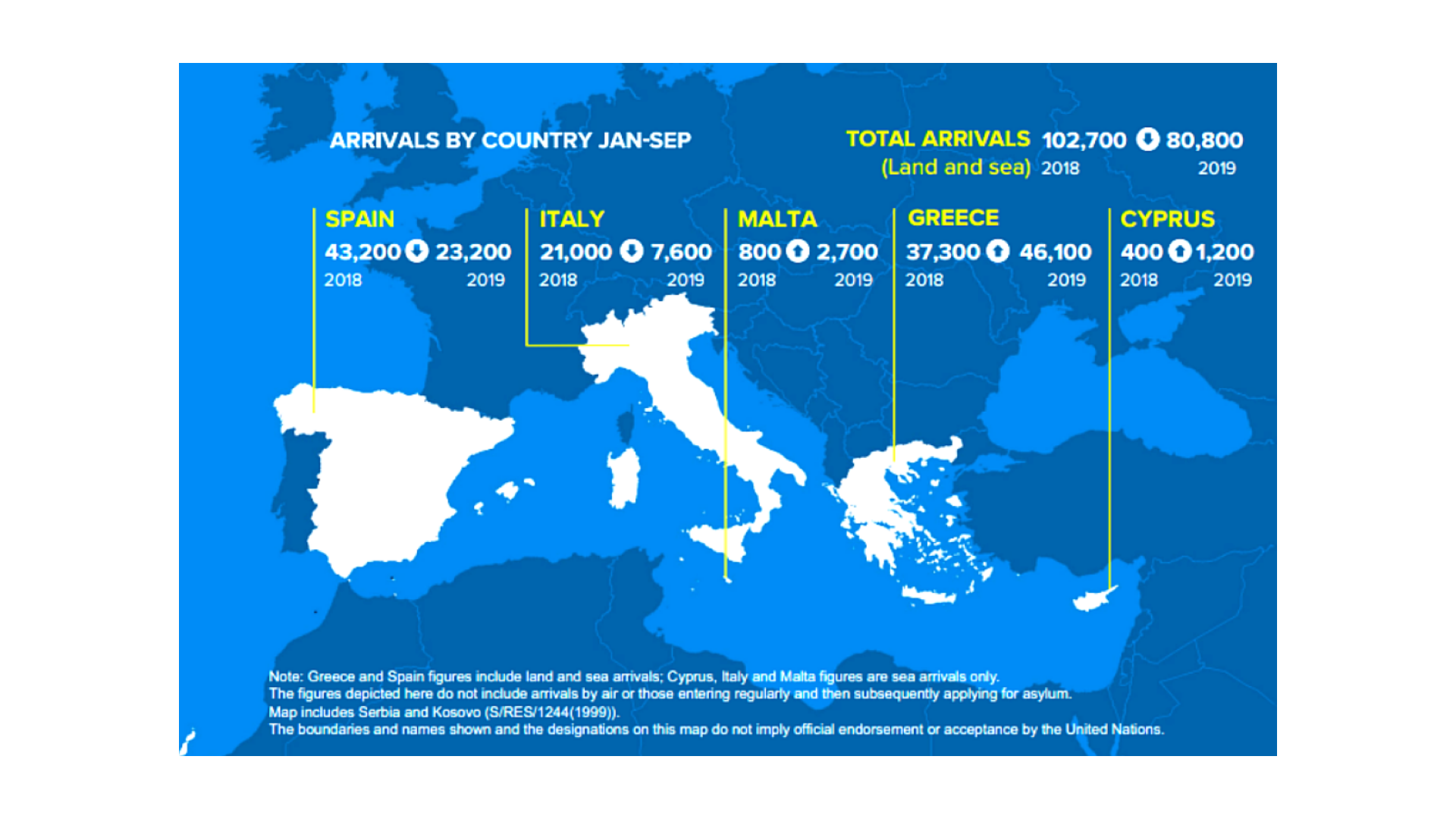
UNHCR calls on European states to strengthen their efforts to protect refugees and migrant children who, despite difficult and dangerous journeys, continue to face risks and hardship once in Europe. These hardships refer to unsafe housing conditions, misregistering as adults, and lack of appropriate care, leaving them exposed to further abuse, violence, and psychological distress (UNHCR, 2019).
According to research by the European University Institute of Florence, with the financial support of the Open Society Foundations in Brussels, migrants working in the agricultural sector in Greece, Italy, and Spain face episodes of violence, racism, marginalization, and flexible working conditions.
Situations of vulnerability related to a person’s identity, status, or circumstances status or circumstances of a person
Irregular migrants, foreigners without legal status, refugees, asylum seekers, victims of trafficking, and stateless persons face a wide range of vulnerability factors (UNHCR & IDC, 2016). Vulnerability (Principles and practical guidance on the protection of the human rights of migrants in vulnerable situations) can be understood through specific factors that may co-exist and can influence and exacerbate each other. The factors that create vulnerability of a migrant may be responsible for migration from the country of origin or occur in transit and/or be linked to a particular aspect of an individual’s identity or situation. Highlighting that vulnerability situations may change over time as circumstances themselves change:
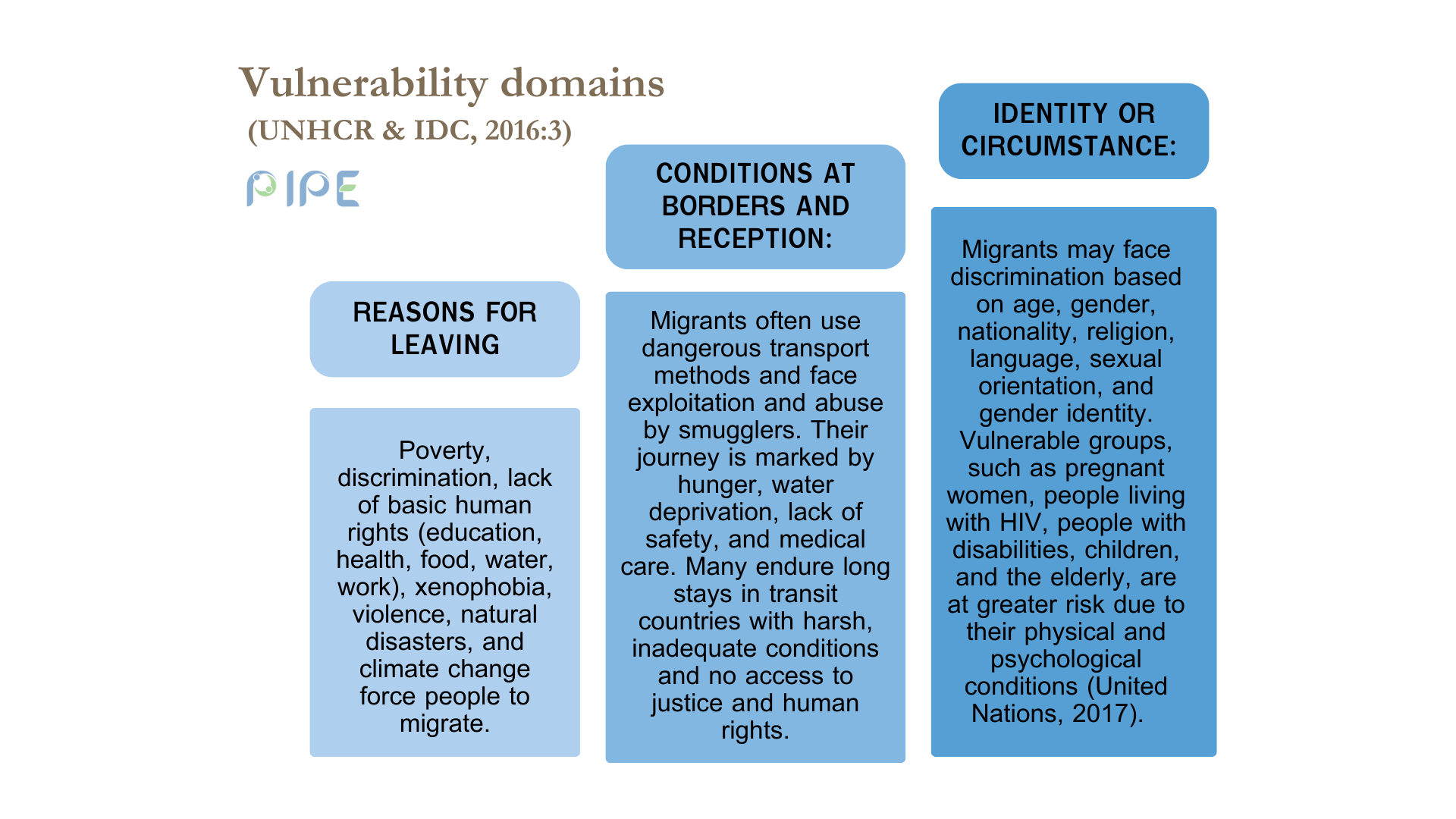
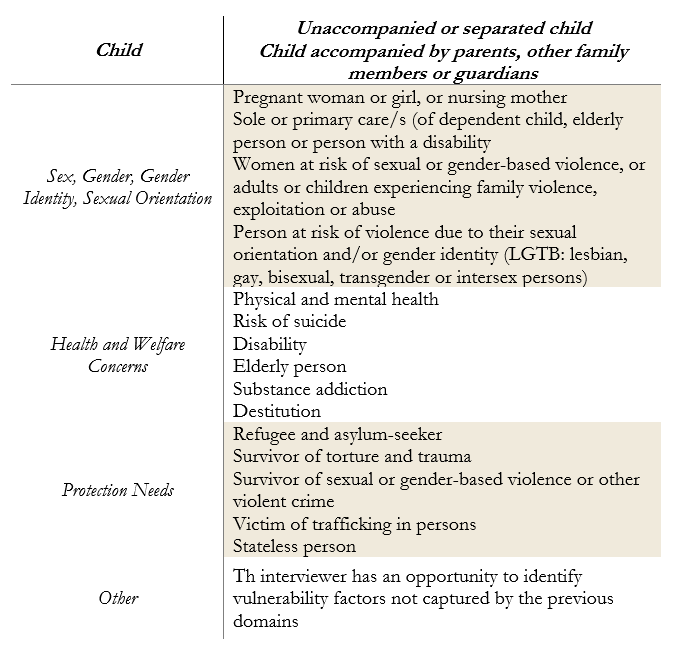
This screening tool on identifying and addressing situations of vulnerability is a UNHCR and IDC collaboration intended to help guide and inform frontline workers and decision-makers on the relevance of vulnerability factors to detention decisions, referrals to alternatives to detention, open reception facilities, community-based placement, and support options, in the context of asylum and migration procedures and systems.
UNHCR (2017:1) in a statement stresses “the importance of distinguishing between identifying and responding to those specific needs that migrants and refugees may share because they are in a vulnerable situation, either situationally or individually, and the need for international protection. As already mentioned, persons in need of international protection – such as refugees – are entitled to protection from refoulement and require a residence permit because of a serious threat to their lives, physical integrity, or freedom as a result of persecution, armed conflict, violence, or serious public disorder against which their country is unwilling or unable to protect them.”
The following resources of useful tools offer a range of materials to assist in the design and implementation of a screening and referral mechanism, as well as in the identification of increased risk, vulnerability testing, and other related areas.