You will find in this Chapter:
Democratic citizenship as a mechanism for the inclusion or exclusion of immigrants
The application of the directive on temporary protection of displaced persons, in cases of mass influx, as an instrument for the displaced persons for the immediate recognition of rights for migrants
The right to universal health: Health education and the functioning of public health systems
The right to education: National education systems and the European Higher Education Area
The right to work. The problematic labour inclusion of migrants (migrant women and care work)
The right to family reunification
The exercise by migrants of the rights of assembly, demonstration, and association. (The relevance of the right of association for the integration of migrants)
Bubble question
How do the rights ensuring migrants’ integrity contribute to their safety and integration into society? Ensuring migrants’ rights promotes their safety, dignity, and successful integration into society, fostering social cohesion and stability.
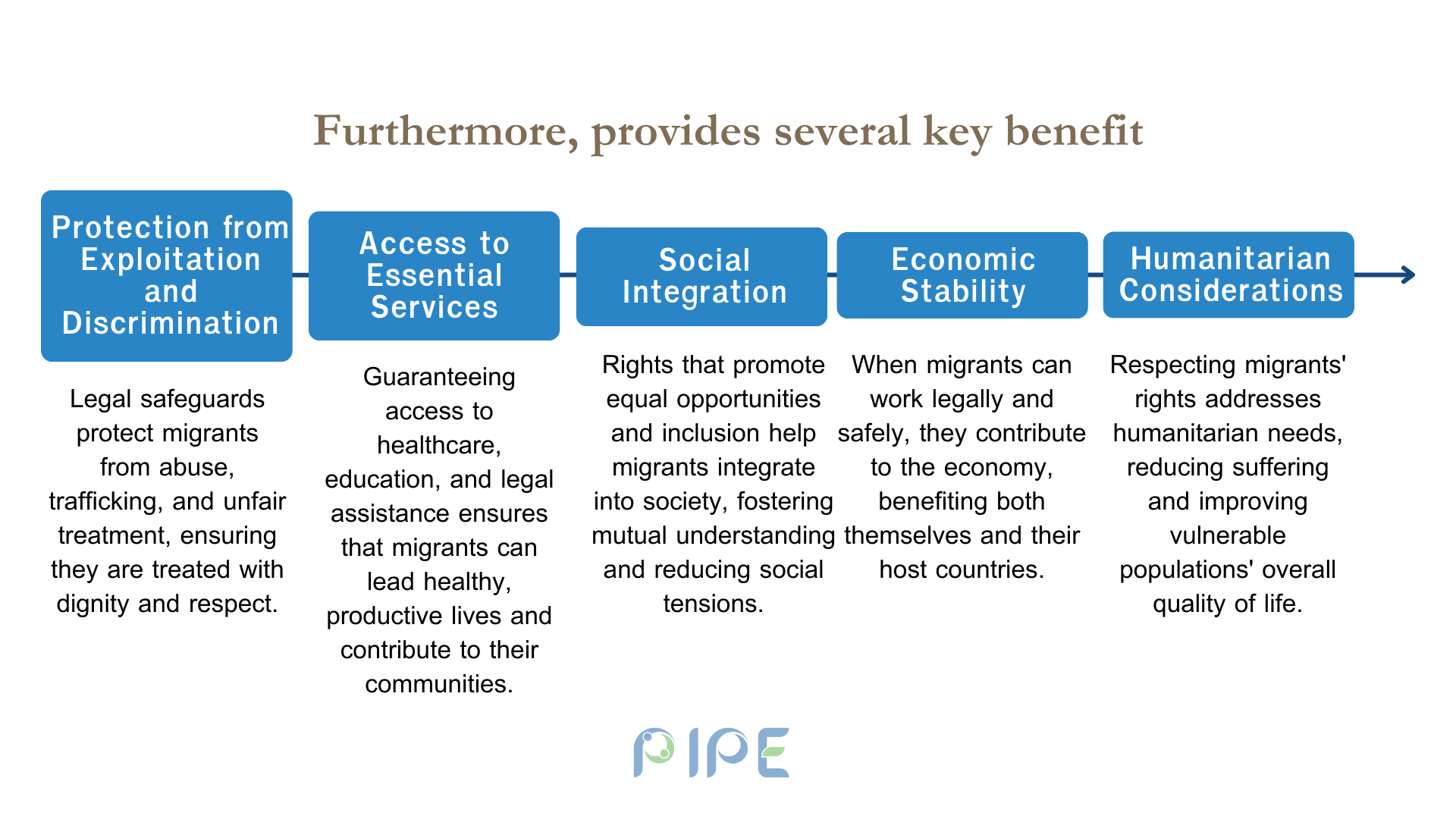
These rights are crucial for creating a fair, just, and stable society where everyone can thrive in stability regardless of origin. For more information, you can read the Toolkit for integration of people with a migrant background.
Democratic citizenship as a mechanism for the inclusion or exclusion of immigrants
Migrants are often excluded from the enjoyment of basic rights, as many human rights are provided by national legislations of States only to their citizens. However, international and European law include non-discrimination clauses regarding the protection of migrants’ rights. Apart from international law’s provisions, migrants present in Europe are protected by legal texts established by two regional international organizations: the Council of Europe and the European Union (EU).
The application of the directive on temporary protection of displaced persons, in cases of mass influx, as an instrument for the displaced persons for the immediate recognition of rights for migrants
The Directive 2001/55/EC of 20 July 2001 on minimum standards for giving temporary protection in the event of a mass influx of displaced persons and on measures promoting a balance of efforts between the Member States in receiving such persons and bearing the consequences thereof was adopted following the crisis in Kosovo. “Temporary protection” means a procedure of exceptional character to provide, in the event of a mass influx or imminent mass influx of displaced persons from third countries who are unable to return to their country of origin, immediate and temporary protection to such persons, in particular, if there is also a risk that the national asylum system will be unable to process this influx without adverse effects for its efficient operation, in the interests of the persons concerned and other persons requesting protection. Apart from providing protection in cases of mass influx, the Directive also reflects the objectives of reducing costs and sharing the responsibility between EU Member States. The first is achieved through the provision of protection of a shorter duration (three years maximum duration) and fewer material benefits to beneficiaries of temporary protection compared to beneficiaries of refugee status, while the second is based on the financial solidarity provided for in Article 24 of the Directive (European Refugee Fund) and the distribution of applicants/ beneficiaries in the Member States of the EU. The Directive has only been applied once, 20+ years after its adoption, following the Russian invasion of Ukraine.
The Human Rights Education for Legal Professionals (HELP) Programme of the Council of Europe offers a 2.5 hours duration course available for free on the CoE HELP e-learning platform, which aims to increase the knowledge of legal professionals and other relevant stakeholders on the practical application of the EU Temporary protection regime.
The right to universal health: Health education and the functioning of public health systems
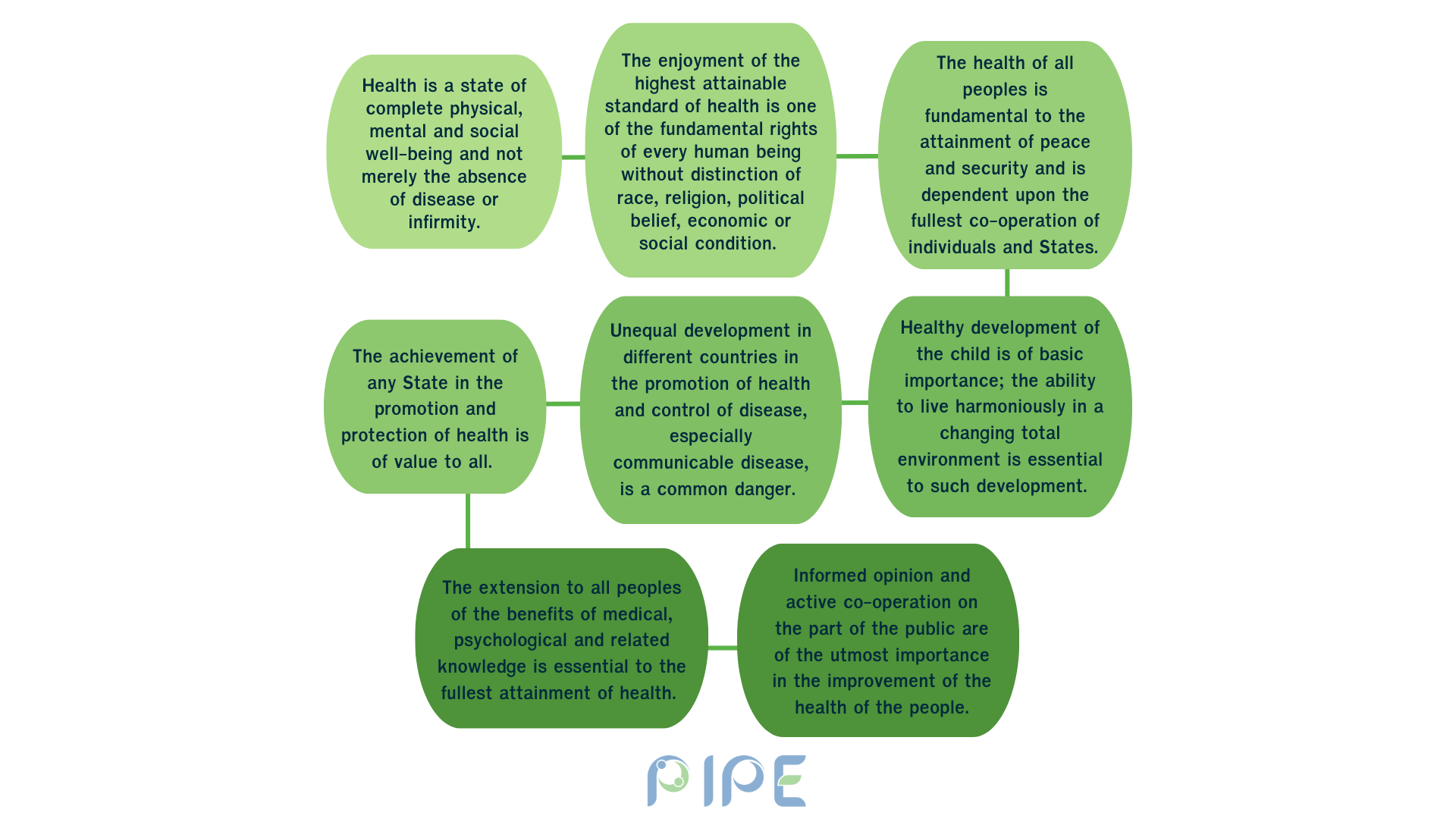
According to the Constitution of the World Health Organization, the enjoyment of the highest attainable standard of health is one of the fundamental rights of every human being without distinction of race, religion, political belief, economic or social condition. The universal right to health is guaranteed by Articles 25 of the Universal Declaration of Human Rights, 12 of the International Covenant of Economic Social and Cultural Rights, 24 of the Convention of the Rights of the Child, 12 of the Convention for the Elimination of Discrimination Against Women, 25 of the Convention on the Rights of Persons with Disabilities, 28 of the Convention on the Protection of the Rights of All Migrant Workers and Members of Their Families and 5 of the Convention on the Elimination of All Forms of Racial Discrimination.
To ensure the effective exercise of the right to protection of health, the Parties undertake, either directly or in cooperation with public or private organizations, to take appropriate measures designed inter alia: 1) to remove as far as possible the causes of ill-health; 2) to provide advisory and educational facilities for the promotion of health and the encouragement of individual responsibility in matters of health; 3) to prevent as far as possible epidemic, endemic and other diseases, as well as accidents’ (art. 11 “The right to protection of health”, European Social Charter).
These provisions also protect migrants because according to the Charter ‘The enjoyment of the rights outlined in this Charter shall be secured without discrimination on any ground such as race, color, sex, language, religion, political or another opinion, national extraction or social origin, health, association with a national minority, birth or another status’ (Article E – “Non-discrimination”).
The right to education: National education systems and the European Higher Education Area
A right is not what someone gives you; it’s what no one can take from you.
Ramsey Clark
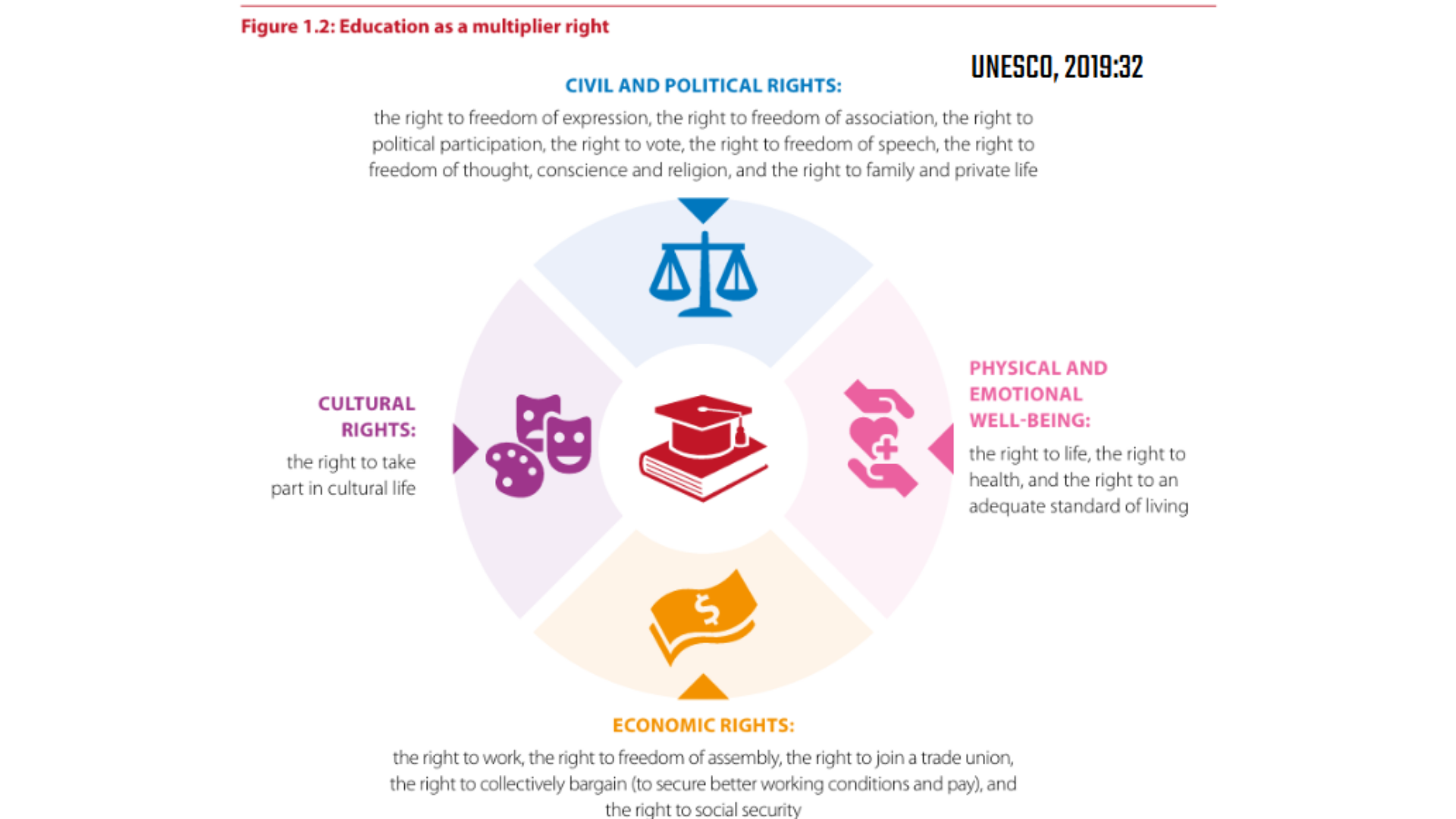
The right to education is protected by Articles 13 of the International Covenant on Economic, Social and Cultural Rights, 24 of the International Covenant on Civil and Political Rights, 28 and 29 of the Convention on the Rights of the Child, 5 of the International Convention on the Elimination of All Forms of Racial Discrimination, 22 of the 1951 Geneva Convention and the UNESCO Convention against Discrimination in Education.
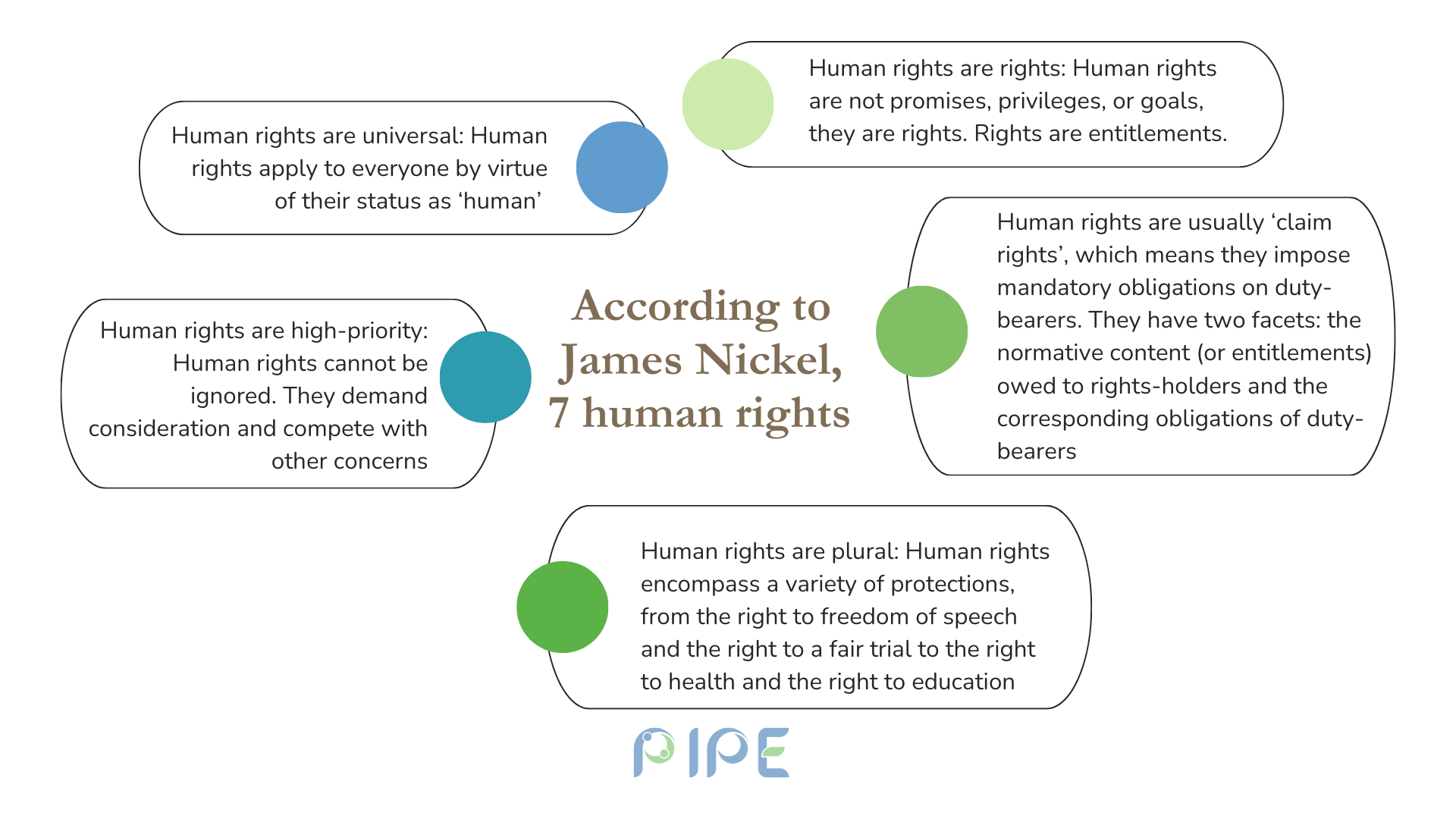
At the European level, it is ensured by the European Convention on Human Rights, the EU Charter of Fundamental Rights, as well as EU Law. Specific provisions under the latter ensure refugees and asylum seekers also have access to education, recognizing its crucial role in integration and human dignity (article 14 of the Charter of Fundamental Rights of the European Union, article 14 of the Directive 2013/33/EU of the European Parliament and of the Council of 26 June 2013 laying down standards for the reception of applicants for international protection and article 27 of the Directive 2011/95/EU of the European Parliament and of the Council of 13 December 2011 on standards for the qualification of third-country nationals or stateless persons as beneficiaries of international protection, for a uniform status for refugees or persons eligible for subsidiary protection, and the content of the protection granted).
The right to work. The problematic labour inclusion of migrants (migrant women and care work)
The right to work is provided by Articles 23 of the Universal Declaration of Human Rights, 6 and 7 of the International Covenant on Economic Social, and Cultural Rights, and 5 e, i, and ii of the Convention on the Elimination of Racial Discrimination. The Convention on the Protection of the Rights of All Migrant Workers and Members of Their Families is of direct relevance to migrant workers, but most host countries have not ratified it.
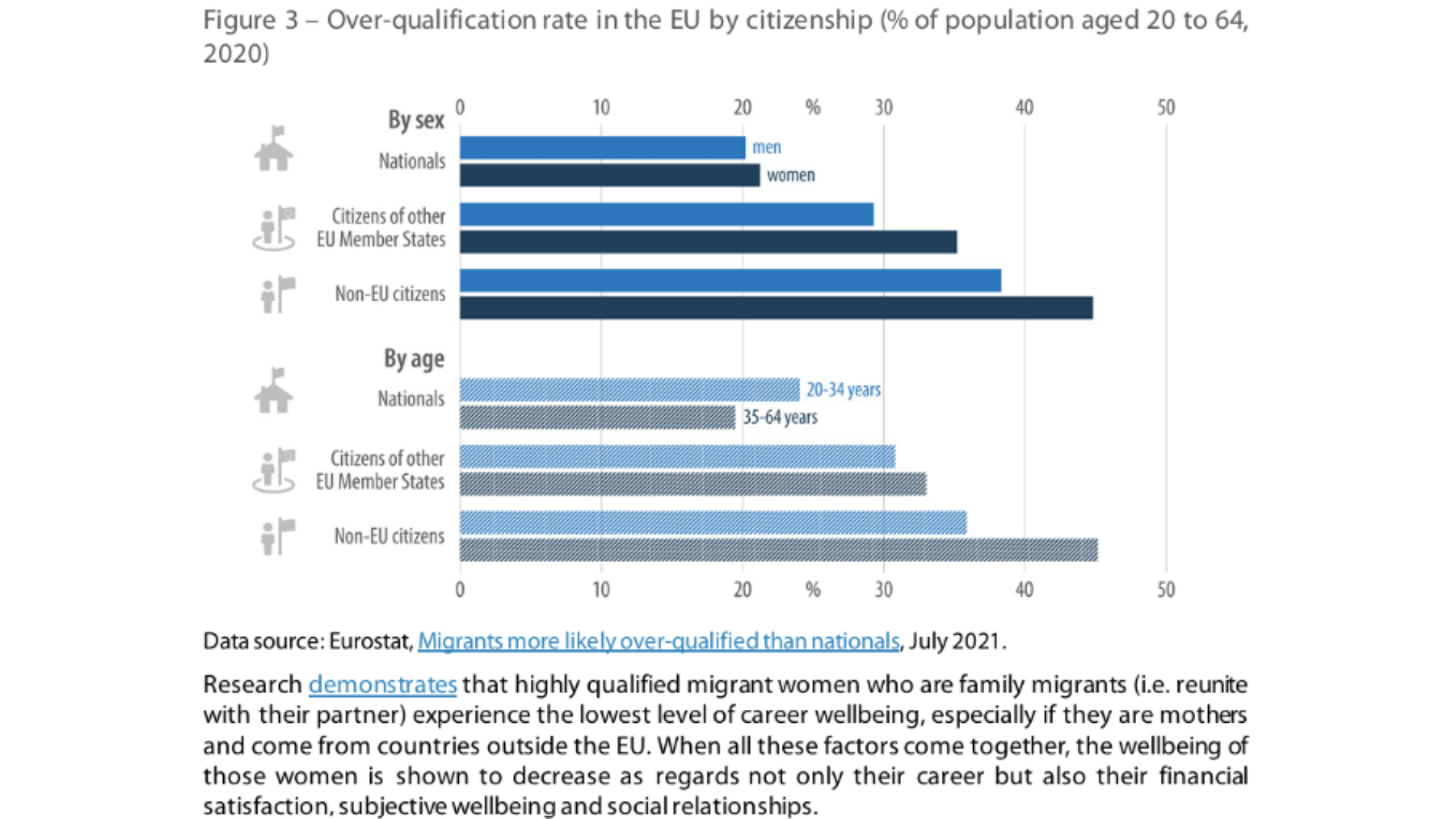
Access to the labour market and relevant conditions for recognized refugees are provided by Article 17 of the 1951 Geneva Convention. EU law regulates this issue not only for recognized refugees (Article 26 of the Directive 2011/95/EU, but also for asylum seekers (Article 15 of the Directive 2013/33/EU. Access to the labour market in the host country is of fundamental importance for asylum seekers and refugees who must be able to provide for themselves and their families and maintain their dignity. While access to the labour market facilitates social integration, long-term dependence on state funding through allowances can be demoralizing. The prohibition to work condemns individuals to idleness, or, in practical terms, if they are deprived of this right, they are exposed to illegal employment and exploitation. Furthermore, in addition to granting access to the labour market, states should take measures to facilitate asylum seekers and refugees to find work. In this regard, particular attention should be paid to vocational training and providing employers with appropriate information and benefits to hire them.
The right to family reunification
How can one integrate fully into one’s new host country without knowing that one’s spouse or children are safe? The first member of a family to have settled in the host country will assist and guide subsequent arriving members of the family in the integration process, thereby facilitating the government’s work (…) Restrictive laws prevent families from reuniting concluded that: immigrants and refugees, who are lawfully residing in a state, should be able to reunite with their family members as soon as possible, without going through laborious procedures. Being denied the human right to be with one’s family makes life more burdensome – and integration much more difficult.
Council of Europe Commissioner for Human Rights, Human Rights Comment “Restrictive laws prevent families from reuniting” (2 February 2011)
The right to family reunification is one of the aspects of the right to respect family life, which is a fundamental right provided by international, European, and EU law. This right is enshrined in various international and European instruments, including the Universal Declaration of Human Rights, the International Covenant on Economic, Social, and Cultural Rights, the Convention on the Rights of the Child, and the European Convention on Human Rights. Asylum seekers, recognized refugees, and legal immigrants are entitled to specific rights regarding family reunification in Europe. The right to family reunification for asylum seekers is enshrined in the Dublin III Regulation and will also be provided by the Regulation on Asylum and Migration Management of the new EU Pact on Migration and Asylum, which is expected to start being implemented in 2026.
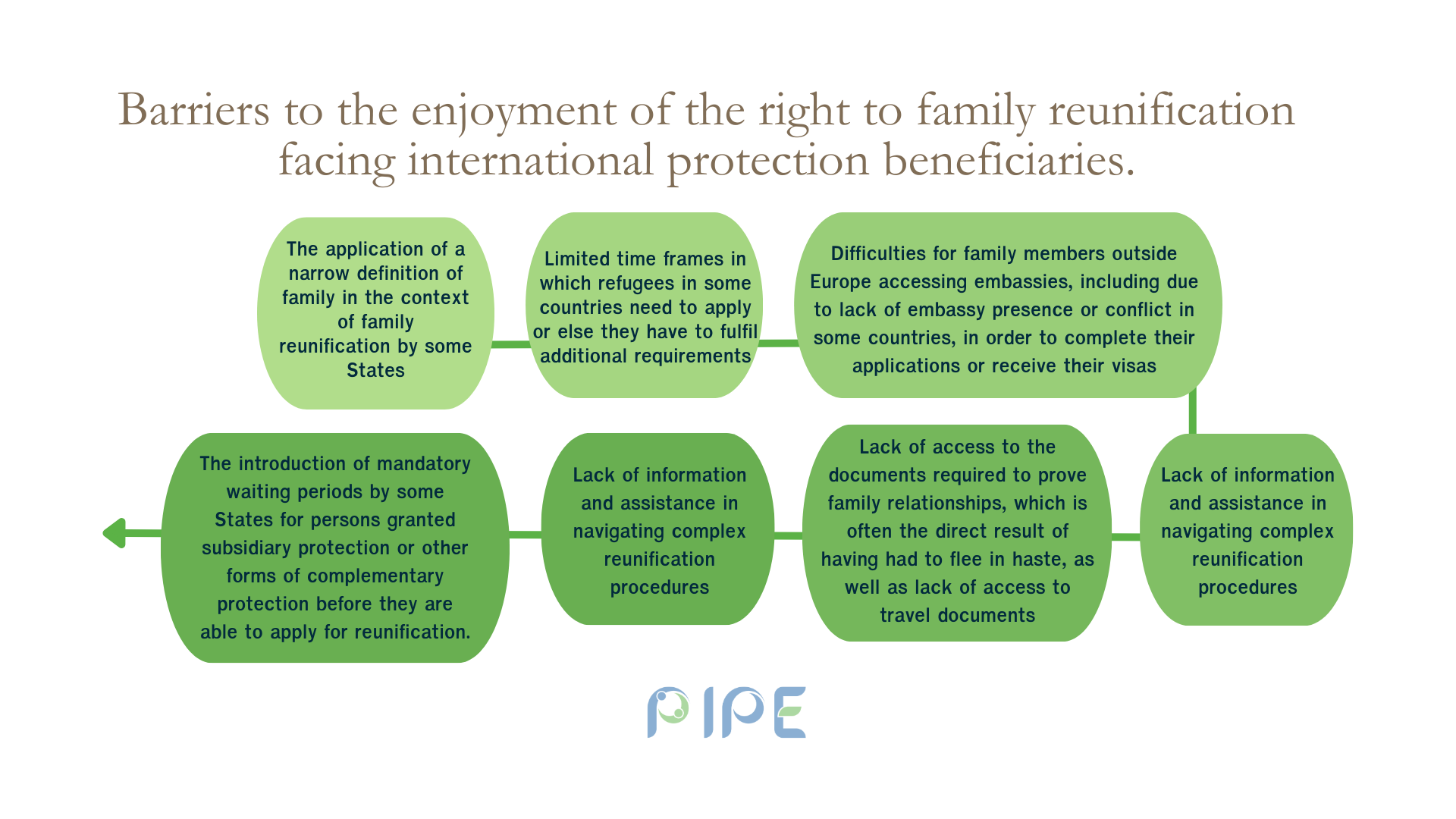
Asylum seekers are not allowed to bring family members from third countries into the European Union. However, they have the right to be reunited with family members who are already present in other member states. Only couples and their minor children are considered family members. The right to family reunification for recognized refugees and legal immigrants is provided by Council Directive 2003/86/EC of 22 September 2003 on the right to family reunification. EU Member States may allow entry and residence for (a) dependent first-degree relatives in the direct ascending line of the sponsor or their spouse, and (b) adult unmarried children of the sponsor or their spouse who cannot support themselves due to health issues. They may also allow entry for the unmarried partner in a long-term, proven relationship, or for a partner in a registered partnership. Evidence such as a common child, prior cohabitation, or partnership registration should be considered. Family reunification with additional spouses in polygamous marriages is prohibited if one spouse is already residing in an EU Member State. EU Member States can limit family reunification for minor children of an additional spouse and the sponsor. To support integration and prevent forced marriages, they may require both the sponsor and spouse to be at least 21 years old before joining. They may also permit reunification of other dependent family members of a refugee. For unaccompanied minor refugees, Member States must allow entry and residence for first-degree relatives in the direct ascending line and may allow entry for a legal guardian or other family members if no direct relatives are found.
The exercise by migrants of the rights of assembly, demonstration, and association. (The relevance of the right of association for the integration of migrants)
The rights to freedom of peaceful assembly and association are recognized in numerous international instruments. The International Covenant on Civil and Political Rights stipulates that states must respect the rights to assembly and association and ensure that all individuals within their territory and jurisdiction can exercise these rights without distinction of any kind. This is to be achieved through the enactment of legislation, the provision of effective remedies, and the implementation of effective enforcement mechanisms (article 2). The Committee on Migrant Workers (CMW) has identified a need for states to facilitate the formation of self-organised groups among migrant workers, regardless of their migration status. (Committee on the Protection of the Rights of All Migrant Workers and Members of Their Families, general comment No. 2, 28 August 2013). Article 15 of the 1951 Geneva Convention regulates the right of refugees to form non-political and non-profit-making associations and trade unions. Additionally, Article 11 of the European Convention on Human Rights, which concerns the freedom of assembly and association, is also applicable to migrants.