You will find in this Chapter:
What should education be for?
What does it mean to ‘align with the common good’, in the framework of an emancipatory educational relationship?
What is the role of the teacher in this process and how should he/she deal with it?
How does this process begin? Where does it start?
Who is the learner who summons us to this relationship?
How far have/have the above ideas developed in the field of language teaching?
Which methodological approach or didactic approach seems the most suitable, in view of the above?
What contents, competences or skills can be the referents for the design of activities that structure the pedagogical relationship?
What type of resources should be used?
One of the fundamental differences between myself and the fatalistic intellectuals – sociologists, economists, philosophers or pedagogues, it doesn’t matter – is that, yesterday as today, I never accepted that educational practiceshould be limited only to ‘reading the word’, to ‘reading the text’, but should include ‘reading the context’, ‘reading the world’. (Paulo Freire)
Bubble question
What training and critical awareness do language teachers need to have? This question as a space for reflection invites us to look into the mirror of the other, to imagine language learning as a vehicle of singular transformation – emancipation – and plural – alignment with the common good. Recalling that the Greeks had two words in this regard, for the person who aligns his or her singular emancipation process with the common good they called politikos, and for the person who prioritises his or her personal interest over the community they called idiotas. The singular transformation and its alignment with the common good -koinos- calls us to think about how the teaching and learning of a language can mean an intercultural projection, political co-responsibility and social commitment, an openness to intercultural synergies in relation to diversity.
What selection of resources and/or activities and experiences of meaningful learning do we need? What do we understand by meaningful learning? What contents do we imagine to be meaningful for a critical training and awareness of the language teacher? Following the narrative of Nuccio Ordine in his manifesto on the Utility of the Useless, if aliens were to arrive at this little blue marble floating in the universe, attached to the principle of utility, perhaps we would present humanity from the urinal but, surely, other creations come to mind that, equally, do not represent it with greater dignity.
What should education be for?
Any process of education (and the process of teaching languages to immigrant populations is one) always involves a project of subjectivation, not just learning. Learning is something that always happens, per se, in any human being: if these migrant populations were left alone in the host national contexts, would they not end up learning the rudiments of the language, even if they did not want to?
Therefore, what is important, when we consider undertaking any educational process, is not the question of how to promote more and better certain learning (in this case, learning the language), but how to contribute to this process of subjectivation that calls for education (how to become a subject, an agent of oneself, within the framework of the host culture and state).
This is not the time and place to enter the theorisation of the conceptual universe behind the above statements. Suffice it to point out that this project of subjectivation that calls for education is, in essence, to contribute to the subjects being educated being able to make good use of the freedom inherent in their dignity as human beings.
Managing one’s own freedom is a complex aspiration that has essentially been redefined in two ways: the freedom to be able to be and the freedom to want to be – Some have referred to this as ‘negative’ freedom and ‘positive’ freedom. These should not be interpreted as polar extremes, but as two qualitatively different kinds of freedom-. The freedom to be implies, among other things, having the means of life that facilitate access to options and alternatives, and this always implies a more egalitarian distribution of the material goods that enable subsistence and well-being, equality in recognition and equality in the possibility of participating in community decisions. In short, it brings us back to the idea of equality and, behind it, to the pursuit of social justice.
The role of education, understood then as a lever of social justice (a political tool), is to contribute to developing in learners the capacities (competencies) that enable them to access, within the framework of complex societies, to the distribution of goods (mainly through a qualification that allows access to the labour market) and to a homologated status of citizenship (mainly through a socialisation based on the recognition of respective identities and an understanding of the structures of citizen participation).
The freedom to want to be is more related to processes of ethical self-construction. It implies having constructed oneself not only with a determined, freely chosen identity, but having done so within the framework of a problematising analysis of the legitimate moral options available and having internalised those that are considered most appropriate to serve one’s own ends and the common good. This second aspect of what emancipatory development implies is, perhaps, the most properly educational and, beyond educational policies, looks directly at the way in which the educational relationships that allow each learner to become a subject are shaped and developed.
Education, therefore, can be understood as a process of ethical self-construction, essentially emancipatory, in each cultural context, induced and supported by the presence of an educating agent. The ultimate result of this process should be the transformation of the subjects being educated, in such a way that they are able to define their own good (i.e. ethically oriented) life project, aligned with the common good.
What does it mean to ‘align with the common good’, in the framework of an emancipatory educational relationship?
In the 21st century, it is essential to establish links between what happens in society and what is taught in the classroom. In other words, we are committed to a humanist vision of education in which the social context is always considered.
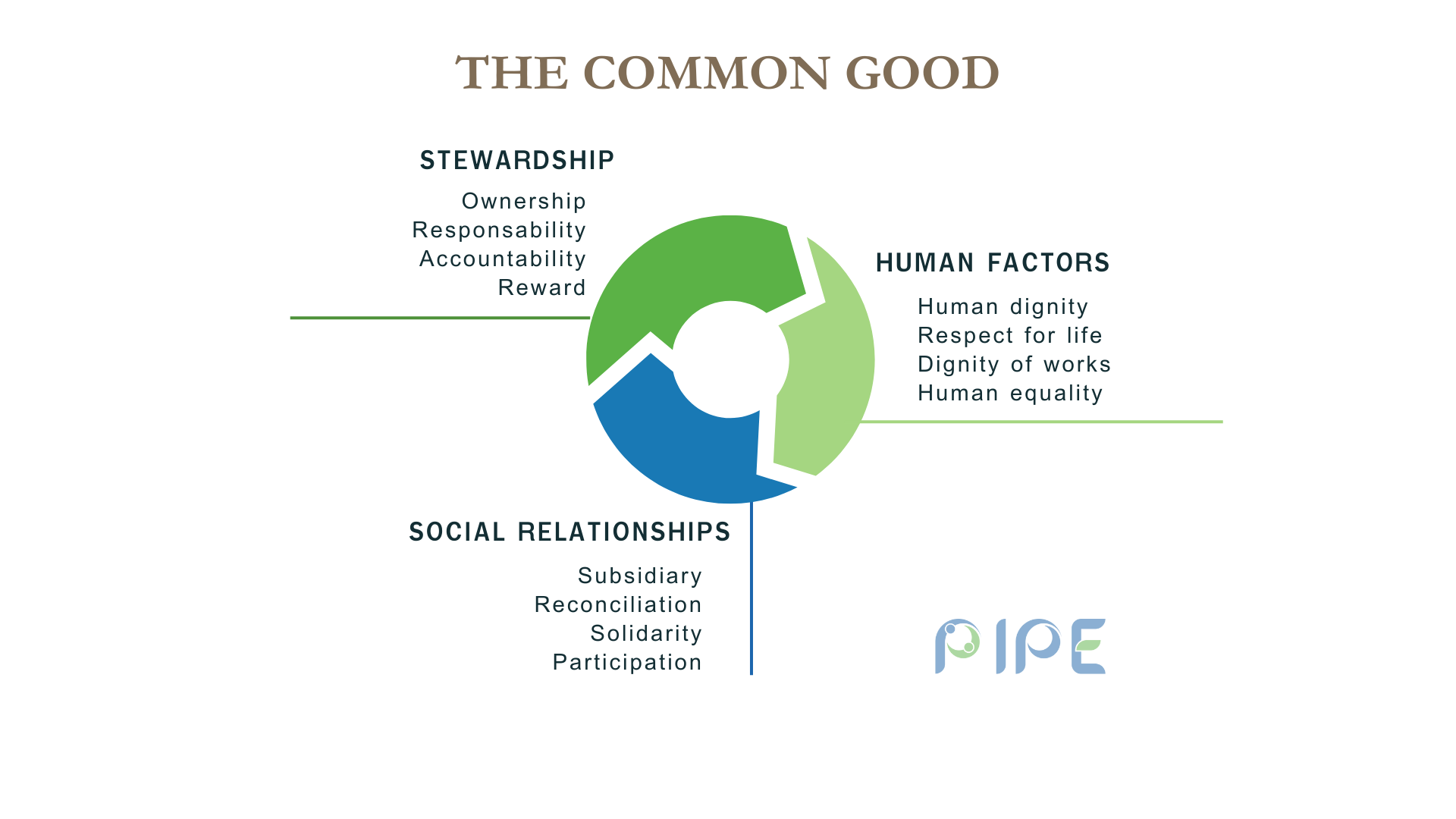
Education is never neutral: it is conditioned by social, cultural, economic and political circumstances. Education is always based on a particular worldview of social life, responds to interests and pursues objectives. Based on this consideration, there are pedagogies that seek to promote conformist subjects and tend to the reproduction and permanence of existing structures. These are conservative pedagogies, abstracted from the surrounding realities, which tend to emphasise the introjection of predominant values, seek to maintain the status quo and, in essence, seek to limit themselves to training good workers.
In the face of these, critical pedagogies (with which this proposal is aligned) emerge, interested in developing subjectivities committed to social transformation, justice and equality. Critical pedagogies aim to develop pedagogical alternatives that consider the experiences and realities of learners, stimulate their critical spirit and promote the development of attitudes and skills that enable them to commit and act in favour of their own emancipation and social justice.
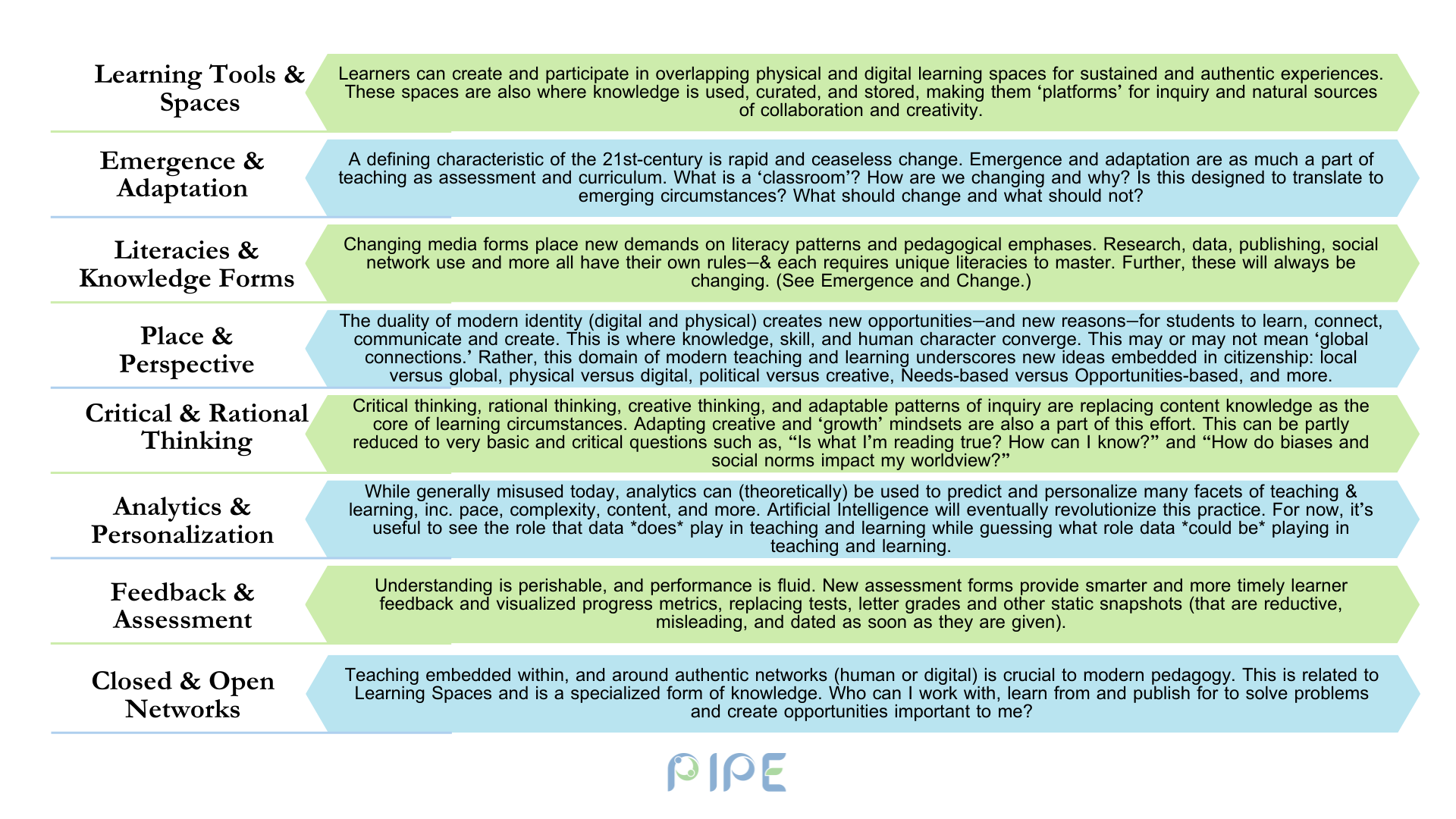
One of the key concepts of this educational current is that of critical consciousness. It consists of acquiring a profound knowledge of the world, perceiving the existing social, political and economic contradictions, and thus acting against the oppressive elements of reality.
What is the role of the teacher in this process and how should he/she deal with it?
To facilitate the emergence of critical consciousness, the role of the teacher is fundamental. Not only to point out those aspects that the learner should problematise (the moral options available) but also to encourage him or her to do so. In this process, the analysis of the ethical aspects is as important as the aesthetics of the educator, which must be the result of previous work on himself/herself, which has allowed him/her to internalise and understand his/her role as an educator.
Critical pedagogy conceives teachers as transformative intellectuals, as opposed to the conception of the teacher as a mere executor of the curriculum. Thus, teachers are seen as independent, reflective and critical professionals, aware of the political and social implications of their work (i.e., in turn, as teaching subjects). They are, in short, active agents committed to the construction of the curriculum in their classes, seeking to foster the capacity and critical awareness of the student-subject, always starting from a position of empowerment and emancipation of their students.
How does this process begin? Where does it start?
The fundamental gesture, from which a pedagogical link is established that can lead to a relationship scheme compatible with the idea of a critical pedagogy, always starts from recognition. The idea of recognition is complex and, in essence, requires the renunciation of the conception of the educational relationship understood as an asymmetrical relationship, dominated by the educator, understood as an agent transmitting a predetermined cultural selection (a curriculum), decontextualised, alien to the interests and concerns of the learner and which, above all, is not questioned.
On the contrary, the idea of recognition as an essential basis in any authentically educational relationship (and even more so in the context of language teaching to migrants), requires conceptualising the educational relationship as a meeting of two subjectivities (that of the teacher and that of the learner) in development (the process of subjectivation is never complete) which are committed, each in their own role, to the process. It is not possible to develop a pedagogical process aimed at generating a critical conscience if, first, this encounter and recognition does not take place.
Who is the learner who summons us to this relationship?
Where does he/she come from? Why does he/she come? What is his/her background? What is he/she like? What does he/she believe in? What does he/she want to do with his/her life? These questions, and others like them, are the ones that should preside over and underlie the pedagogical relationship that is established between educator and learner. Asking these questions, moreover, should not be the result of a merely ‘informative’ interest (collecting data), aimed at ‘better adjusting the curricular proposal’ (a kind of initial diagnostic evaluation). On the contrary, what should motivate these and other questions should be a genuine and authentic interest in knowing and understanding our interlocutor. This interest represents the essential gesture of welcome that forms the basis of what is known as the pedagogy of hospitality.
This hospitable relationship also involves asking oneself, the educator, who am I in this relationship? Who do I want to be? How do I want to be in this relationship? Why am I in it? What do I want? What do I believe about migrants? These and other reflections must also be made explicit within the framework of the relationship, generating a space of mutual recognition, of reciprocal understanding that allows the foundations of an emancipating pedagogical relationship to be established: a horizontal relationship, which is built on dialogue, seeking a genuine understanding of the other.
This ‘openness’ to the other, seeking their essential recognition, does not imply uncritical affirmation of the other (unconditional acceptance of their beliefs and positions), but can and should sometimes lead to a critical and problematising dialogue that forces the other to rethink issues or aspects that can and should be questioned. In other words, what we are talking about here is not an indulgent, easy pedagogy, oriented towards always overprotecting the learner. Rather, it is a committed pedagogy, which accepts the other in his or her actual being, but which is also committed to his or her transformation.
The role of the teacher/educator in this sense should be very similar to that of a cultural ambassador, of one’s own culture, the welcoming one, towards the immigrant subject, representative of another cultural reality. The educator, with the refinement and respect of an ambassador, must show his or her values and beliefs, without trying to impose them, but simply to problematise them, explain them and reinterpret them in the light of the viewpoint of the immigrant teacher, who comes from another cultural reality. In no case should this relationship be conceived as a process of cultural indoctrination or of inducing a process of replacing one’s own beliefs and values with those of the host culture (or those of the teacher/educator). Rather, the way to understand the complex relationship between the values and beliefs of the educator and those of the learner is what Claude Magris (1999) tries to depict in his essay ‘Teachers and Learners’.
‘The master is such because, while affirming his own convictions, he does not want to impose them on his disciple; he does not seek followers, he does not want to form copies of himself, but independent intelligences, capable of going their own way. Moreover, he is a master only insofar as he knows how to understand what is the right path for his pupil and knows how to help him to find it and to follow it, not to betray the essence of his person’. A true teacher never allows himself to be carried away by ‘the rhetoric of transgression so dear to banal spirits, who believe they are asserting their own originality by throwing rubbish out of the window just because a label forbids it’, and knows how to treat his pupils ‘without haughtiness and without regard, correcting them and being corrected by them, without seeking the false confidence that prevents such a relationship’. ‘To have real teachers is an extraordinary good fortune, but it is also a merit, because it presupposes the ability to know how to recognise them and to accept their help; not only giving, but also receiving is a sign of freedom, and a free man is one who knows how to confess his weakness and take the hand that is offered to him’. Claudio Magris. «Maestros y alumnos». Utopía y desencanto – Historias, esperanzas e ilusiones de la modernidad (Utopía e disincanto. Storie, speranze, illusioni del moderno, 1999). Barcelona: Anagrama; 1999; 364 pp.; col. Argumentos; trad. de J. A. González Sáinz; ISBN: 84-339-6148-9.
How far have/have the above ideas developed in the field of language teaching?
In the field of foreign language teaching and learning, critical pedagogy is a more recent phenomenon than in general education, although there is an increasing number of studies and educational practices that fall under the umbrella of critical pedagogies. Critical pedagogy invites language teachers to make explicit in the classroom the connections between language and its wider social context, thus exploring the socio-political implications of language education and knowledge production.
In applied linguistics and sociolinguistics, the term ‘critical’ refers to types of approaches that question prevailing arguments and perspectives: they take a sceptical view of assumptions and ideas that have become natural. One focus of critical research in language education in recent years has been to examine the influence of neoliberalism – the latest mutation of capitalism – on foreign language teaching and learning.
One of the most obvious neoliberal effects is the widespread conception of language from a purely instrumental point of view, as an economic resource or a tool for work or social advancement. The impact of neoliberalism is also visible in the conception of learners as entrepreneurs and consumers, and of teachers as mere providers of language skills. Moreover, the neoliberal nature is very much present in language textbooks, which emphasise individualism, entrepreneurship and consumerism in their content and activities, as studies on teaching materials for English and also for Spanish as a foreign language show.
Which methodological approach or didactic approach seems the most suitable, in view of the above?
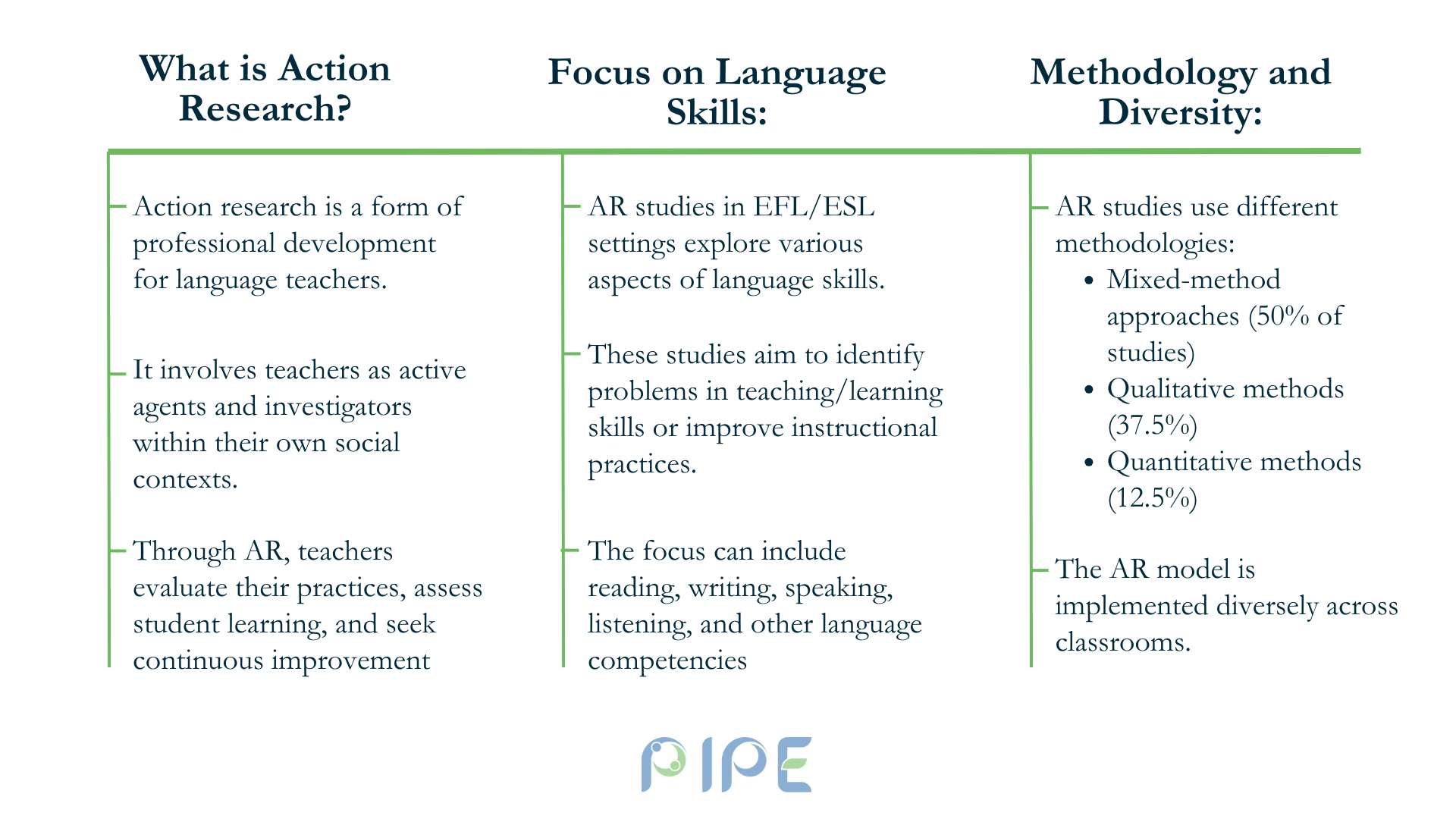
Any physical framework and any methodological format can be valid, if it is done from a dialogical, rather than horizontal, position, based on recognition. However, critical pedagogy’s conception of counter-hegemonic and transformative teaching fits perfectly with the educational proposal of action research. Action research conceives the teacher as a researcher, thus breaking with the traditional separation between theory and practice in the field of education.
It consists of understanding teaching as ‘a process of research, a process of continuous search’, for the improvement of educational practice. It is a subjective and interventionist approach to the educational process.
Action research is a method which, with different variants, has been applied in general education since at least the second half of the 20th century, but its impact in the field of foreign language teaching is much more recent. In the field of teaching a host language to immigrants, recent action research aimed at developing critical intercultural competence should be highlighted.
A very appropriate way of establishing relations between classroom teaching and what is happening in society is using real texts dealing with current issues; social literature, selected filmography, analysis of works of art, plays… In this way, students will be encouraged to reflect on the contents and share criteria collectively, to improve their critical capacity. This favours students’ awareness of the social transformations that need to be carried out in the world and encourages them to assume an active and critical role as active citizens of the 21st century. Consequently, emphasis is placed on the transformative power of education, and therefore, in addition to the importance given to didactic aspects, the role of education as a socialising tool is highlighted.
What contents, competences or skills can be the referents for the design of activities that structure the pedagogical relationship?
To get to know different social realities, it is necessary to base teaching on social competences among which communication, cooperation, leadership, influence and conflict resolution stand out.
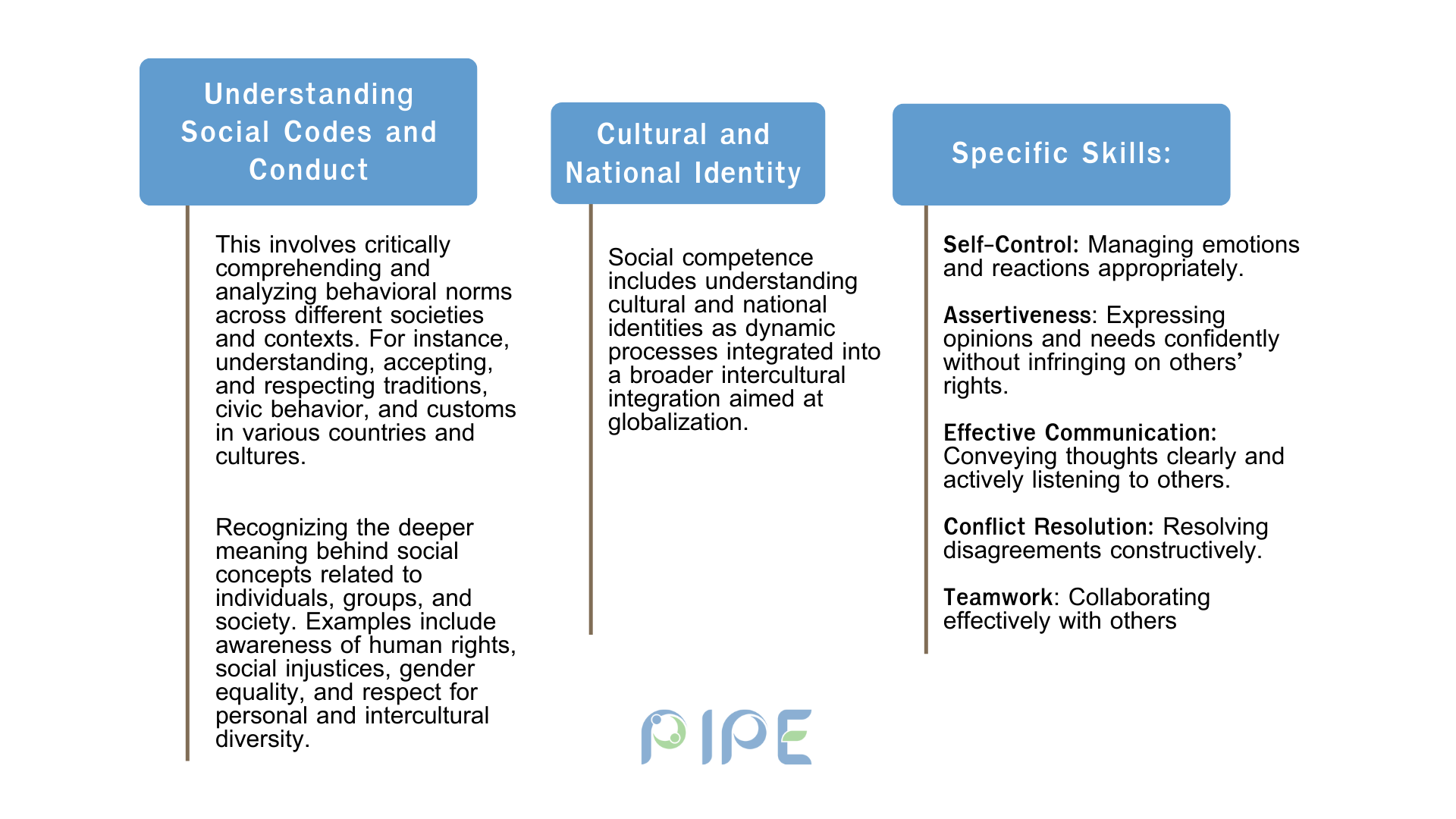
At all times, students should be invited to delve into the socio-political and cultural context in which the educational process takes place to foster a relationship between what is taught in the classroom – or in other pedagogical meeting places – and what is happening in society. This goes hand in hand with education for global citizenship, which implies openness to social realities other than one’s own and awareness of individual responsibility in different social aspects, including social justice.
An educational proposal based on these searches helps to become aware of the social inequalities that exist today, to make visible that many people are deprived of rights and of being active citizens in this globalised world, to pay attention to the people who are currently oppressed and to all forms of social injustice.
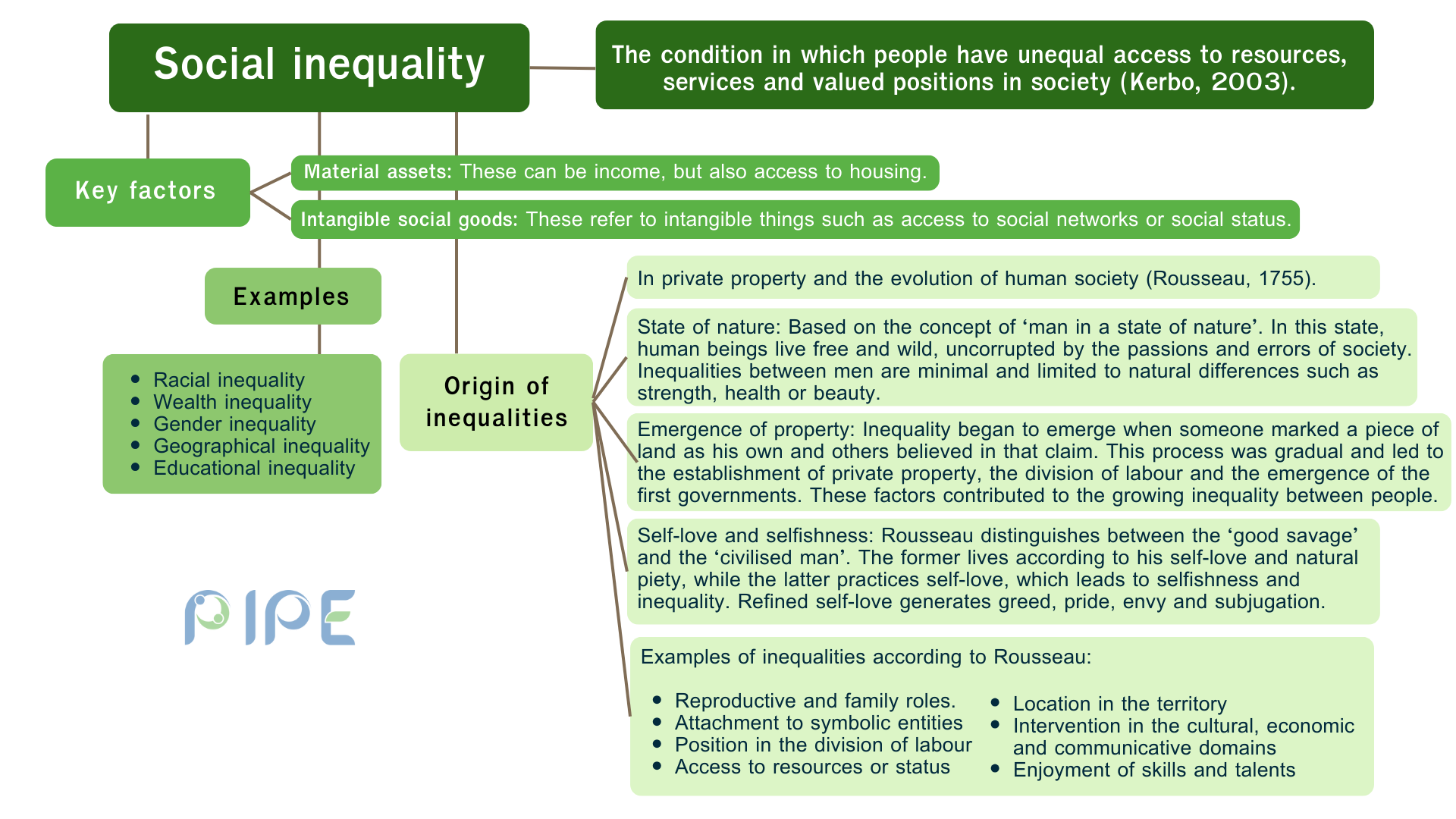
There is thus an opportunity to design activities that enable students to advance as global citizens while at the same time deepening the importance of interculturality.
When teaching language classes, when teaching a new language, we consider that it is essential to work with these resources that allow us to introduce social issues that help students to deepen their understanding of different realities and different socio-cultural issues, as well as to share their own life experiences, their journey, their uprooting, their expectations, their cultural heritage. This will give us the opportunity to work with key concepts for social research, such as power, ideology and discourse. These types of activities and resources will allow us to delve deeper into the context to which they refer and to establish relationships between the discourse used and the social reality in which it is framed.
Establishing relationships between text and context (when we talk about text we refer to any chosen learning tool, readings, writings and/or shared viewing), helps students to consider assuming an active social commitment that contributes to transforming unjust social realities.
The power relations present in the chosen resources or activities, such as the exploitation of countries in the South by countries in the North or the power relations between women and men, must be deconstructed. This is related to the fact of promoting cross-cutting themes in the classroom such as those related to cultural aspects or gender issues (the reality of countries in the North and South, armed conflicts, the struggle for territories, forced displacement, the situation of refugees, the unfair distribution of wealth, the ecological crisis, discrimination based on race, religion or gender… themes related to development cooperation or human rights) as these themes contribute to making students aware of shared realities, common histories in diverse geographies. And also, when necessary, it facilitates the questioning of morally unacceptable beliefs, practices or cultures, from a basic human rights perspective.
What type of resources should be used?
Is it important to choose textbooks specifically aimed at a canonical knowledge of the language or should communicative competence take precedence, based on the underlying problematic issues that underpin the educational relationship?
The resources used and recommended should not only improve the students’ level of acquisition of a new language by encouraging the study of specific vocabulary related to intercultural aspects, but also favour the acquisition of social competences such as cooperation between people or communication; empathy and respect for diversity are also enhanced. Multimodal texts help students to observe how meanings are expressed through different modes of communication. In this way, forms of literacy different from traditional grammaticalization (morphology and syntax without semantics) are promoted, by including in teaching the use of images and other modes of communication and transmission of educational content close to the reality of the learner and provoking new centres of interest and motivation. Consequently, it is emphasised that language evolves because of social changes, i.e. language is a system of meanings which enables people to select from among different options, considering the aims of communication which are always influenced by the social context.
We believe it is essential to base teaching on social content so that pupils can broaden their view of social realities other than their own and can work on skills related to respect for diversity.
Every multimodal text, every artistic-cultural creation, fulfils a symbolic function closely linked to the process of shaping cultural memory, in that it not only creates information, but is also capable of storing, saving and accumulating it in its structure throughout its uninterrupted dialogue with culture; thus, significant texts and other resources become cultural symbols and the foundational memory of a shared culture.