The concepts of the Anthropocene, Symbiocene, and Solastalgia offer profound insights into our relationship with the environment and provide a powerful lens through which to approach language learning. By integrating these concepts into language instruction, educators can foster emotional competencies, critical thinking skills, and a sense of responsibility for the planet.
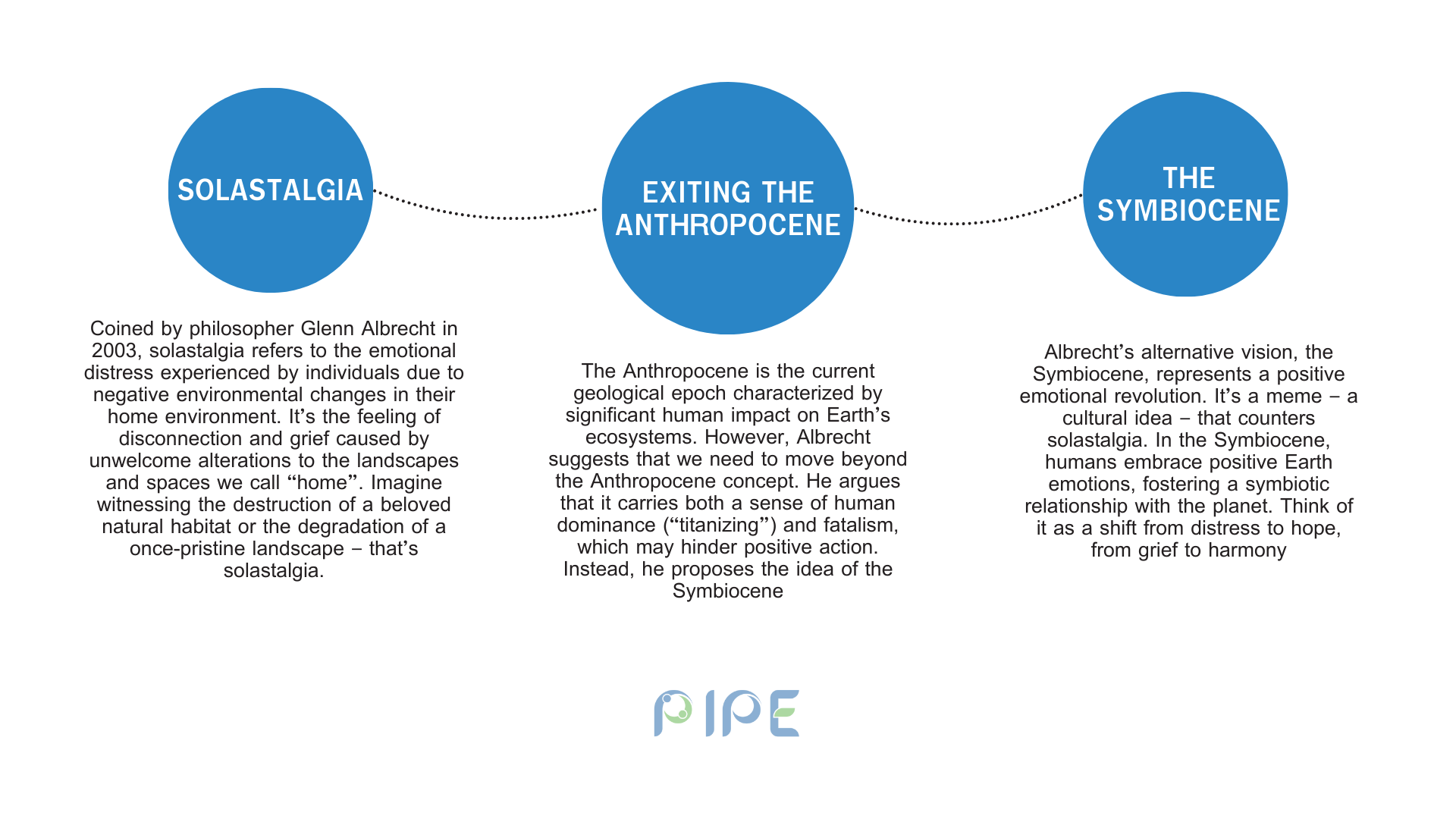
The Anthropocene, often referred to as the “Age of Humans,” is a proposed geological epoch marked by the significant impact of human activities on Earth’s ecosystems. It highlights the unintended consequences of our actions, such as climate change, pollution, and biodiversity loss. In language learning, exploring the Anthropocene can involve examining the vocabulary and discourse surrounding these issues, analysing how different cultures and languages frame environmental concerns, and engaging in critical discussions about our role in shaping the planet’s future.
In contrast, the Symbiocene offers a more hopeful vision for the future. It envisions a world where humans live in harmony with nature, recognizing the interconnectedness of all living beings and working towards mutual flourishing. The Symbiocene emphasizes the importance of cooperation, reciprocity, and ecological responsibility. In language learning, exploring the Symbiocene can involve learning about sustainable practices, exploring indigenous knowledge systems, and engaging in projects that promote ecological restoration and social justice.
Solastalgia, a term coined by environmental philosopher Glenn Albrecht, describes the feeling of distress and loss caused by environmental change. It is a form of homesickness that one experiences while still being at home, as familiar landscapes and ecosystems are transformed by human activities. In language learning, exploring solastalgia can involve reading literature and poetry that express grief and loss for the environment, discussing the emotional impact of climate change, and engaging in creative projects that explore ways to cope with and heal from environmental trauma.
Integrating these concepts into language learning can be done in a variety of ways. Teachers can incorporate texts, videos, and other resources that explore the Anthropocene, Symbiocene, and Solastalgia into their lessons. They can also facilitate discussions and debates about these issues, encouraging learners to share their perspectives and develop critical thinking skills. Additionally, teachers can engage learners in project-based learning activities that address environmental challenges and promote sustainable practices.
By exploring the Anthropocene, Symbiocene, and Solastalgia, language learners can develop a deeper understanding of the complex relationship between humans and the environment. They can also cultivate emotional competencies such as empathy, compassion, and a sense of responsibility for the planet. This, in turn, can empower them to become active participants in creating a more sustainable and just future.