You will find in this Chapter:
Environmentally based Materials and Resources, for languages learning
English language teachers (ELTs) Professional Development
Environmental Education in Actions
How to be more sustainable while teaching
Environmentally based Materials and Resources, for languages learning
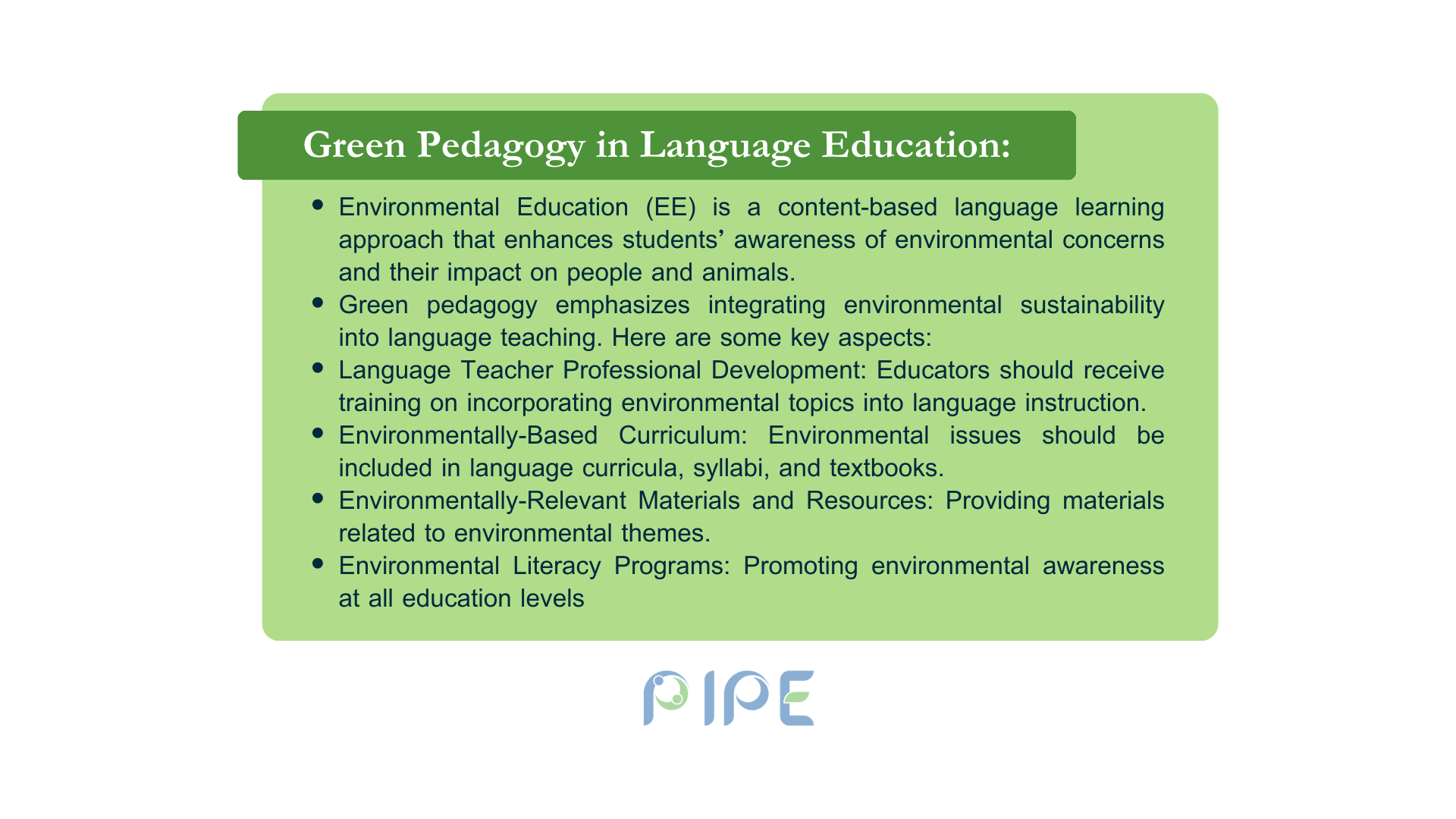
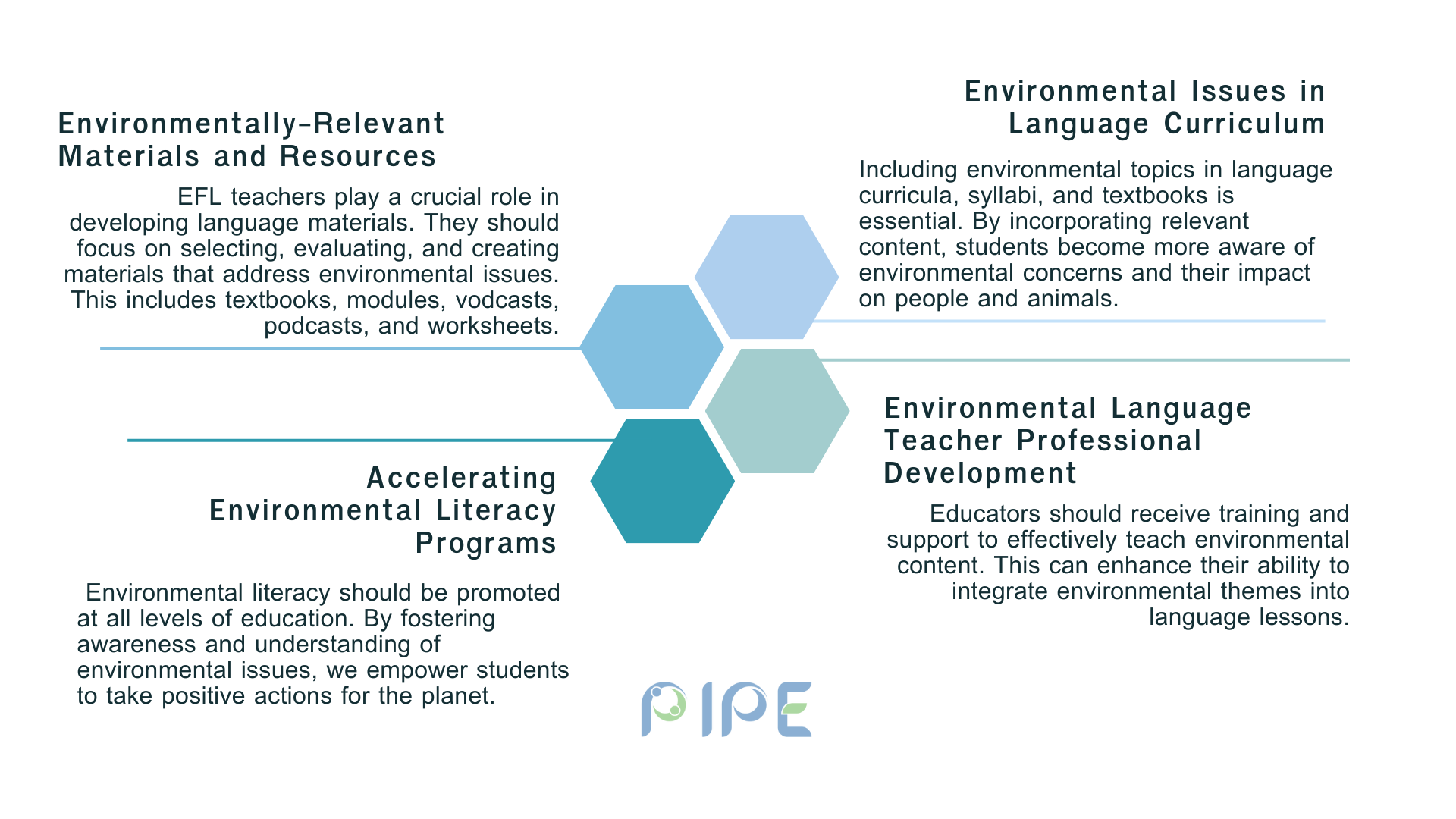
Integrating environmentally based materials and resources into language learning can create a dynamic and engaging learning experience that fosters environmental awareness and language acquisition simultaneously. By incorporating authentic texts, real-world data, and multimedia resources that address environmental issues, educators can empower learners to develop critical thinking skills, expand their vocabulary, and become informed advocates for a sustainable future.
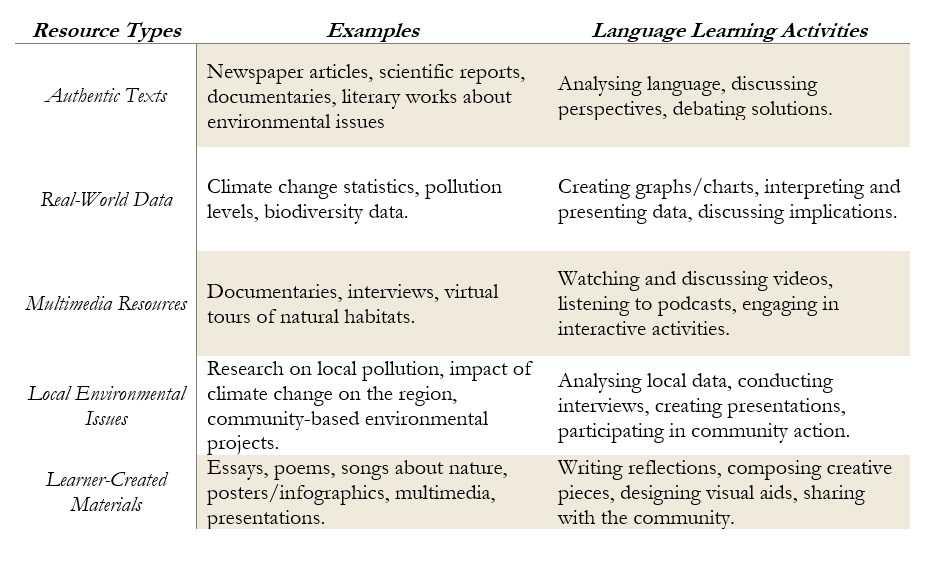
One effective approach is to utilize authentic texts that address environmental topics. Newspaper articles, scientific reports, documentaries, and literary works can provide learners with exposure to a wide range of vocabulary and discourse related to environmental issues. Analysing the language used in these texts can help learners understand the nuances of environmental discourse and develop their own critical perspectives. Additionally, engaging in discussions and debates about these texts can foster deeper understanding and promote critical thinking skills.
Real-world data can also be a valuable resource for language learning. Climate change statistics, pollution levels, and biodiversity data can provide learners with concrete information about the state of the environment. Using this data to create graphs, charts, or other visual representations can make complex information more accessible and engaging. Learners can practice their language skills by interpreting and presenting this data, while also developing their understanding of the scientific and technical aspects of environmental issues.
Multimedia resources, such as videos, podcasts, and interactive websites, can add another dimension to language learning. Documentaries about environmental issues, interviews with experts, and virtual tours of natural habitats can provide learners with a rich and immersive learning experience. These resources can also cater to different learning styles, providing visual, auditory, and kinaesthetic learners with multiple avenues for engagement.
Incorporating local environmental issues into language learning can be particularly impactful. By focusing on environmental challenges that are relevant to the learners’ community, educators can make the learning experience more meaningful and encourage learners to act in their own lives. For example, learners could research local pollution sources, analyse the impact of climate change on their region, or participate in community-based environmental projects.
In addition to using existing resources, educators can also encourage learners to create their own environmentally based materials. This can involve writing essays or poems about nature, creating posters or infographics about environmental issues, or developing multimedia presentations to share with the community. By becoming content creators, learners can deepen their understanding of environmental issues and develop their language skills in a creative and meaningful way.
Integrating environmentally based materials and resources into language learning is not just about raising awareness; it’s also about empowering learners to become active participants in creating a more sustainable future. By developing their language skills in the context of environmental issues, learners gain the tools they need to communicate effectively about these challenges, advocate for change, and make informed decisions about their own impact on the planet.
English language teachers (ELTs) Professional Development
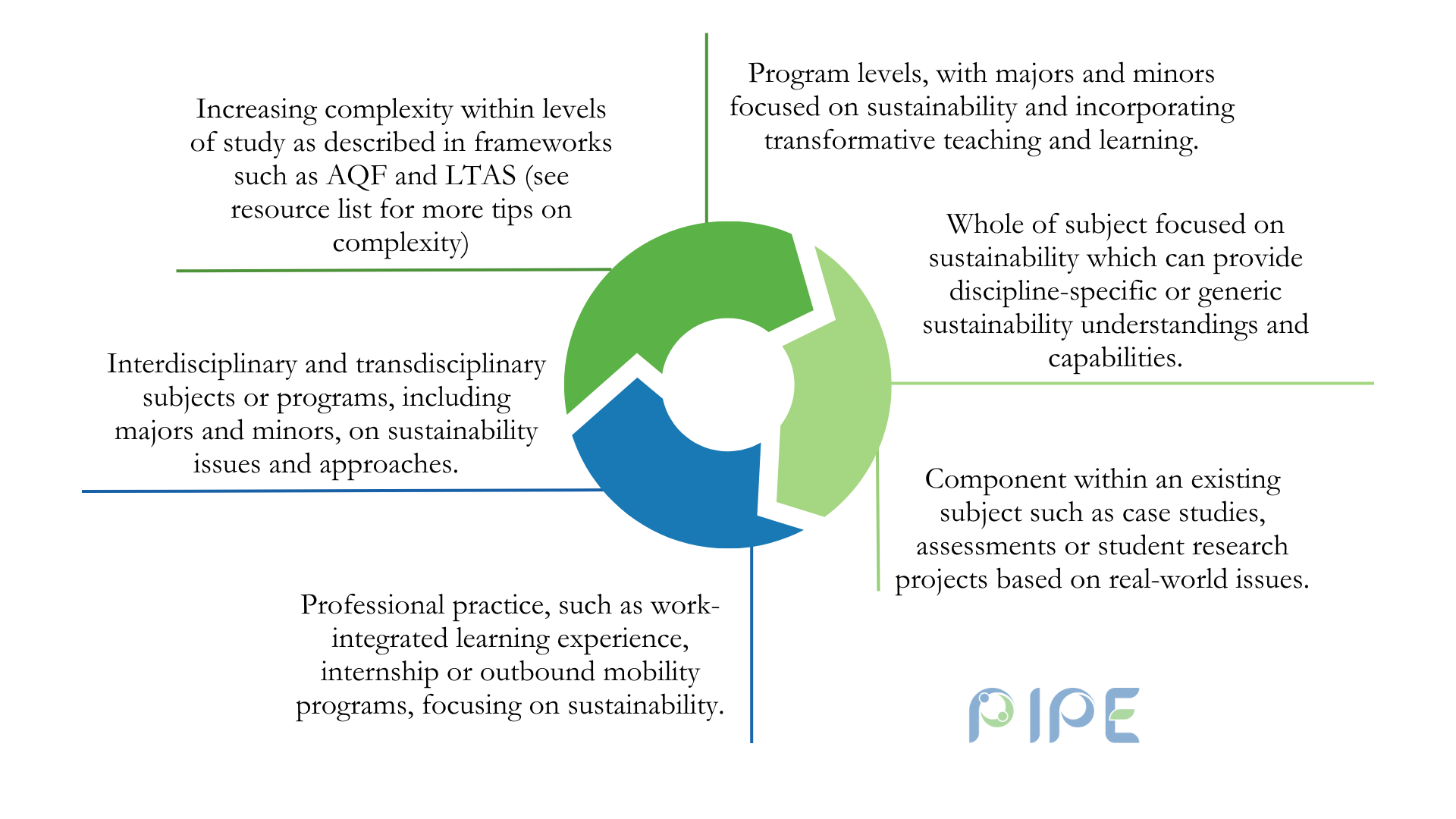
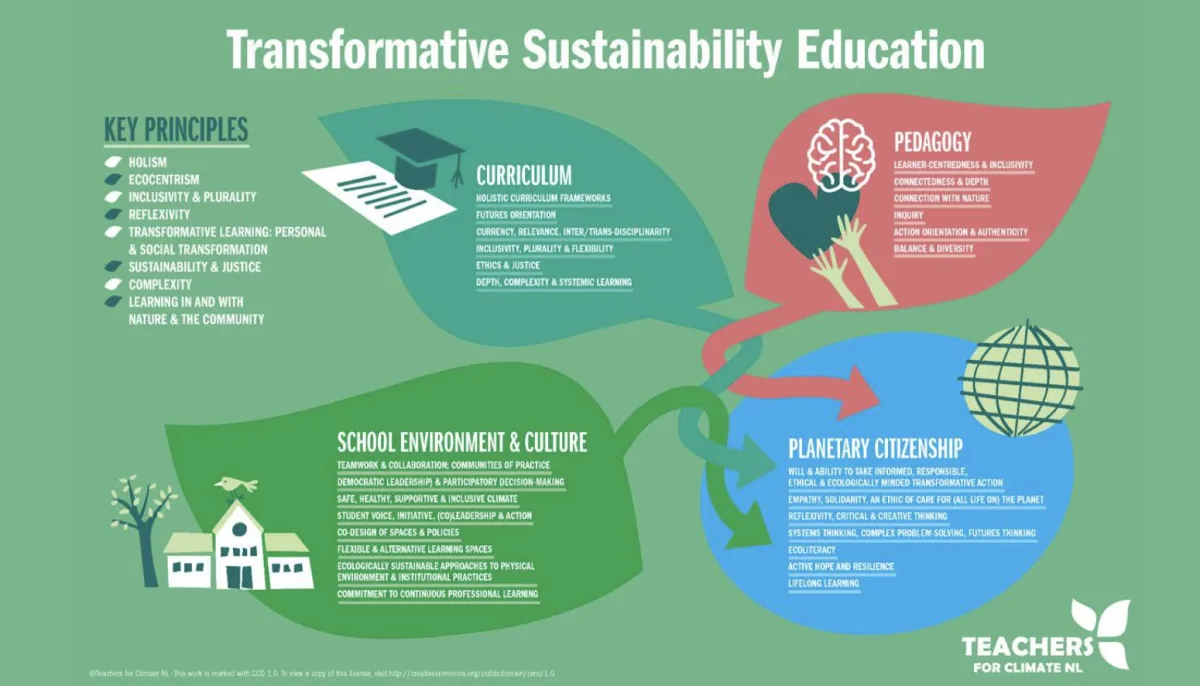
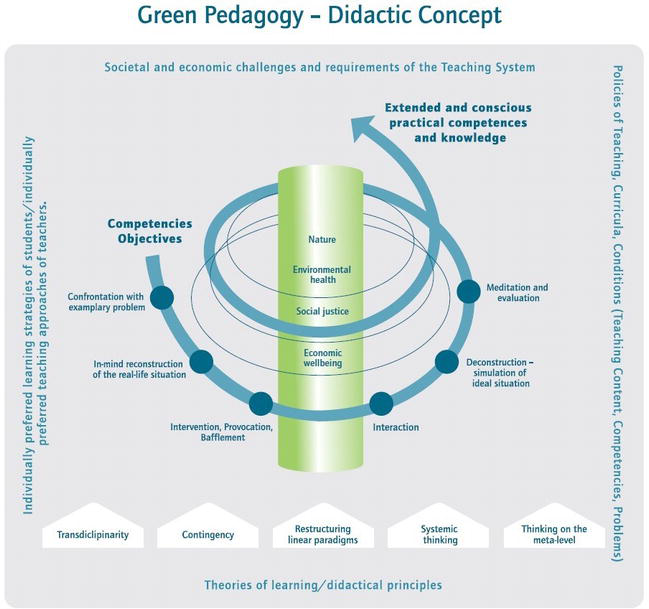
Professional development for English language teachers (ELTs) is undergoing a significant shift towards embracing environmental consciousness and sustainability. This evolution, known as Green Pedagogy, recognizes the crucial role language educators play in fostering global citizenship and environmental responsibility. By integrating environmental themes and sustainable practices into their teaching, ELTs can empower learners to become critical thinkers, informed decision-makers, and active participants in creating a more sustainable future.
One key aspect of Green Pedagogy in professional development is the exploration of environmental themes and issues in language instruction. This involves incorporating authentic texts, such as articles on climate change or excerpts from environmental literature, into the curriculum. Teachers can facilitate discussions and debates on these topics, encouraging learners to analyse language, identify biases, and form their own opinions. Additionally, exploring the cultural and linguistic representations of nature across different communities can deepen learners’ understanding of the interconnectedness of language, culture, and the environment.
Another important aspect is the integration of sustainable practices into the classroom. This can involve simple actions like reducing paper waste, using energy-efficient lighting, and promoting recycling. Teachers can also encourage learners to engage in environmentally friendly behaviours, such as conserving water, using public transportation, and supporting local sustainable businesses. By modelling sustainable practices and incorporating them into the curriculum, teachers can create a culture of environmental responsibility within the classroom.
Professional development for ELTs also includes exploring innovative teaching methods that promote environmental awareness. Project-based learning, for example, can empower learners to take action on environmental issues. Projects such as designing eco-friendly products, organizing community cleanups, or creating educational materials on sustainability can not only enhance language skills but also foster critical thinking, collaboration, and a sense of agency.
Technology can play a significant role in Green Pedagogy professional development. Online courses, webinars, and virtual conferences offer accessible opportunities for teachers to learn about environmental issues, explore sustainable practices, and connect with a global community of educators committed to sustainability. Digital tools and resources, such as interactive maps, simulations, and environmental databases, can also enrich language instruction by providing real-world data and engaging learning experiences.
Collaboration and knowledge sharing are essential components of professional development in Green Pedagogy. Creating professional learning communities where teachers can share ideas, resources, and experiences can foster a culture of continuous learning and innovation. These communities can provide a supportive space for teachers to explore new approaches, reflect on their practice, and develop their expertise in environmental education.
Ultimately, professional development in Green Pedagogy empowers English language teachers to become agents of change. By integrating environmental themes, sustainable practices, and innovative methodologies into their teaching, they can inspire learners to become informed, responsible, and engaged global citizens who are committed to creating a more sustainable future.
Environmental Education in Actions
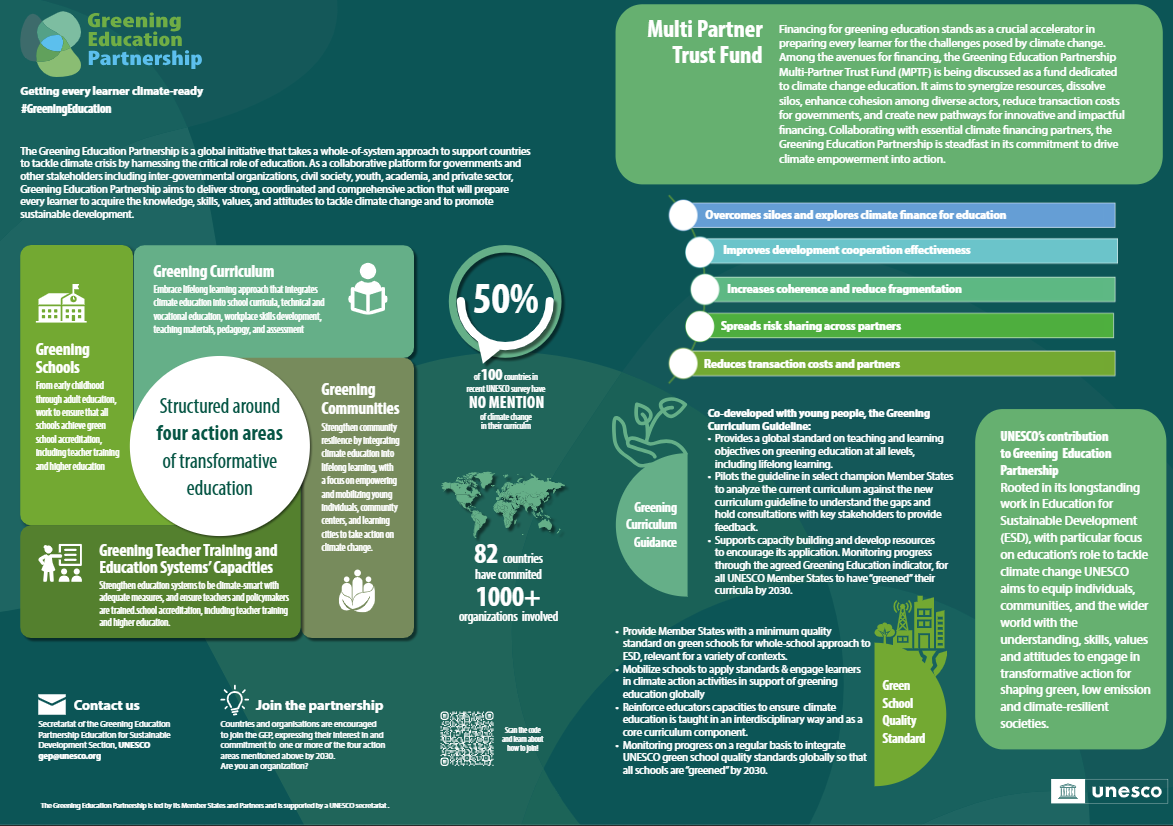
Environmental education in action transforms language learning into a powerful tool for cultivating ecological awareness and responsible citizenship. By moving beyond theoretical discussions and engaging learners in practical activities, educators can foster a deeper understanding of environmental issues, ignite passion for sustainability, and empower learners to make a positive impact on the world.
One of the most effective ways to bring environmental education to life is through project-based learning. These projects can take various forms, from creating community gardens to designing eco-friendly products or organizing awareness campaigns. For example, learners might research local pollution sources and present their findings to the community, develop a recycling program for their school, or create a multilingual website about sustainable living. Through these projects, learners not only practice their language skills but also develop critical thinking, problem-solving, and collaboration skills while making a tangible difference in their communities.
Field trips and outdoor learning experiences offer another powerful way to connect language learning with the environment. Visiting local parks, nature reserves, or even urban green spaces can provide learners with firsthand experience of the natural world. They can observe different ecosystems, learn about local biodiversity, and practice identifying plants and animals in the target language. These experiences can spark curiosity, inspire creativity, and foster a deeper connection with nature.
Incorporating environmental themes into everyday classroom activities can also be effective. Teachers can use environmentally themed vocabulary games, reading comprehension exercises based on environmental texts, or writing prompts that encourage reflection on environmental issues. For example, learners could write a persuasive essay about the importance of reducing plastic waste, create a dialogue between two characters discussing climate change, or develop a presentation about renewable energy sources.
The use of technology can enhance environmental education in language learning. Interactive maps, simulations, and virtual field trips can provide learners with immersive experiences that transport them to different ecosystems and environmental contexts. Online collaboration tools can facilitate communication and collaboration with learners from around the world, allowing them to share perspectives and work together on environmental projects.
Another approach is to invite guest speakers who are experts in environmental fields to share their knowledge and experiences with learners. This could involve scientists, environmental activists, or community leaders who are working on local sustainability initiatives. These interactions can provide learners with valuable insights into the real-world challenges and solutions related to environmental issues.
By engaging in these diverse activities, learners can develop a deeper understanding of environmental concepts, expand their vocabulary, and refine their language skills. They also gain critical thinking skills, problem-solving abilities, and a sense of agency as they actively engage with environmental issues. Ultimately, environmental education in action empowers language learners to become informed and responsible global citizens who are committed to creating a more sustainable future.
How to be more sustainable while teaching
Incorporating sustainable practices into language teaching is not only a responsible choice for the environment but also an enriching experience for both educators and learners. Green Pedagogy, with its focus on ecological awareness and social responsibility, offers a framework for transforming language classrooms into spaces that promote sustainability while fostering language acquisition and critical thinking. This section explores specific examples and strategies for integrating sustainability into language teaching, creating a more eco-conscious and engaging learning environment.
One of the most fundamental ways to promote sustainability in language teaching is to minimize paper usage. Educators can embrace digital resources, such as online textbooks, articles, and worksheets, to reduce the need for printing. Utilizing online platforms for assignments, quizzes, and feedback can further minimize paper consumption. Additionally, encouraging learners to bring their own reusable notebooks and water bottles can help reduce waste and promote a culture of sustainability in the classroom.
Energy conservation is another crucial aspect of sustainable language teaching. Teachers can make a conscious effort to turn off lights and electronic devices when not in use, unplug chargers and appliances, and optimize the use of natural light. Utilizing energy-efficient equipment, such as LED bulbs and laptops with power-saving features, can also significantly reduce energy consumption. Educators can also raise awareness about energy conservation by incorporating related vocabulary and discussions into their lessons.
Promoting recycling and waste reduction is an essential component of Green Pedagogy. Teachers can set up recycling bins in the classroom and encourage learners to sort their waste properly. They can also organize recycling drives, where learners collect recyclable materials from the school or community and learn about the recycling process. By making recycling a regular practice, teachers can instil a sense of environmental responsibility in their learners.
Integrating environmental themes into language lessons can be a powerful way to raise awareness and spark discussions. Teachers can select texts and materials that explore environmental issues, such as climate change, pollution, or biodiversity loss. They can also use real-world data and statistics to illustrate the impact of human activities on the environment. By engaging learners in conversations about these topics, educators can foster critical thinking, encourage them to develop their own perspectives, and motivate them to act.
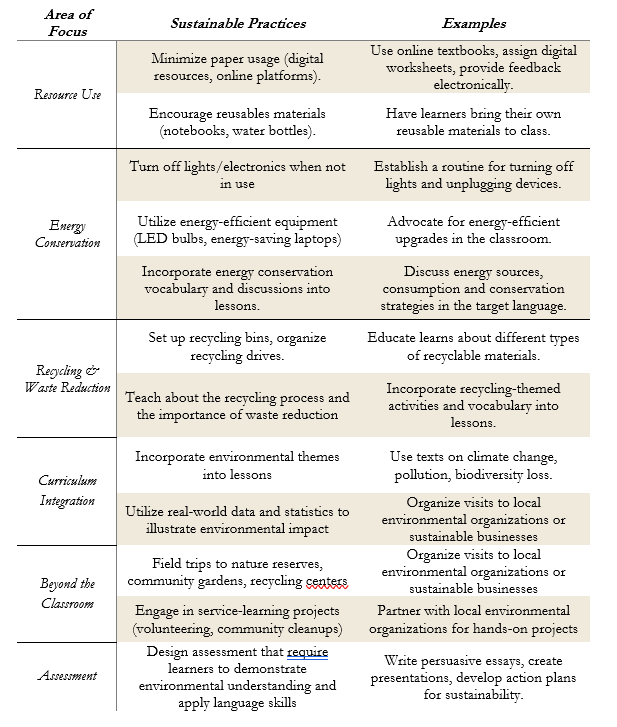
Beyond the classroom, there are numerous opportunities to incorporate sustainability into language learning. Field trips to nature reserves, community gardens, or recycling centres can provide learners with firsthand experience of environmental issues and sustainable practices. Engaging in service-learning projects, such as volunteering at environmental organizations or participating in community cleanups, can provide learners with opportunities to apply their language skills in real-world contexts while making a positive impact.
Incorporating sustainability into assessment practices is another important aspect of Green Pedagogy. Teachers can design assessments that require learners to demonstrate their understanding of environmental issues and their ability to apply language skills to real-world problems. For example, learners could write a persuasive essay about the importance of renewable energy, create a presentation about the benefits of sustainable agriculture, or develop a plan for reducing their school’s environmental footprint.
By embracing these strategies and incorporating sustainability into all aspects of language teaching, educators can not only foster environmental awareness but also create a more engaging and meaningful learning experience for their students. Green Pedagogy empowers learners to become active participants in creating a more sustainable future, equipping them with the language skills and critical thinking abilities necessary to address the complex environmental challenges facing our planet.