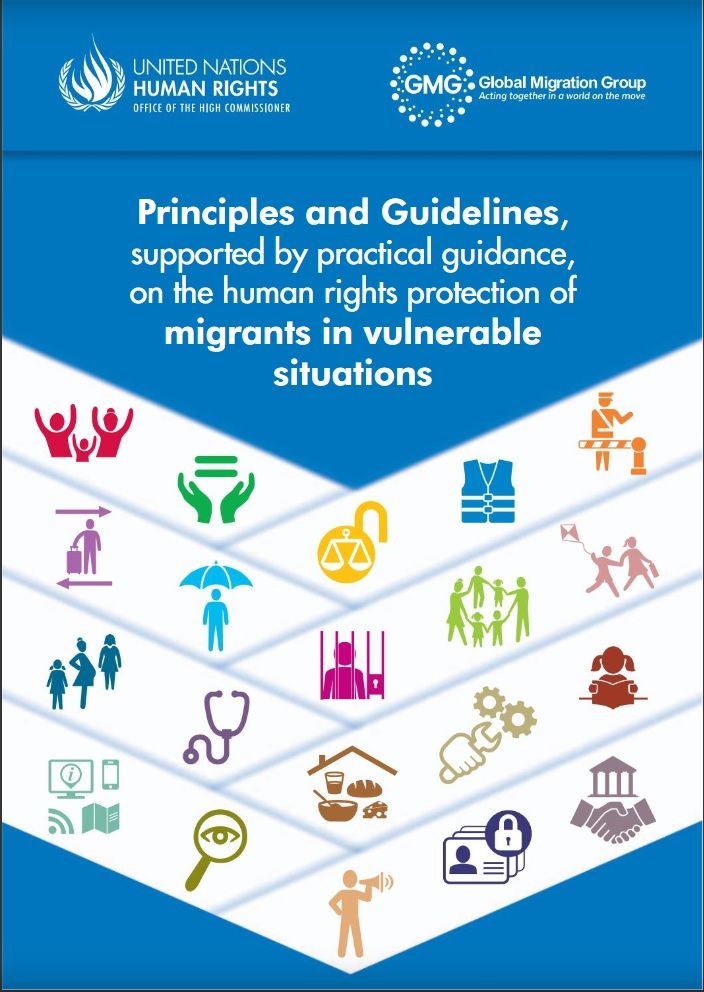
Many people on the move today fall outside legal protection categories but are nonetheless in need of specific human rights protection interventions. The vulnerable situations that migrants face can arise from a range of situational and personal factors that may intersect or coexist simultaneously, influencing and exacerbating each other and evolving or changing over time as circumstances change. Migrants may find themselves in vulnerable situations because of the situations compelling them to leave their country of origin, the circumstances in which they travel or the conditions they face on arrival, or because of personal characteristics such as their age, gender identity, race, disability or health status. Migrants are not inherently vulnerable, nor do they lack resilience and agency. Rather, vulnerability to human rights violations is the result of multiple and intersecting forms of discrimination, inequality, and structural and societal dynamics that lead to diminished and unequal levels of power and enjoyment of rights. As a matter of principle, and to ensure that every migrant can access appropriate protection of their rights, the situation of each person must be assessed individually. OHCHR, working with other UN partners, has led the development of a set of Principles and guidelines on the human rights protection of migrants in vulnerable situations. These principles and guidelines focus on the human rights situation of those migrants who may not qualify as refugees, yet who are in vulnerable situations and thus in need of the protection of the international human rights framework. They provide advice to States and other stakeholders on how they should implement their obligations to respect, protect, and fulfil the human rights of migrants who are in vulnerable situations.
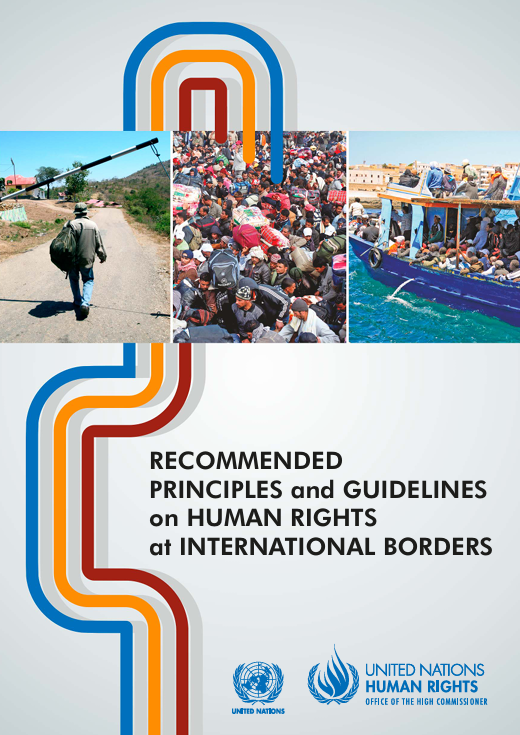
OHCHR’s Recommended Principles and Guidelines on Human Rights at International Borders are the result of wide-ranging expert consultations to draw up normative guidelines on the governance of international borders. They are intended to inform the work of States, international agencies, and other stakeholders with an interest in human rights-based border governance. The Principles and Guidelines accompanied the report of the Secretary-General on Protection of Migrants (A/69/277) presented to the 69th session of the General Assembly held in 2014. Member States have taken note of the Principles and Guidelines in General Assembly resolutions on the Protection of Migrants and Migrant children and adolescents. International borders can be dangerous places for migrants, particularly those who are (or who are presumed to be) in irregular situations. Many migrants lose their lives when they board unseaworthy boats, smugglers leave them to die at sea, or when border guards are given orders to “shoot at sight” to deter irregular migration. At land, sea and air borders around the world, migrants experience discrimination and arbitrary decision making, unlawful profiling and disproportionate interference with the right to privacy, torture and sexual and gender-based violence, dangerous interception practices, and prolonged or arbitrary detention. National law and administrative regulations can also characterize borders as zones of exclusion or exception for human rights obligations, and seek to exempt them from compliance with the human rights safeguards, checks and balances that are usually embedded in national laws. These, and a range of other human rights issues, are addressed in OHCHR’s Recommended Principles and Guidelines on Human Rights at International Borders. The fundamental premise of ii the Principles and Guidelines is that international human rights law provides that all migrants, regardless of their legal status, how they arrive at the border, where they come from or what they look like, are entitled to enjoy their human rights. As their introduction makes clear, “Underpinning these Principles and Guidelines is the belief that respecting the human rights of all migrants, regardless of their nationality, migration status or other circumstances, facilitates effective border governance.”
UN Human Rights is mandated to promote and protect the enjoyment and full realization, by all people, of all rights. Given the impact of harmful narratives in the context of migration, UN Human Rights believes there is a compelling need to shift the narrative on migrants and migration from one of hate and exclusion to one that celebrates what we have in common and paints a hopeful picture of the future we share. UN Human Rights recognizes that shifting narratives is a key element to achieving positive change and ensuring all migrants can enjoy their human rights. UN Human Rights has developed this toolbox to offer ideas, actions and inspiration on how to make this shift. The step-by-step guide is based on the Seven Key Elements on Building Human Rights-Based Narratives on Migrants and Migration, and the experiences of our partners, whose research, efforts and engagement contributed to the content of these resources. This toolbox is for people working on migration-related issues, but ultimately, for everyone who wants to see a change and play a role in countering harmful narratives. UN Human Rights’ hope that many of you will join us to shift narratives on migration and stand up for migrants’ rights.
Migrants and their Vulnerability to Human Trafficking, Modern Slavery and Forced Labour What makes migrants vulnerable to human trafficking and associated forms of exploitation and abuse? A new study, undertaken by Minderoo Foundation’s Walk Free initiative and IOM, examines the connection between migration and modern slavery, and focuses on which migrants are most vulnerable, and in what circumstances, to modern slavery. The report explores various sites of vulnerability where migrants are particularly susceptible to human trafficking, forced labour and modern slavery. These include private dwellings, border crossings, irregular migration routes and conflict zones. The report illustrates that migrants are most vulnerable to exploitation in situations where the authority of the State and society are unable to protect them. It also analyses the characteristics of victims that are thought to contribute to their vulnerability. In addition, the study explains some characteristics of offenders, including worldviews that allow them to rationalize the exploitation of others. Lastly, the study looks at examples of enabling environments or contexts, such as restrictive immigration policies, that engender or exacerbate vulnerability. Prepared for the Alliance 8.7 Action Group on Migration, the report examines the recent research literature through a crime prevention lens to identify a set of salient features that can help understand the relevant connections between migration and vulnerability to forced labour, human trafficking and modern slavery.
This screening tool on identifying and addressing situations of vulnerability is a UNHCR and IDC collaboration intended to help guide and inform frontline workers and decision-makers on the relevance of vulnerability factors to detention decisions, referrals to alternatives to detention, open reception facilities, community-based placement and support options, in the context of asylum and migration procedures and systems. Refugees, asylum-seekers, trafficked persons, stateless persons, irregular migrants and other non-nationals without legal status often experience situations of vulnerability – they are often exposed to heightened risks of harm and require special care, support and protection. For the purposes of this document, vulnerability is more inclusive than being at risk of persecution or refoulement. While the tool might contribute to the process of determining protection needs as outlined in international refugee law and other human rights frameworks, that is not its purpose. Its purpose is to identify situations of vulnerability to inform a range of decisions around the person such as those related to the most appropriate placement and support options in the individual case. It aims to encourage early intervention, effective care of individuals in need, and partnerships with community services. Further, it aims to reduce the presumption of detention and to encourage a consideration of placement options starting with the least restriction on liberty and freedom of movement. Subject always to judicial oversight, screening can help ensure that immigration detention (a) meets the tests of necessity, reasonableness and proportionality, (b) avoids being arbitrary or automatic, and (c) is only used as a last resort when all alternative placement options have been explored, for those exposed to heightened risks of harm. Also, the tool can help to ensure that persons who are detained have access to relevant support and services. The tool is also relevant in asylum and migration systems that prohibit or restrict the use of detention, where it could be used during intake interviews to guide the identification of needed support services. The tool can be used both in interviews before decisions about detention, alternatives to detention or placement options in the community, and at periodic intervals during asylum and migration procedures to review and adjust decisions about placement and support.

Mechanisms to differentiate between various categories of persons soon after they arrive in a host State can facilitate management of mixed movements, especially those involving large-scale arrivals. Such mechanisms can ensure that asylum-seekers and others with specific needs are identified and their needs are addressed. The information gathered through these mechanisms can be used to facilitate individual processing. The updated 10-Point Plan in Action uses the phrase “screening and referral” to refer to such mechanisms.1 The term “profiling”, as used in the previous edition and the original 10-Point Plan, has been replaced by “screening” for purposes of clarity in recognition of the fact that, in several contexts “profiling” refers to data collection on trends and patterns.
Teaching Guide for Lecturers Using the UNODC Teaching Modules on Trafficking in Persons and Smuggling of Migrants. This Module forms part of the UNODC Teaching Module Series on Trafficking in Persons / Smuggling of Migrants and is accompanied by a Teaching Guide. The full range of materials includes teaching modules on organized crime, trafficking in persons / smuggling of migrants, cybercrime, wildlife, forest and fisheries crime, counterterrorism as well as firearms. In addition, Module Series on anti-corruption and integrity & ethics are available at the Global Resource for Anti-Corruption Education and Youth Empowerment (GRACE) website. All teaching modules provide suggestions for in-class exercises, student assessments, slides, and other teaching tools that lecturers can adapt to their contexts and integrate into existing university courses and programmes.
The Right to Remain Toolkit is our step-by-step guide to the UK immigration and asylum system. It’s free to use, and it’s for people who want to learn more about the legal process, or a particular part of the legal process. You might be making an application or thinking about it; you might be helping someone else to do so. The information in this guide comes from experts – from people who are going through the legal process or have done so in the past, from those helping them, from lawyers, from community groups. It covers different stages of the legal system and procedures, with detailed information on rights and options at each stage, and advice about actions you can take to be in a better situation, or to help someone else.