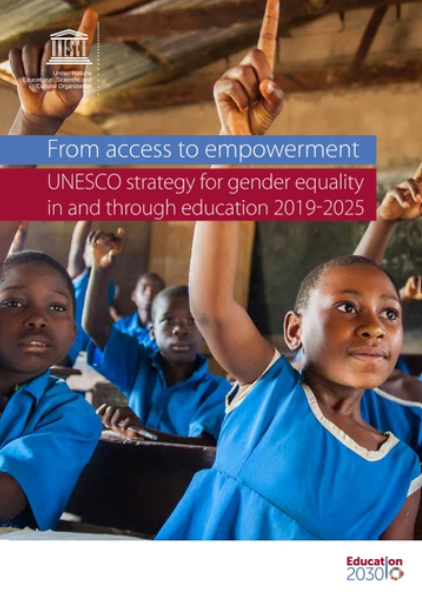
In UNESCO’s strategy for gender equality and through education you will find, within the non-formal sphere, best practices in teaching and learning for empowerment, which underlines the formative commitment we must assume in order to include in our educational practice cognitive, socioemotional and behavioural competences that promote, through the teaching of language, in our case, the capacity to act, critical reflection, conflict management, acceptance of diversity, creativity, leadership, cooperation, adaptability and global citizenship.
In relation to the processes of discrimination through language teaching, the Gender and Diversity in Teaching Toolbox created by the Freie Universität Berlin can help you to find audiovisual materials for teaching with a gender and diversity perspective, criteria for integrating gender and diversity issues in teaching, good practices for the use of inclusive language beyond gender, literature and sources, and notes for research on gender and diversity focusing on intersectionality, situated knowledge and the deconstruction of the canon.
The Gender Toolkit is an open learning resource, available to all those interested in communication. It contains a careful selection of content from authoritative sources and aims to promote non-sexist communication. It is designed by the UOC’s Information and Communication Sciences Department’s gender group and “it is a living material, which we want to update every six months with the latest developments,” says Candela Ollé, coordinator of the resource and director of the UOC’s Master’s Degree in Journalism and Digital Communication: Data and New Narratives. What will you find in the Toolkit? “Putting on gender glasses is a proactive exercise that involves thinking twice about how we create our content,” says Arantza Diez, author of the Gender Toolkit and professor at the UOC’s Faculty of Information and Communication Sciences. As the author explains, there is no formula to guarantee the application of the gender perspective; what there is is a perspective, a commitment to the way in which we want to explain the world, whether it be through information, entertainment or advertising. “The gender perspective is about power relations and privilege, and applying it means shaking up and challenging the status quo,” she says.
The Association for the Management of Social Integration (GINSO), coordinates ‘Tool4Gender‘ at international level, a project funded by the European Union within the Erasmus+ programme, in which seven entities from different countries collaborate: Save the Children (Romania), Heron Digital Education & Mathisis LTD (Cyprus), Sociedad Española de Asistencia Sociosanitaria de Valencia (Spain), Senior Europa Sociedad Limitada (Spain), I.R.E.S. – Istituto di Ricerche Economia e Sociali del Friuli Venezia Giulia Impresa Sociale (Italy), MTÜ Lastekaitse Liit (Estonia) and GINSO (Spain). Istituto di Ricerche Economiche e Sociali del Friuli Venezia Giulia Impresa Sociale (Italy), MTÜ Lastekaitse Liit (Estonia) and GINSO (Spain). The aim of this project is to prevent and combat gender-based violence in children from 8 to 16 years old, raising awareness from an early age, through the development of support tools that will allow families, teachers and other professionals, access to a repository of materials on good practices, protocols and working methods in the field of prevention of gender-based violence. Tool4Gender is developing different tools: a ToolKit, aimed at the prevention of gender-based violence that serves as support for teachers and families, a virtual platform, which includes different types of educational material (videos, documents and free courses), aimed at preventing this type of violence, and an app for detecting gender-based violence aimed at building healthy relationships that allow children and adolescents to detect sexist behaviour at an early stage.
Sexual violence and intimate partner violence (IPV) – which may be physical, sexual and/or emotional/psychological – are global problems, occurring in every society, country and region. In humanitarian settings, because of mass displacement and the breakdown of social protections, women and children who are refugees, internally displaced persons (IDPs), or otherwise affected by conflict-related or natural humanitarian crises, are at increased risk. The high rates of sexual violence and IPV are well documented and constitute a serious violation of international humanitarian law and human rights law.
This guide is intended for use by qualified health-care providers (medical doctors, clinical officers, midwives and nurses) who are working in humanitarian emergencies or other similar settings, and who wish to develop specific protocols for the medical care of survivors of sexual violence and IPV. This guidance will need to be adapted to each setting, considering available resources, materials, medications, and national policies and procedures. It can also be used to update existing protocols, to help plan and provide services and train health-care providers.
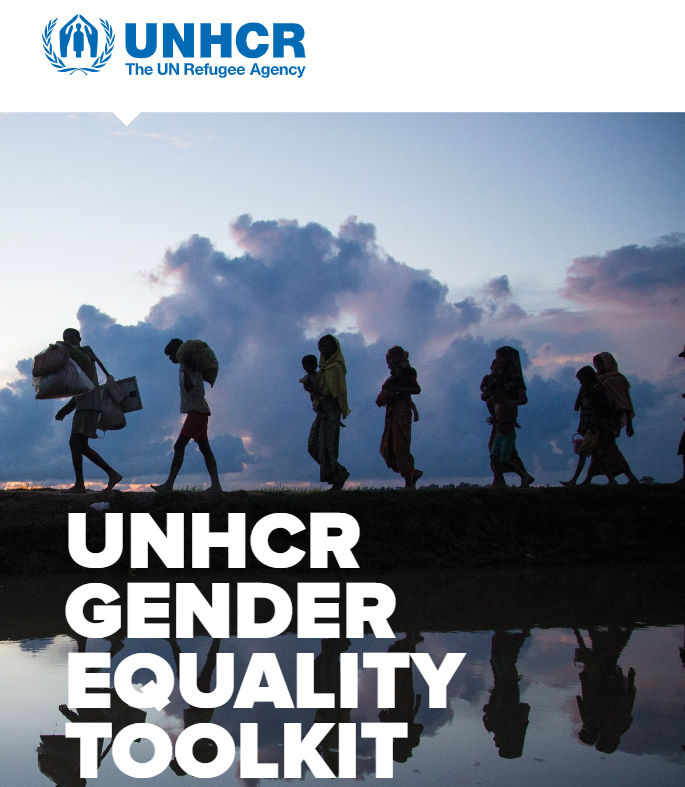
The UNHCR Gender Equality Toolkit is designed to provide UNHCR personnel – staff, affiliate workforce and consultants – with practical guidance and user- friendly tools, tips, information and resources to support the achievement of gender equality. It is not intended to be exhaustive; rather it offers minimum actions to incorporate gender considerations in specific areas and processes and provides additional resources highlighting promising practices from the field to promote cross-operational and regional learning. These are relevant to all personnel, regardless of their function or the operational context.
This toolkit has been developed by the Immigrant Council of Ireland thanks to the generous support of the Lifes2Good foundation. With this support over the course of two years, the ICI conducted an outreach and capacity building project in the West of Ireland on the topic of gender-based violence and human trafficking. Through this project, we trained individuals to develop their knowledge and understanding of gender-based violence and human trafficking issues. We also received referrals from frontline organisations to our services and held in person and online appointments at specialist legal clinics for women affected by these issues.