Guide and action plan for the cultural training of migration professionals
Our planet is a lonely speck in the great enveloping cosmic gloom. In our darkness – in all this vastness – there is not a hint of help coming from anywhere else to save us from ourselves. Earth is the only world known so far to harbour life.
There is nowhere else, at least in the foreseeable future, to which our species could migrate. Visit, yes. Settle, not yet. Like it or not, for the moment Earth is where we have to stay. It has been said that astronomy is humbling and character- building. Perhaps there is no better demonstration of human hubris than this distant image of our tiny world.
For me, it underlines our responsibility to treat each other more kindly and to preserve and cherish the pale blue dot, the only home we have ever known.
(Carl Sagan, 2003:33)

The consortium formed between EVM, the Institute for Roma and Inclusion (IRMI), Alborg University, the University of La Laguna and its critical pedagogy research group PEDACRI, the Hellenic Mediterranean University and the Universitá Telematica Internazionale (UNINETTUNO), developing the Inclusion Programme for Migrants at Risk of Social Exclusion (PIPE), within the third work package whose objective is to offer professionals, volunteers and migrants a toolbox that favours a pedagogy of hospitality that means the construction of an ethics of miscegenation in order to imagine a culture of peace, presents in section 2. 4 of the programme presents a Guide for professionals to design their own action plan for training in cultural competencies, integrating national resources in the language of each participating country (PIPE: 49-54).
We therefore present a brief theoretical framework that allows them to approach the concept of cultural competence and an itinerary by levels, progressive, that allows each professional or organisation to decide, based on their experience and needs, to choose, like Cortázar’s novel Rayuela, to follow the whole path or to opt for a specific level or levels. In this way we structure the guide not as a linear and sequential process, which it can be, but as a hall that allows one to choose which room to visit or revisit as many times as necessary.
To do so, we start from Hayes’ Continuum of cultural competence (1991) and transfer it from the health field to the pedagogical field, integrating questions that those of us who work in the scenario of migratory movements ask ourselves and aspire to offer a dialogue of knowledge that generates epistemologies of resistance in the communities that prevent or weaken the processes of colonisation that become a myriad of violence.
Awakening cultural sensitivity, offering resources to increase cultural knowledge, favouring the training of cultural skills, encouraging intercultural encounters and raising personal development at the community level are the premises of our proposal.
In this way, we offer an analysis of the barriers and difficulties we encounter on a daily basis in implementing a cultural competence training plan in the field of interculturality, a series of reflections on the concept of identity and heritage and the need to direct our efforts towards the collective and progressive construction of an ethic of miscegenation, as an epistemological framework in order to define the basic elements to be observed before establishing a cultural competence training plan in a given context.
An ethic of miscegenation that Orbe, Bondía and Mèlich (2006) do not understand as an end, it is not a teleological ethic in the Aristotelian sense, but one that accompanies processes in a maieutic- socratic sense. Therefore, we propose that the management of knowledge that inhabits an educational plan on cultural competence should be thought from the ethics of miscegenation proposed by Nouss and Laplantine (2001, 2008), in which complementarity is suggested to us instead of fusion and differentialize. Thus, the different cultures that come into play in knowledge management can contribute and receive, in an act of complementarity, with respect for the subject and his or her knowledge. This is what we mean when we talk about the ethics of miscegenation, as a qualitative approach of a hermeneutic nature to understand knowledge management as an act of complementarity in which each of the communities contributes its knowledge, which, as a pedagogical tool, forms a great potential that favours quality spaces in teaching and learning.

In Eros and Paideia (Pais, 2015:359) the following is added on the ethics of miscegenation, in the field of intercultural politics: ‘In the strategy of generating another counter-power, it is a matter of opening a new transnational public space that summons the wounded, rescues the expelled, agglutinates indignant wills; In short, it is about inverting the idea and the reality of docility of the category ‘people’, from a re-foundation of politics as an exercise of full humanity from an ethics of miscegenation, the only viable one for a condition of future dignity’ and, oriented to the position of those who need to imagine a plan for professionals who work with migrants based on cultural competence, we close with what is expressed in (González and González, 2021: 219): ‘We must adopt a responsible stance towards our own cultures, most of them, by the way, already hybridised with the hegemonic culture, and understand that all of them must “lose in order to win”, being in constant revision before an ethic of miscegenation that makes room for culturally just societies. Only in this way will it be possible to face the challenges of a changing world, not only technologically and culturally, but above all ethically. For more on this concept, see chapter 2.3.8 Thinking Cultural Competence from an Ethics of Miscegenation.
The second part of the guide defines the learning objectives and a decalogue of good practices to generate dialogue and community reflection on what we should consider when designing our own training plan. Finally, in coherence with Hayes’ continuum, we outline the structure that can favour a training programme that is adaptable, flexible and coherent with the reality that surrounds each organisation or professional. This section is summarised in a table where you will find specific elements from the different social or human sciences that help us to define in detail and personalise the structure of our own plan. The aim is not to provide a ready-made product, but rather the ingredients and the recipe so that everyone can cook their own training action plan for the development of cultural competence.


The third section could be an annex, serve as an example, it is about going out of our experience and offering many more voices that are already working in the field that concerns us, a series of considerations that we took into account among the partners that form the PIPE consortium and that become proposals or concrete examples for each of the dimensions and the elements that are hosted in them, so that they can serve as a dialogical reference to adapt the foundations to the unrepeatable and incomparable realities.
It is therefore an open guide and in the process of construction, your participation is essential for its improvement. It is not about giving a recipe or a concrete solution but about creating a framework of intercultural conversation where all the actors participate and add their experiences and knowledge over time, Let us say that what has been presented is a starting point for moving forward together in the construction of sustainable and convivial ways of inhabiting the world, with that image that Apollo XIII gave us and that Carl Sagan wrote about the home we share, that small blue marble, fragile and solitary, floating in the middle of the ether, where we are obliged, in the sense of the duty of citizenship, to coexist. Touraine’s question is forced: can we live together? The elaboration of this guide is a conditional affirmative answer, yes, but we will have to learn how, and that forces us to interrupt our daily inertia and think that we must learn to imagine a culture of peace that welcomes the diversity that inhabits this small marble.
Cultural competencies for professionals involved in working with migrants
The concept of culture refers to the social, physical, and spiritual attributes of a people. At the very practical level, it is a process of communication between people in contexts within which members of the group assimilate each other’s experiences and eventually create a standard form unique to the group. The concept of culture also encompasses the idea of a people’s worldview, their values and practical everyday material manifestations of human activities and the contexts in which these activities take place. The concept of culture therefore refers to the ways in which people construct their own impressions and create a framework for understanding and constructing their interactions within and with their environment. These impressions and expressions are manifest in manners and customs, tastes, language and social roles, the constructed environment and social organisations. [Chile 2000:63 Biculturalism and Multiculturalism Are they Mutually Exclusive?)
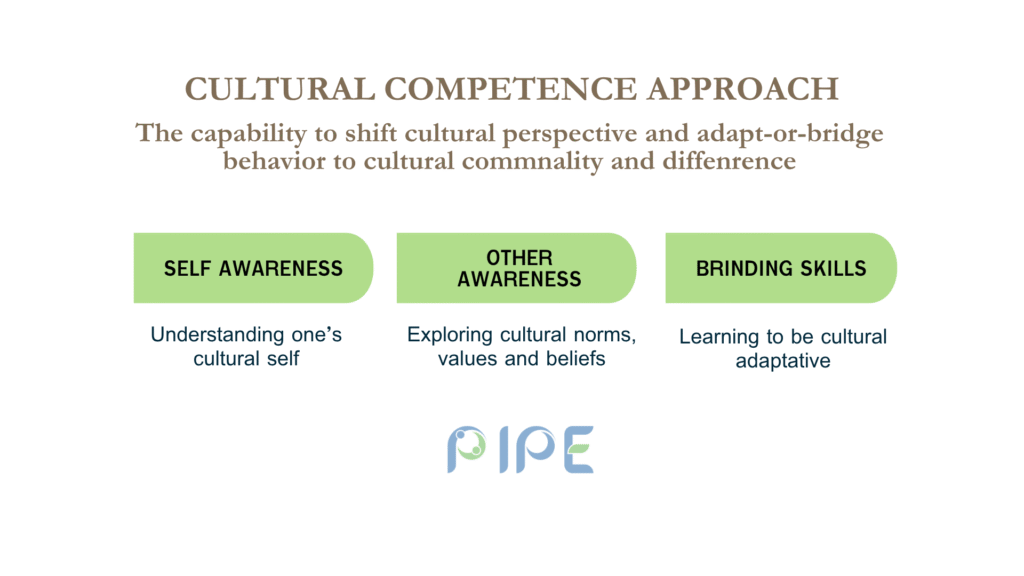
On the concept of intercultural competency
On the concept of intercultural competency
Cultural competence in education is a multifaceted concept that encompasses the ability of educators and educational institutions to effectively understand, respect, and respond to the diverse cultural backgrounds and identities of students, families, and communities they serve. It involves creating inclusive learning environments where all individuals feel valued, respected, and empowered to succeed regardless of their cultural heritage or background (Horvat, et al., 2014; Goh, 2012)
Cross cultural competence refers to the process by which individuals and systems respond respectfully and effectively to people of all cultures, languages, classes, races, ethic backgrounds, religions, and other diversity factors in a manner that recognises, affirms, and values the worth of individuals, families and communities and protects and preserves the dignity of each. [National Association of Social Workers 2001:11]
Cultural competence is a complex construct, not only because of its multiple dimensions, but also because it is both a process and an outcome. Hayes (1991) conceives it as a dynamic structure that moves on an axis representing the continuous progress (advances) made by people (institutions, systems, etc.) until they reach the optimal degree of functioning in cultural contexts. According to this author, the acquisition of effective cultural competence is the result of a process of capacity development that does not follow a linear pattern. Everyone (system, institution, programme, etc.) progresses at a particular pace and trajectory, facing its own setbacks and achieving specific improvements at each stage. Moreover, the different domains of cultural competence achievement (gender, ethnicity, sexual orientation, etc.) often follow different patterns of achievement (in time and intensity) in everyone. Thus, it is common to find people (institutions, system, etc.) who achieve high cultural competence in relation to gender, for example, and remain incapable in other contexts: interethnic, political, religious, etc.
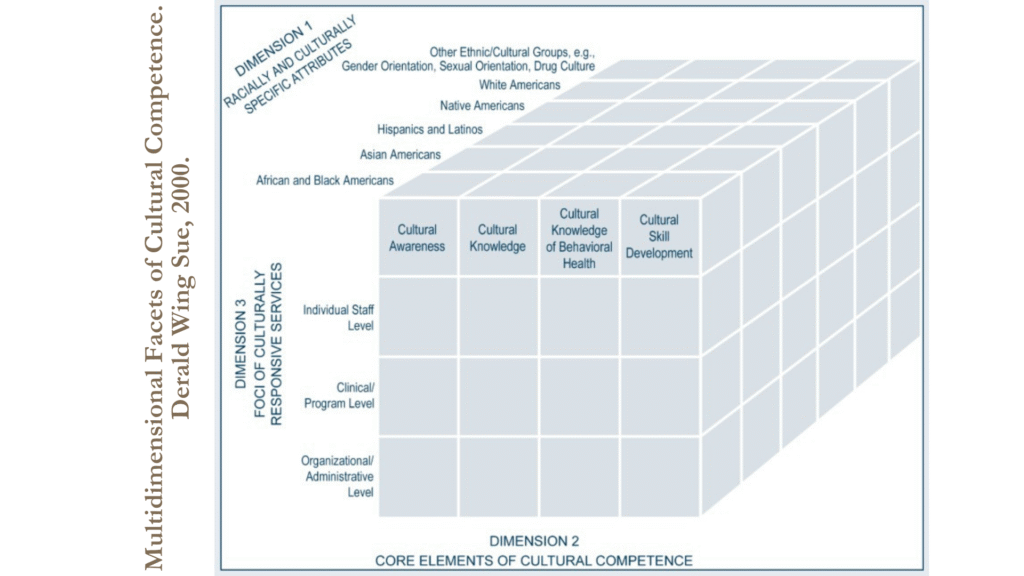
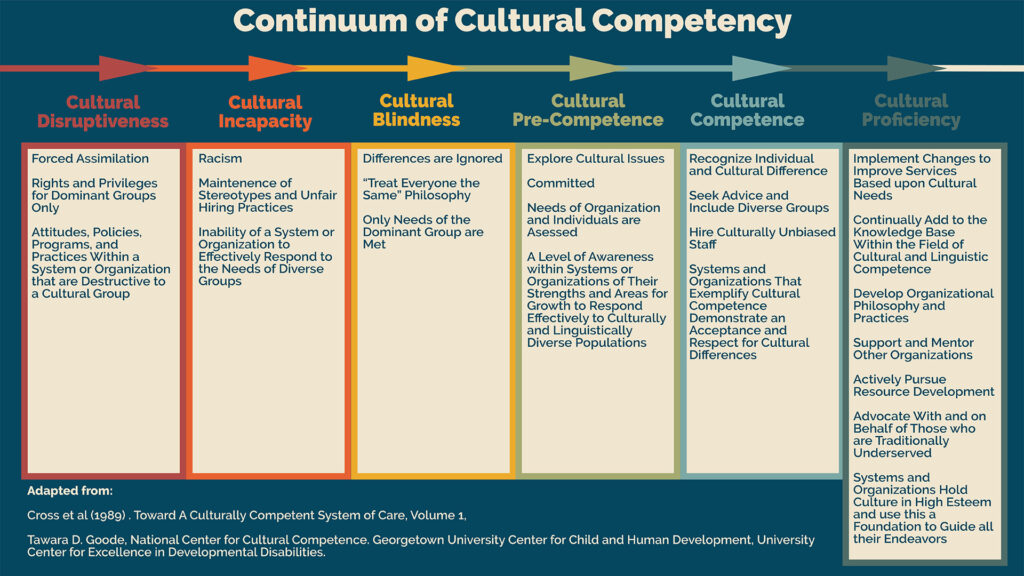
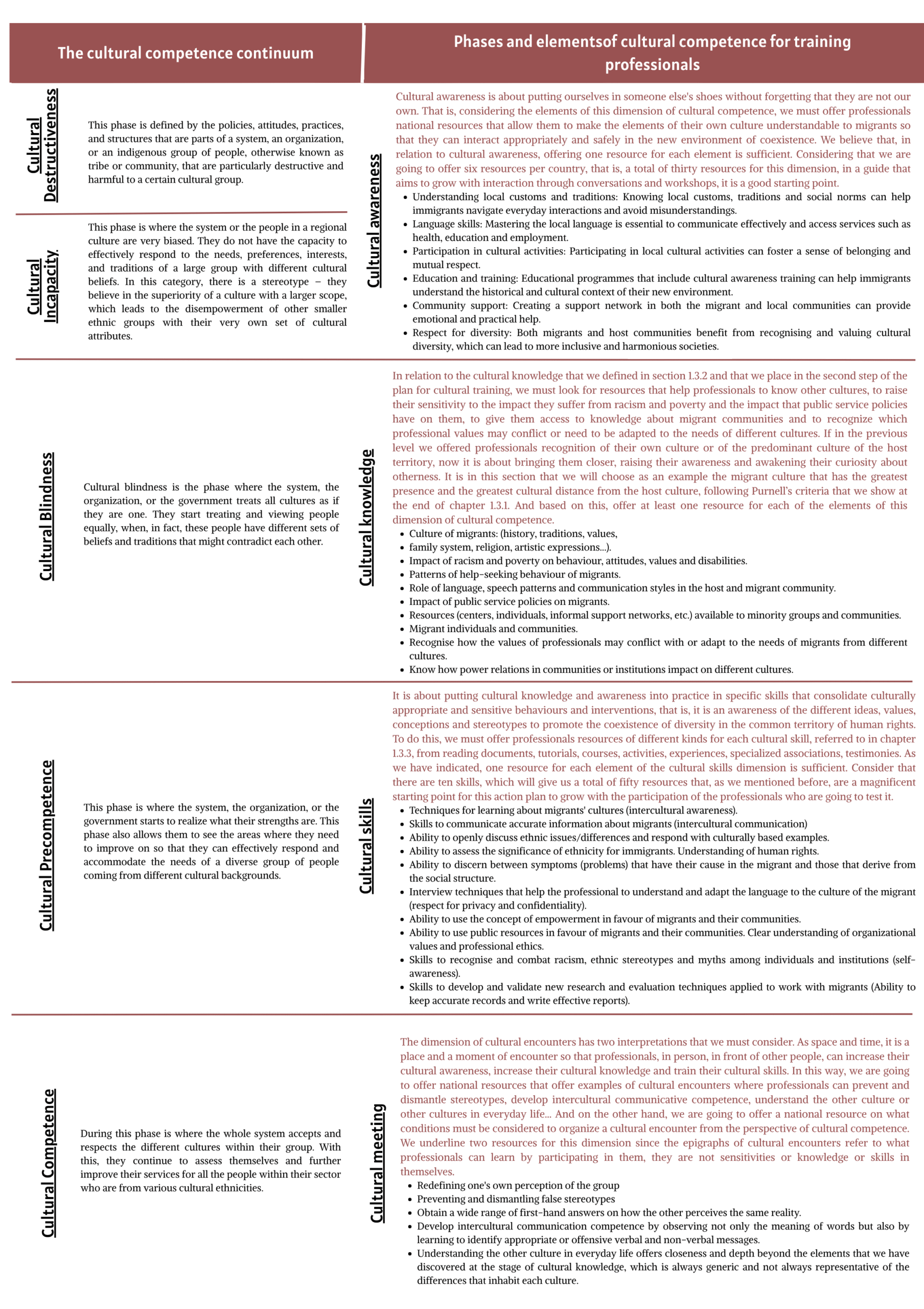
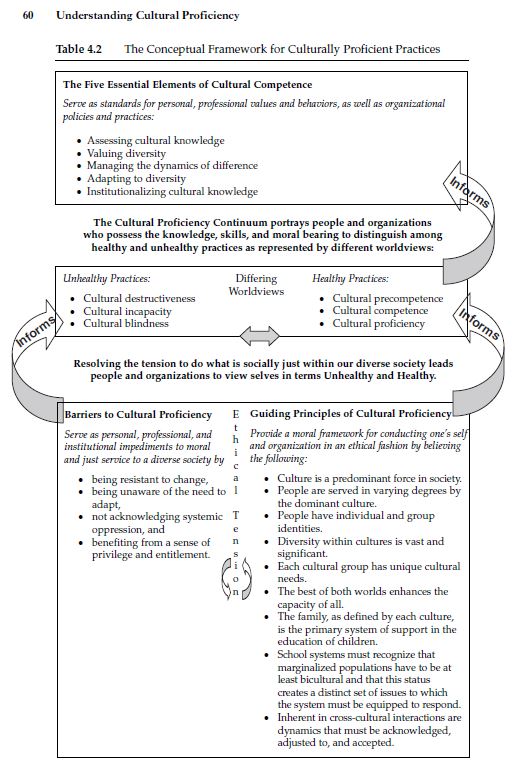
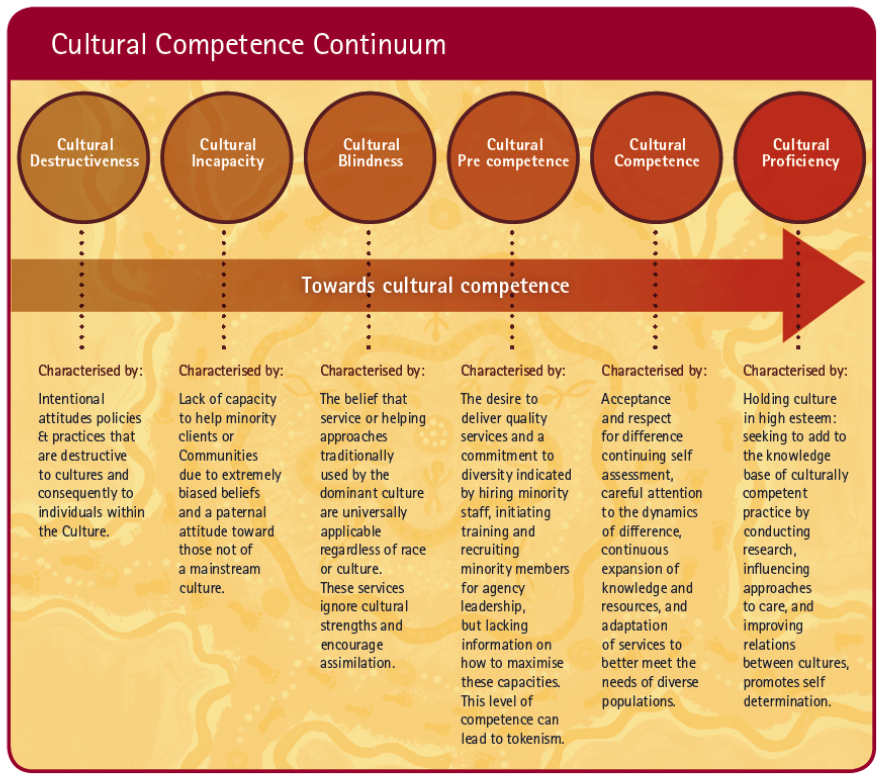
The cultural competence continuum
The cultural competence continuum
The cultural competence continuum is composed of six stages that an individual undergoes to reach cultural proficiency. This model helps an individual to understand further the phases that are normally milestones for someone to be culturally competent.
– Cultural Destructiveness: This phase is defined by the policies, attitudes, practices, and structures that are parts of a system, an organization, or an indigenous group of people, otherwise known as tribe or community, that are particularly destructive and harmful to a certain cultural This is the most negative portion of the cultural competence continuum. For example, forced assimilation is a type of involuntary procedure of cultural assimilation of ethnic or religious minority groups. During this process, the people are forced to learn, understand, and adopt specific languages, norms, beliefs, values, traditions, identity, customs, perceptions, and most of the time, religion and ideology of an already existing community. Forced assimilation takes place whenever a state places extreme measures for the emphasis of a homogenous identity as a whole nation. This will result in the harsh measures of exterminating an already existing minority group with their own set of values, norms, practices. Basically, they have a different culture from the whole nation. But because of the strict implementation of the government, they are forced to abandon their beliefs, customs, values, principles, practices, way of thinking, and norms. The worst ending for these minority groups is physical elimination – they are expelled, and sometimes genocide takes place to get rid of the whole minority.
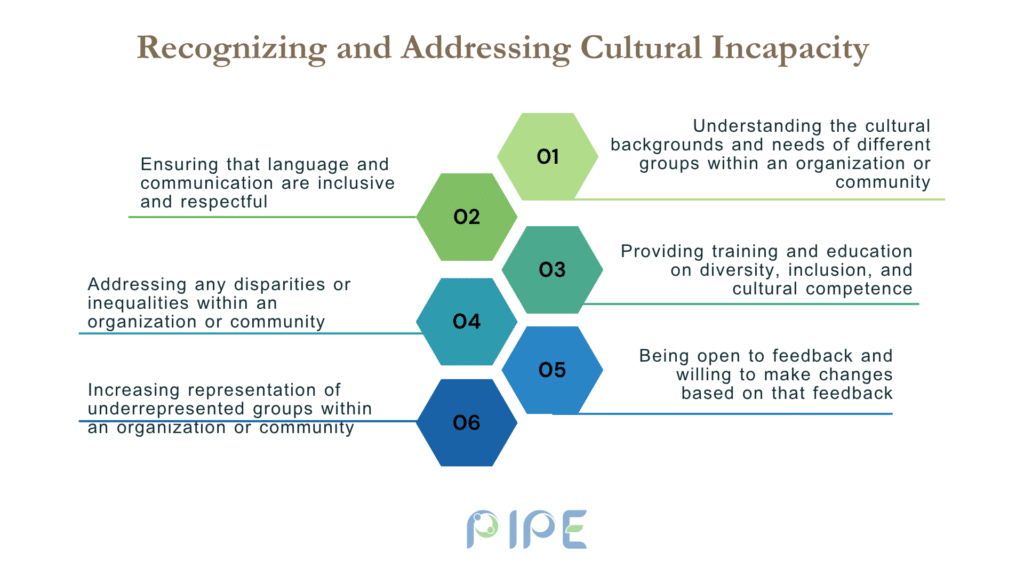
- – Cultural Incapacity: This phase is where the system or the people in a regional culture are very biased. They do not have the capacity to effectively respond to the needs, preferences, interests, and traditions of a large group with different cultural beliefs. In this category, there is a stereotype – they believe in the superiority of a culture with a larger scope, which leads to the disempowerment of other smaller ethnic groups with their very own set of cultural attributes. For example, racism is still rampant in the 21st Century. It is a particular belief or ideology that instils the thought of a specific racial group being superior to another race. Racism is when a specific group of people with similar races are marginalized and oppressed based on their racial culture. In the 21st century, this is exemplified by stereotyping a specific race, an unfair process of hiring based on a person’s ethical race, and other discriminatory acts that stop a person from having equal opportunities as a person who belongs to a dominant race.
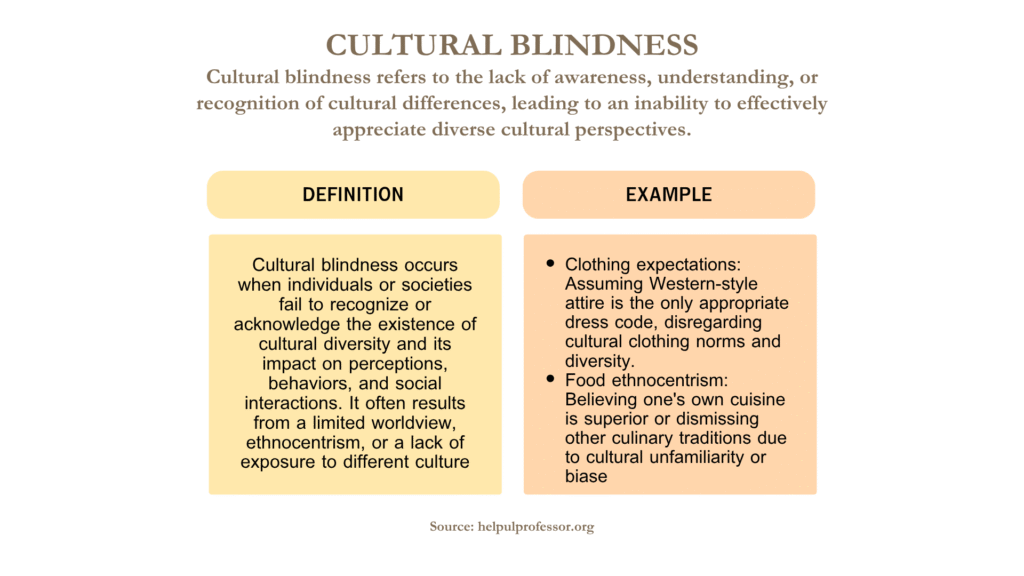
- – Cultural Blindness: Is the phase where the system, the organization, or the government treats all cultures as if they are one. They start treating and viewing people equally, when, in fact, these people have different sets of beliefs and traditions that might contradict each other. Usually, the dominant culture has an advantage because their culture is considered as the basis for how all cultures will be The “lesser” ethnic groups are forced to follow the culture of the dominant group. Cultural blindness is a system that is often classified by ignorance as well as the unrealistic fear and worry of people who do not belong to the dominant group. This is because the only needs that are met by the system are the needs of the dominant culture. For example, when it comes to religion, if you serve different people from different religions with pork, a lot would not be able to eat it. But because Christianity is used as the basis by the system, the needs of people from other religions such as Islam and Judaism are not met.
- – Cultural Pre-Competence: This phase is where the system, the organization, or the government starts to realize what their strengths are. This phase also allows them to see the areas where they need to improve on so that they can effectively respond and accommodate the needs of a diverse group of people coming from different cultural During this, the government becomes more committed to providing the needs and support that all minority groups ought to seek. However, there is still a lack of information about maximizing the capacities that the government has to provide the best experience for all cultures within the nation. The downside of this stage is that it has the capacity to lead to tokenism. Tokenism is when a group only makes a symbolic or perfunctory effort to say that they have already done their part. For example, tokenism is when a company only hires some people of colour to look as if they are diverse in their hiring process.
- – Cultural Competence: During this phase is where the whole system accepts and respects the different cultures within their group. With this, they continue to assess themselves and further improve their services for all the people within their sector who are from various cultural ethnicities. They start to provide more satisfactory programs and events that can cater to different cultures, and this is because they finally understand these groups on a deeper and more effective level.
- – Cultural Proficiency: Finally, cultural proficiency has been reached. During this phase, the different cultures within a group or a nation are held with high esteem, and they are effectively taken good care of by the system, the organization, or the government. To learn more about the concept and elements of cultural proficiency, we refer you to the course offered by The Center for Culturally Proficient Educational Practice (CCPEP), which consists of 13 audiovisual pieces and other materials of interest, which you can access through the following link.
As a process, and from the field of social intervention, professional cultural competence involves continuous improvement in the recognition of the cultural dimensions of work (clinical, social, educational, etc.). This includes:
- – Acceptance of intergroup differences in worldviews, social problems, health, the effects of racism and oppression, etc.
- – The ability to deal with people (users, learners, patients, ) with flexibility and cultural sensitivity
- – The ability to understand one’s own ideas, predispositions and reactions.
Bubble Questions
All these elements are configured in a dynamic model according to which the process of acquiring cultural competence results from the intersection of all of them. According to this model, and to the care of minority groups from different cultural backgrounds, a self- assessment of the cultural competence of social intervention professionals involves answering key questions such as: Am I aware of my personal biases and prejudices towards cultural groups different from my own? Do I have the necessary skills to conduct a cultural assessment and design a culturally sensitive action plan; do I have significant knowledge of the most important elements of the client’s cultural and human diversity in general; how many face-to-face encounters have I had with clients from different cultural backgrounds; and how genuine is my desire to be culturally competent? Cultural competence may in the future become the most important construct for diversity-sensitive service provision. However, to achieve this goal it must be further developed from the comprehensive conception outlined above into real and effective practice. In this sense, Sue (2006) has recently raised some questions that represent a challenge for practitioners and researchers in the coming years: If cultural competence implies knowledge, is it possible to know all cultures, how much and what cultural knowledge is necessary, are there different competences according to minority reference groups, or does cultural competence reside in the individual (professional) regardless of these groups, if cultural competence is a multidimensional construct, are all its dimensions equally important, and if cultural competence is a multidimensional construct, are all its dimensions equally important?
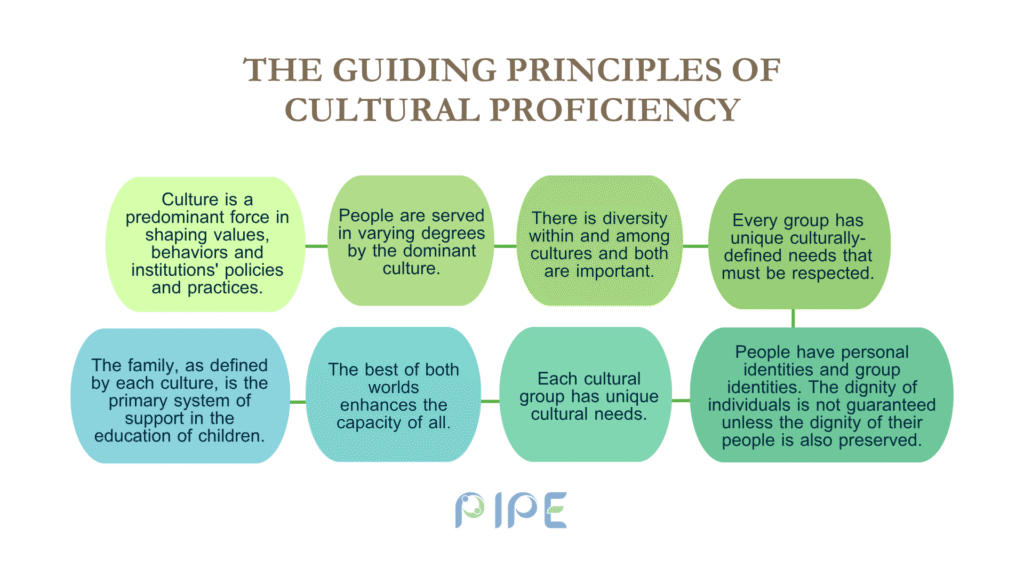
Dimensions of cultural competence
Dimensions of cultural competence
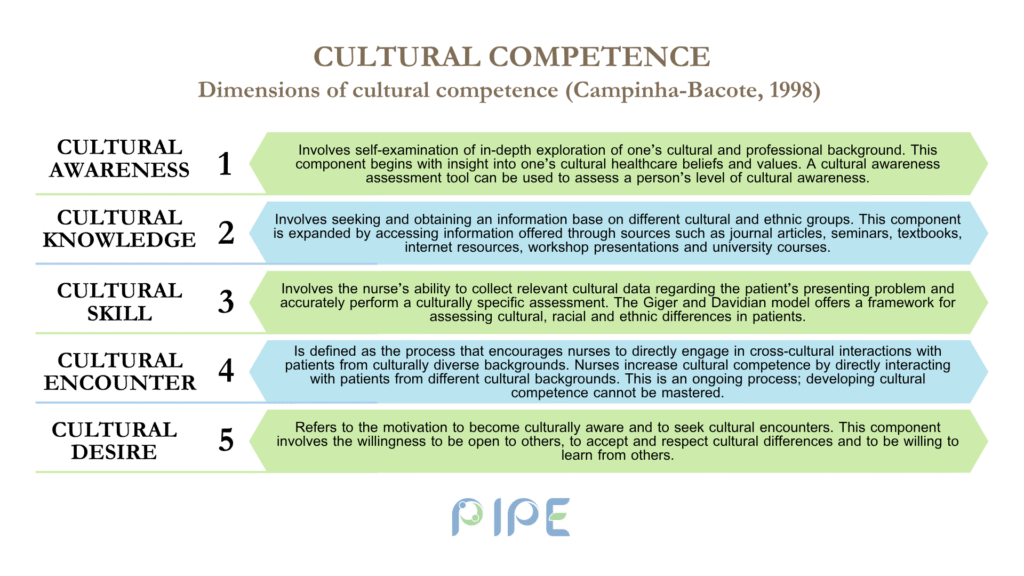
Cultural awareness
The practitioner of social intervention with migrants is influenced in shaping his or her worldview by his or her own cultural context of belonging (Pedersen, 2000; Sue, Arredondo and McDavis, 1992). Therefore, they must learn to recognise that belonging to specific (cultural) groups may lead them to adopt attitudes and/or beliefs that have a negative influence on the way they interact with people belonging to culturally different groups (by nationality, ethnicity, religion, gender, etc.). If the way of perceiving the user, his/her problems and the professional relationship established with him/her are involved in the provision of services (Sue, Ivey and Pedersen, 1996), cultural awareness will be the process through which the professional comes to respect, appreciate and be sensitive to the values, beliefs, lifestyles, practices, problem-solving strategies… of the migrant’s culture.
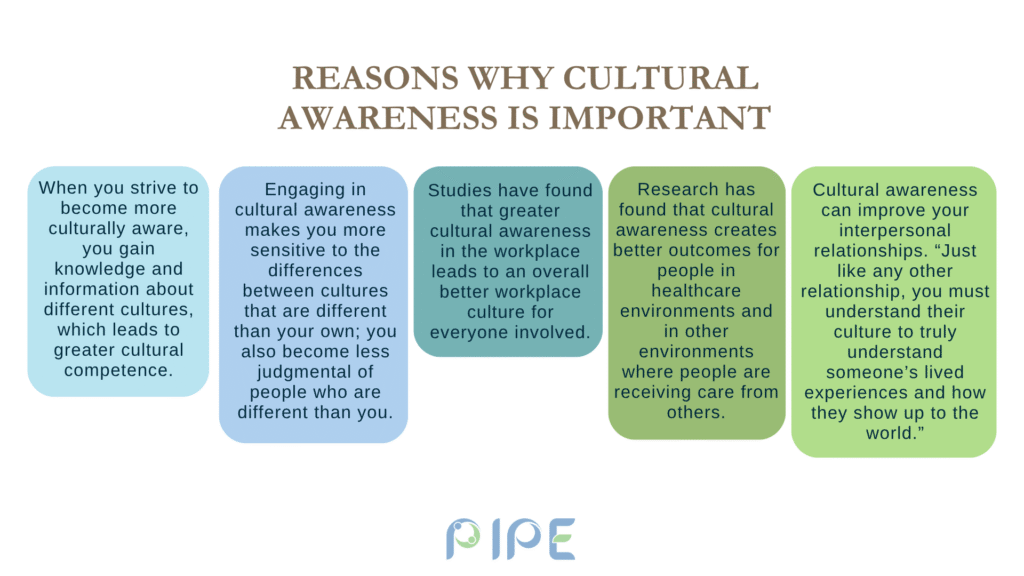
Cultural awareness should be a critical element in the process of updating the training of professionals working with migrants and should lead them from ethnocentrism to cultural ethnorelativism, without this meaning that all cultural practices must be accepted. It involves the acquisition of knowledge (values, beliefs, behavioural patterns, etc.) about their own cultural environments that have influenced their attitudes, stereotypes, preconceptions, behaviour… As these are particularly sensitive issues, and professionals working with migrants may feel vulnerable, learning processes in this area should take place in an open, positive and trusting environment.
Cultural awareness is crucial for migrants as it helps them integrate into their new communities while preserving their own cultural identities. Here are some key aspects to consider:
- – Understanding Local Customs and Traditions: Learning about the local customs, traditions, and social norms can help migrants navigate daily interactions and avoid misunderstandings.
- – Language Skills: Acquiring proficiency in the local language is essential for effective communication and accessing services like healthcare, education, and employment.
- – Participation in Cultural Activities: Engaging in local cultural activities can foster a sense of belonging and mutual respect.
- – Education and Training: Educational programs that include cultural awareness training can help migrants understand the historical and cultural context of their new enviroment.
- – Community Support: Building a support network within both the migrant and local communities can provide emotional and practical assistance.
- – Respect for Diversity: Both migrants and host communities benefit from recognizing and valuing cultural diversity, which can lead to more inclusive and harmonious societies.
Cultural awareness is even more crucial for professionals, as it helps them to rethink the reception processes, considering aspects that represent a critical challenge for the host community and for the hosted communities, considering multiple aspects that we summarize in the following outline:
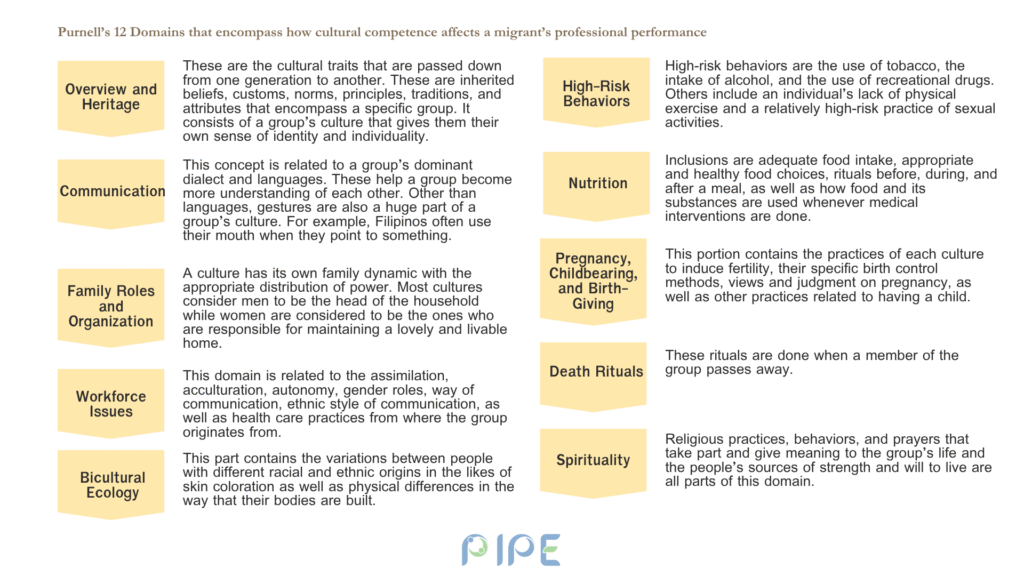
Cultural knowledge
Cultural knowledge is the collective understanding of values, customs, beliefs, and practices that are shared within a particular group or society. It encompasses a wide range of topics, including language, history, and values, and can be gained through a variety of means such as education, experience, and interpersonal exchanges. Cultural knowledge is constantly evolving and changing as it is passed from one generation to the next. Traditionally, cultural frameworks and models emphasized the importance of developing cultural knowledge or “cultural expertise” as a way of becoming proficient in serving culturally diverse populations. These notions of cultural competence were reflected in definitions of culture which favoured group-based distinctions, categorizing sets of individuals based on factors such as religion, race or ethnicity (Bhui et al. 2012).
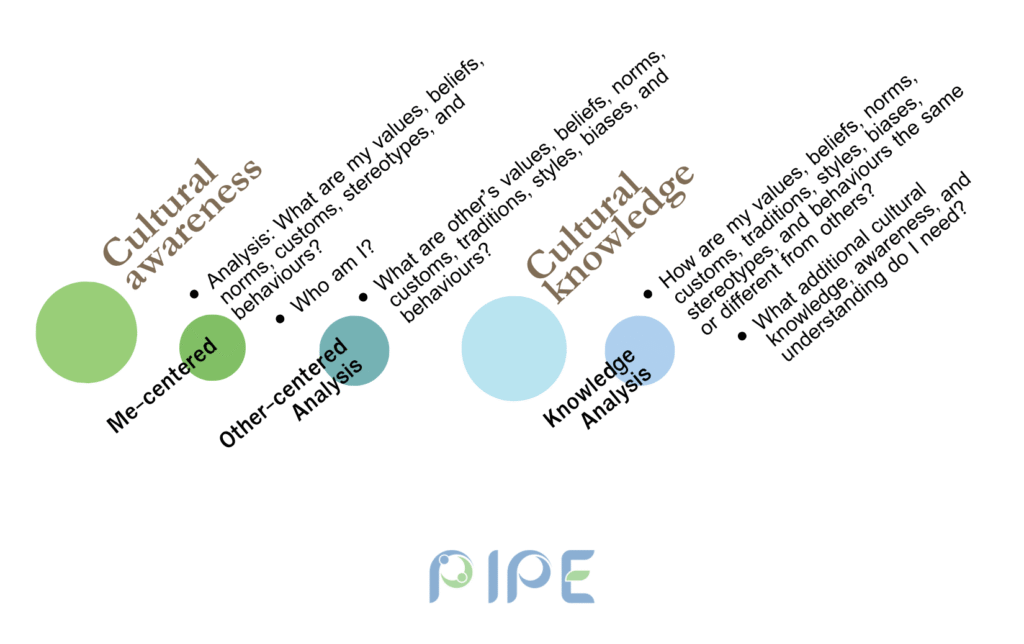
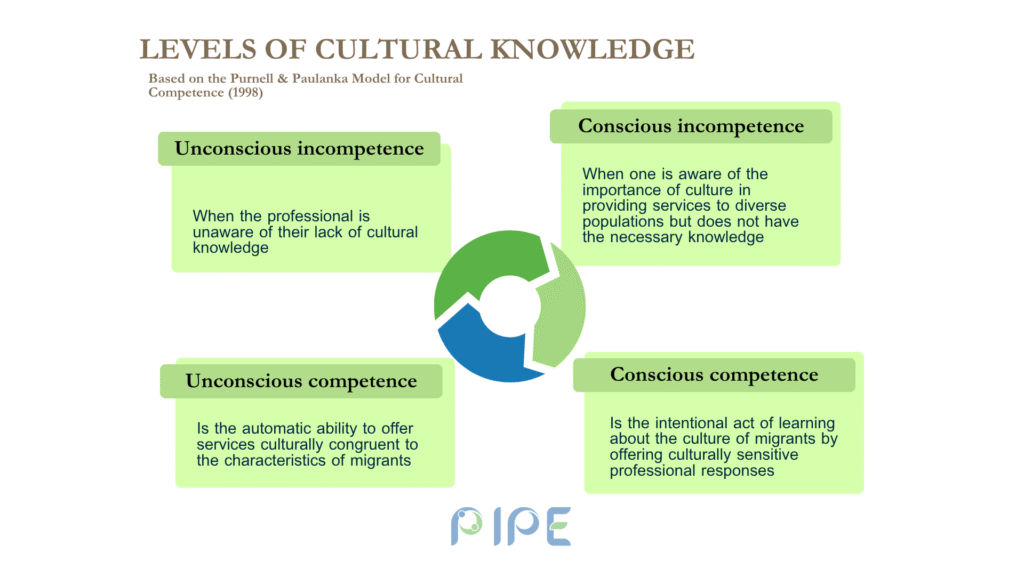
As a guideline, we will list the knowledge that favours the development of cultural competence for professionals working with migrants:
- – Culture of migrant people: (history, traditions, values, family system, religion, artistic ..).
- – Impact of racism and poverty on behaviour, attitudes, values and disabilities.
- – Patterns of help-seeking behaviour of migrants.
- – Role of language, speech patterns and communication styles in the host community and of migrants.
- – Impact of public service policies on migrants.
- – Resources (centers, people, informal support networks, etc.) available to minority groups and migrant individuals and communities.
- – Recognise how the values of professionals may conflict with or accommodate the needs of migrants from different cultures.
- – Know how power relations in communities or institutions impact on different cultures.
While the acquisition of cultural knowledge based on facts pertaining to specific ethnocultural and linguistic groups is important, this must be balanced against developing skills, competencies, and knowledge that applies to a wide range of cross-cultural encounters. Culture specific knowledge is helpful as a first step to gaining cross cultural knowledge but also has the risk of stereotyping. Cross cultural skills and competencies provide a much deeper understanding and broader environmental context for cross cultural encounters.
Cultural awareness, cultural knowledge and cultural skills/behaviour were posited as the most important elements of cultural competence in most of the frameworks. In some models, cultural awareness and cultural knowledge were combined as one element of cultural competence, namely the cognitive element. Generally, cultural awareness was defined as an individual’s awareness of her/his own views such as ethnocentric, biased and prejudiced beliefs towards other cultures, and cultural knowledge was pronounced as the continued acquisition of information about other cultures. Cultural skills or behaviour was described as the communication and behavioural ability to interact effectively with culturally different people. In the business context, these skills mainly stressed communication skills, while in the healthcare context, the ability to make an accurate physical assessment and collect health data of culturally/ethnically diverse patients was also included. (Alizadeh and Chavan, 2015)
Cultural skills
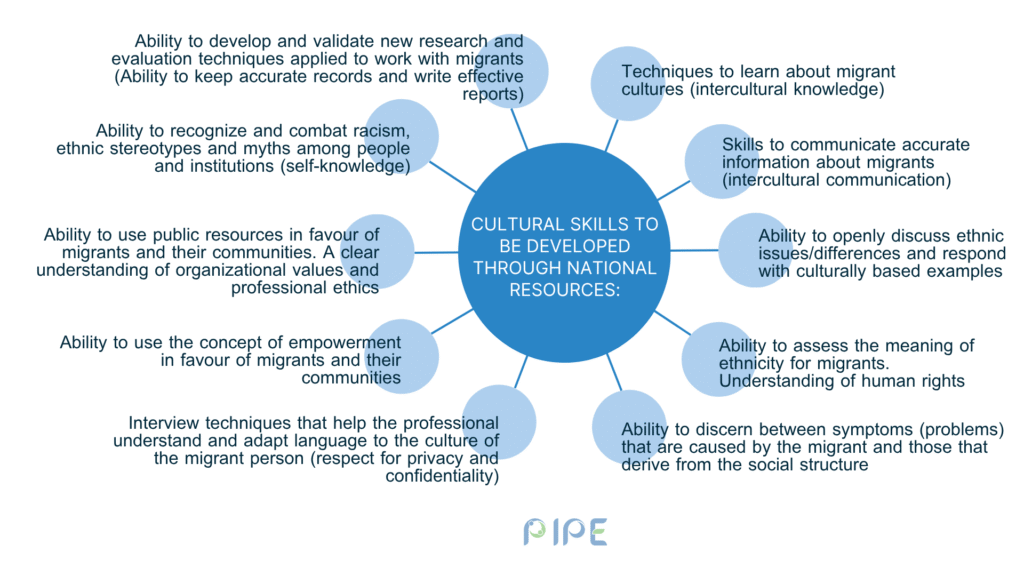
Cultural skills mean professional practices that are culturally appropriate to the characteristics of the migrants with whom one interacts. These practices range from the appropriate use of language, the way interviews are conducted, the data to be obtained, the elaboration of the diagnosis of educational needs or the design of an intervention programme. Cultural knowledge and awareness must be used to develop multicultural skills, that is, culturally appropriate and culturally sensitive behaviours and interventions. The pathway to developing these skills is cultural exploration and awareness, and as practitioners become more aware of their own ideas, values, conceptions and stereotypes, they will tend to project their own cultural values onto users to a lesser extent, thus becoming more effective (Sue, Ivey and Pederson, 2009).
- – Techniques for learning from migrant cultures (Cross cultural knowledge)
- – Skills for communicating accurate information about migrants (Cross cultural communication)
- – Ability to openly discuss ethnic issues/differences and respond with culturally based examples.
- – Ability to assess the meaning that ethnicity has for Understanding human rights.
- – Ability to discern between symptoms (problems) that have their cause in the migrant and those that derive from the social structure.
- – Interview techniques that help the professional to understand and accommodate the language to the culture of the migrant person (respect for privacy and confidentiality).
- – Ability to use the concept of empowerment in favour of migrants and their communities.
- – Ability to use public resources in favour of migrants and their A clear understanding of organizational values and professional ethics.
- – Skills to recognise and combat racism, ethnic stereotypes and myths among persons and institutions (self-awareness).
- – Skills to develop and validate new research and evaluation techniques applied to work with migrant people migrants (Ability to keep accurate records and write effective reports).
Cultural meeting
The goals of cultural education are not solely to create tolerance of diversity but to change existing structures that perpetuate intolerance, oppression, and inequity The broader message is that our society needs to change drastically, but that the paths toward those changes are multiple and must be undertaken in a concerted, interactive way. By looking at self, one sees the other. We should each take on the task of understanding self. But we come to see self through the eyes of others, thus we must implicate ourselves in the development of the other if we ourselves wish to develop. This is a call to all [irrespective of one’s race or culture]. (Torres-Guzman and Carter, 2000: 952)
The process encourages the practitioner to engage directly in cross-cultural interactions with users from diverse backgrounds (Campinha-Bacote, 2003). Because endo-group variability is greater than inter-group variability, for these encounters to be meaningful they must be conducted with the greatest number of people and ensure sufficient knowledge of the specific values, beliefs and practices of the migrants with whom we are going to work.
According to Sue et al. (1992), face-to-face encounters help to: redefine one’s perception of the group; help to prevent and/or dismantle false stereotypes; generate a wide range of verbal responses; and; send and receive appropriate and accurate verbal and non-verbal messages. Of particular importance in these encounters are eye contact, facial expressions, body contact, body language, distance, etc.
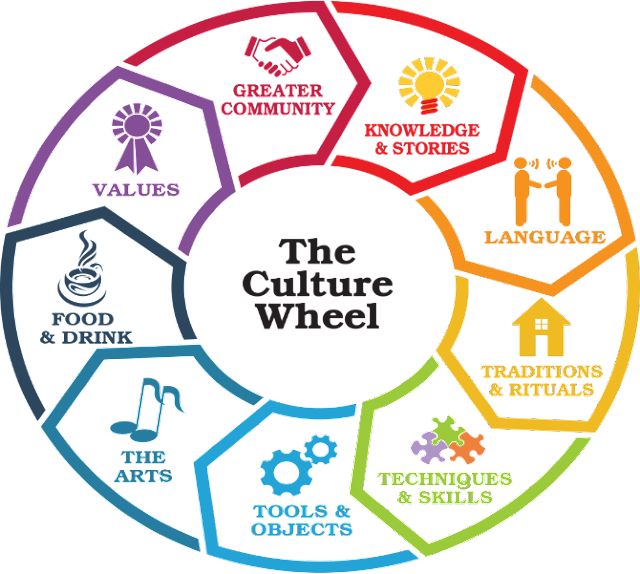
To demonstrate cultural sensitivity in a community is to “be aware” of the variations that exist between cultures and how those differences manifest themselves. “There are differences in how and where people are supposed to go about their daily lives. Meyer recommends “learning as much as you can about the people and regions of the world you work with so that you can adjust your management style gradually. Study the customs and professional practices of a country and become an expert observer of others. Provide professionals and volunteers with reading material about cultural differences and encourage them to think about what their behaviour is like so that they too can adjust.
Cultural meetings can be tricky to lead. “People bring their cultural baggage with them wherever they go—and that includes the workplace,” says Jeanne M. Brett, professor of dispute resolution and negotiations at Kellogg School of Management. Communication styles vary from culture to culture as do notions of authority and hierarchy, which only heightens the potential for misunderstanding and hard feelings. “If you don’t prepare for cultural differences and anticipate them at the front end, they’re a lot harder to deal with after the fact,” she says. It’s daunting but you needn’t feel overwhelmed, says Erin Meyer, a professor at INSEAD and the author of The Culture Maps. Approach your cross-cultural meeting with an open mind. And, have faith in your abilities because “you likely have more experience than you know,” adds Andy Molinsky, professor of organizational behaviour at Brandeis University International Business School and the author of the book Global Dexterity. “You’ve probably run meetings where there was quite a lot of diversity, be it gender diversity, functional diversity, seniority diversity, or just different personalities—culture is one more element,” he says.
‘Cultural encounters’ has become an increasingly popular term used to conceptualise the dynamics of cultural flows as well as the interaction between groups and/or individuals across established cultural boundaries. This special issue focuses on a particular type of cultural encounter: Encounters that are organised to manage and/or transform problems perceived to originate in or include cultural differences. Organising cultural encounters, for example, peace-building programmes or interfaith dialogue initiatives, has become a popular strategy to address conflicts and other challenges related to diversity. It is also, however, a paradoxical field of practice: on the one hand, cultural encounters are seen as the root cause of various global and/or local problems, but on the other hand organising a cultural encounter is also seen as a (potential) solution to these problems. (Christiansen, L. B., Galal, L. P., G Hvenegaard-Lassen, K., 2017)
Organized cultural gatherings are scripted events: time, place, roles, and interactions are strictly prescribed and regulated before the gathering. Scripts are also linked to the particular social domain with which the encounter is associated. That is, organized cultural encounters take place within already established professional or institutional contexts and are therefore significantly determined by the existing norms, discourses, roles and hierarchies that govern these spheres.
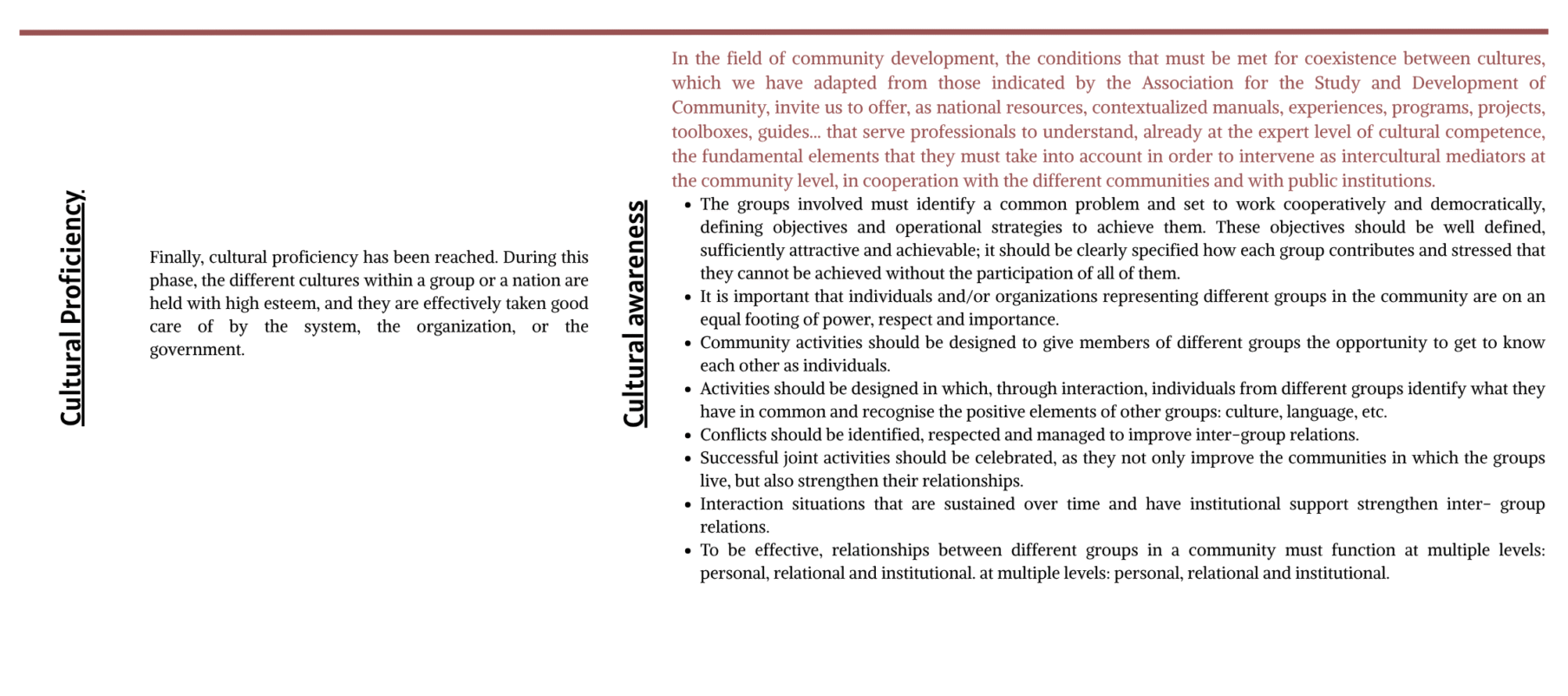
Cultural competence at the community level
Cultural competence at the community level
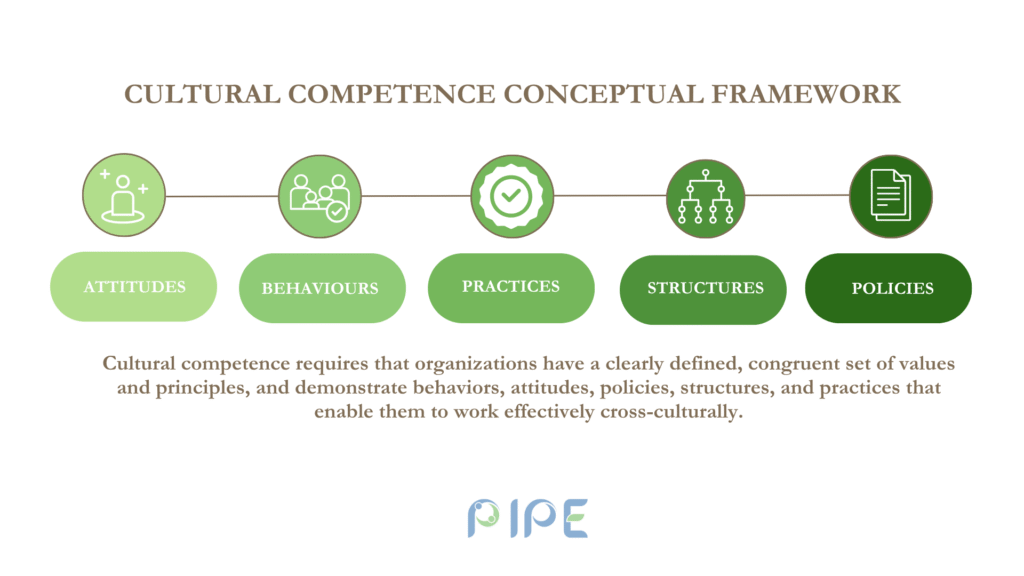
Five essential elements of culturally competent organizations: At the organisational level, there are five essential elements that contribute to a system’s ability to become more culturally competent. The system should: • Value diversity • Have the capacity for cultural self-assessment • Be conscious of the dynamics inherent when cultures interact • Institutionalize cultural knowledge • Develop programmes and services that reflect an understanding of diversity between and within cultural groups and communities. (National Association of Social Workers, 2001:12)
At the community level, cultural competence is also based on an effective valuing of human diversity that promotes peaceful and creative coexistence between the different social groups that make up a given territory (neighbourhood, village, community of neighbours…). Valuing diversity means that the institutions and members of the community are aware of the benefits and similarities and work intentionally to build sustainable relationships between people and institutions of different backgrounds. A community that values diversity ensures that its institutions provide equal treatment and equal access to resources and decisions to all its members regardless of ethnicity, sexual orientation, religious beliefs, etc.
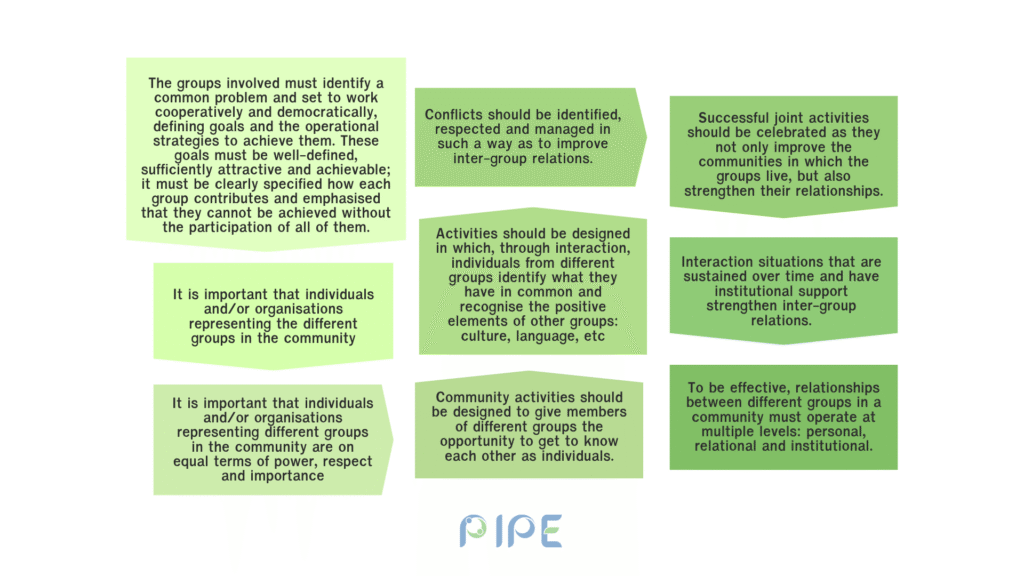
At the community level, programmes aimed at improving intergroup relations (immigrants vs. natives) are a good reference for the implementation of social interventions. These programmes are governed by a series of strategic principles based largely on the results obtained in research on contact theory. According to the Association for the Study and Development of Community (AEDC, 2002), these guidelines are:
Barriers and challenges for the implementation of a training plan on cultural competence in the field of interculturality.
Barriers and challenges for the implementation of a training plan on cultural competence in the field of interculturality.
In recent years, there has been a large increase in the immigrant population in Europe. This phenomenon has posed a challenge for paediatricians who have had to adapt to this new reality. At present, many of the difficulties and challenges posed by immigrant children have more to do with communication problems and different conceptions of health and illness than with imported pathologies or specific health problems. In line with the above, cultural competence is referred to as a set of skills, attitudes and behaviours in which the professional should be trained to provide sensitive, empathetic, flexible and respectful care to the patient, involving effective patient-centred communication. Sensitivity to differences and to others, and the ability to listen and ask questions are basic pillars of cultural competence. These skills are not different from those needed to provide adequate care to our patients in general, but to apply the skills needed for a patient-centred approach to the immigrant population. Therefore, deepening these skills will improve our care for the indigenous population. In our care for immigrants, we encounter difficulties and barriers to overcoming these difficulties. These barriers include problems of attitude, prejudice, suspicion, language barriers, lack of time for consultations, lack of training in specific issues related to the immigrant population, etc. Identifying these barriers and seeking solutions to these difficulties are the objectives of the research teams of the PIPE project.
Transferring the experience in the health field in relation to the care of migrants to the initial reception scenario and the training of professionals who will accompany migrants in what should be a process of pedagogical hospitality or hospitality pedagogy – see the similarity with hospitality – means being aware of the current scenario in which the following aspects threaten coexistence and turn migratory processes into crises beyond the humanitarian, crisis of humanity.
The confusion of aporophobia with racism stems from the ideological cover that neoliberalism gives to capitalism, so that, unconsciously, we have grown up with the suspicion that the poverty that the people who migrate to our countries or communities carry by their own demerit is contagious, like a disease, and that as such, our response must be immunitarian, the biological and political opposite of communitarian.
As we expressed in the Cultural Competence Continuum (1.1), cultural destructivism, typical of neo- colonialism, stems from interests in maintaining a status quo of domination and privileges of some sectors over the great oppressed majorities of the world. It is not new, but it has intensified with globalization and, from the knowledge-power pact – analysed well by Foucault – from which the prevalence of techno-scientific knowledge emanates, an illogic of numbers is generated (Appadurai) that turns the real majorities into cultural minorities, so that the relationship of knowledge is unidirectional, i.e. we export what is ours and ignore the other, reducing otherness to a catalogue of prejudices spread virally through the Internet, which favours the idea of otherness as a potential enemy and hinders the possibility of dialogue, also nullifying curiosity towards the different as a space for learning, generating the breeding ground for a culture of hate that builds epistemological walls stronger than physical borders.
Another obstacle to the development of cultural competence is established by what we call the sociology of absences, and which connects with the cultural knowledge defined in section 1.3.2, that is, how little or nothing we know about other cultures. How many Senegalese women writers do we know? Bolivian philosophers? Have we seen any Romanian films? We could ask so many and so many hurtful questions that would show the desert of Western ignorance that we can only admit that the unidirectional flow of Western knowledge is transferred to culture from a point of view that is clearly expressed in Galeano’s poem Los Nadies, when he recites that they have no culture but folklore, that they have no art but handicrafts, that they have no religion but superstition.
This obstacle leads to another one that hinders a professional relationship that favors the empowerment of migrants in their learning processes and adaptation to the culture that hosts them
– and note that we do not say integration -, paternalism that we can link to charity, a treatment of migrants as minors, as incapacitated, as needy, as incapacitated, as in need of our guidance because they are culturally inferior, something that comes to some extent from the colonial heritage that historically places them as losers and banishes them to the margins of the great historical, political, scientific or artistic events of our memory as humanity. In cartography this is evident in Mercator’s perspective, in how throughout history the West has exerted cultural pressure to minimize or delegitimize any contribution that comes from beyond the margins of its domains.
Another element that hinders cultural competence is the fear of the unknown, a fear that is fed by misinformation and that goes viral throughout history, turning others into soulless beings, monsters, cannibals, criminals, barbarians and, let’s stop at this consideration that comes from the Greeks, barbarians are those who do not share our culture and who are a threat because of it, which implies that for the barbarian we are also barbarians. But behind this idea lies a conviction that our societies, our political constructs and our ways of resolving conflicts are so superior that they allow us to invent pre-emptive wars, to undermine the sovereignty of other nations and to destroy entire cultures for our economic benefit. And the best way to legitimize ignominy is to instil fear in our populations, fear of what we have created by attacking other communities without prior offense, terrorism.
And on the other side of fear, almost as dangerous, is the exoticisation of otherness, considering that the other is colourful and superficial because it is different, that it is fashionable, creating a false consciousness that works as a self-help philosophy, that turns intercultural encounters or the consumption of the other culture into objects of prestige for intellectual elites and that does not transcend into forms of behaviour and horizontality or dialogue of knowledge that aim at cultural competition.
In relation to the cultural skills referred to in section 2.3.3. Our individualized, competitive communities do not possess relevant communication skills, not only do we have great deficits in expressing meaningful ideas in our own words, compared to peoples whose orality is highly developed, we do not know how to listen, nor do we have the attitude for dialogue, the algorithms that govern our virtual interaction processes are based on similarities, we have low tolerance for diversity and a low level of frustration in the face of dissent, the democratic idea that everyone thinks they are right does not favour a spirit of negotiation nor does it harbour a predisposition to be suspicious of one’s own beliefs, in our western societies matching prevails, associating gregariously with those who think or like us, showing a certain tolerance – remember that the word comes from the Maison du tolerance of the French revolution – that does not understand diversity, as long as it does not affect our well-being, it does not matter to accept a certain colour, even if it is only to maintain the atmosphere of political correctness.
In this unfavourable scenario, in which neoliberalism serves as a superstructure for capitalism in its 5.1 version, after the pandemic, with the technological element in its favour, the obstacles to cultural competition are neither immovable nor eternal, they are contextual, migrants like grains of sand in the desert penetrate between the cracks of the system and the borders, in marginal territories, the coexistence between differences generates new cultural and political expressions that re-imagine the journey from immunity to community, from an ethic of miscegenation.
Perspectives on identity and our heritage for learning cultural competence.
Perspectives on identity and our heritage for learning cultural competence.
To abandon the atrium of the western magister and share the stage of people who co-learn with other people. We are not talking about a change of method, nor of a mere horizontalization (although it would be a notable advance), but of the ecological expansion of knowledge, the opening (not libertinism) to non-verifiable knowledge (from the neopositivist machinery), to distance culture from utilitarianism; from spectacle; from protocols; from bureaucracy… to revitalize its critical properties, its temperament and personality, its filiation to dissent, its passion for the forbidden and its inability to submit to norms. But what defines the pedagogies of the hallway, is its cordiality with death, not feeling like hosts of the world, of any space of the worlds, as guests, they invite it to the marriage, to the conversation, they make it participate and thus, they discover themselves during life, as authentic protagonists of the plot. Not as an audience. Novoa, A., “Pedagogies of the Hallway”, Debate Conference: Problems of Hermeneutics, Faculty of Philosophy of the ULL, 2014.
In any order of things, the constitution of lines of thought that generate a critical attitude is almost a normalized fact. Thus, the constructions of discourses and metanarratives are crossed by a multitude of trenches in which the defenders of each of the ideas are hidden from the eventual attacks of those who think differently. Even in most cases, one can observe the phenomenon that the best defence is the attack, and these people launch themselves at their adversaries in order to gain in quantity the fight for the hegemony of their speculation as a paradigm. In this fight we frequently find a multitude of groups, small groups, communities and even societies. The difficult thing, because it is not typical, is to find the self-critical visions of each of these movements.
And it is difficult for two almost obvious reasons. The first is because those who represent the self- critical vision of each group tend to be convinced of the negative nature of their position for the group, the feeling of belonging is usually used for this; to make them see how wrong the opposite is by refuting these ideas from what is “agreed” within the group; there is a tendency not to let them speak or to silence them directly. The second is something simpler. It is the idea of distancing those who practice self-criticism from the group in which they are found. It is the perpetration of the betrayal of the group towards one of its members under the premise that it was said person who betrayed a belonging that must be considered positive without any ambiguity.
Self-criticism is seen as an act of disloyalty that should lead to desertion, whether it is on one’s own initiative or if it is driven by those who do belong to the group. What must be understood is always that, greater value is given to militant loyalty to the group than to the apostate action of those who are closer to heterodoxy. Thus, constancy and loyalty are validated, and the value of identity emerges with respect to a vital situation, not as a fact but as a positive quality inherent to one’s own being. The concept of identity refers to an experience of continuity and sameness of being oneself, as something that maintains its essence, its immobilized permanence amid processes of change and crisis. Uniting identity and change imply a certain paradox given that rethinking our being as phases of an itinerary that is exhausted by sections to re-emerge again being the same but with new features is one of those pieces of knowledge that never seem to be put into fashion. And this becomes more pressing at a historical moment where there has been a predominance of discourses that announce the death, not of God, if we go back to Nietzsche’s announcement, but of man and his utopias, and with them, the end of history, emptiness, futility and disenchantment. This work suggests that we must open the dynamic conceptualization because identity is precisely that experience of continuity through the transformations of time and circumstances.
Identity politics today promotes corporatism under the headings of ethnicity, gender or nation. In these cases, strategies of “purity” are required to mobilize “some” in order to exclude “others.” It is the myth of internal consistency that largely fuels the current multiculturalist discourse, assuming that each culture is harmonious, self-sufficient, compact and homogeneous. Although this fallacy has its roots in the repeated attacks of Western hegemonic culture, we do not believe that it allows the configuration of new forms of development that are more open and constantly changing because:
Many of the apparent apologies for difference and the right to identity end up contributing to the spread of racist attitudes —although less aggressive than in the past—, a racism with a friendly, folkloric, low-intensity face, but racism, nonetheless. Paternalism and confusion are the consequences that flow from the misuse and abuse of the inauthenticity of these assumptions, which must be reconceptualized from another semantic and experiential order and range (González Luis, 2001: 16).
In contrast, reality shows that it is becoming increasingly difficult for each person to define themselves in reference to a nation, a language, a religion or a specific and ethnic group. It is ignored that identity is multiple or, if you prefer, is made up of multiple components, although “it is not a juxtaposition of autonomous belongings, it is not a mosaic: it is a drawing on a taut skin; it is enough to touch just one of these belongings for the whole person to vibrate” (Maalouf, 1999, p. 38).
But not all the components that make up an identity, whether individual or collective, have the same intensity when it comes to defining it. Following the proposal made by Marjorie Ferguson, there are superficial components or identities that are closely related to consumer objects; for example, ways of dressing or eating. And there are deep components or identities such as religion, beliefs, race, gender, class, the image of the past and future or the rights and obligations of its members. As an example, we will point out that the Quechua people have a very different conception from that of the West. For them, the future is “behind” us because it is not known, nor can it be glimpsed; on the other hand, the past is “in front” because it is known and is in fact the only one that can guide our steps. This conception of the past and the future greatly conditions the identity of the Quechua people. But there is also another type of deep identity that is too often forgotten, and that is the one concerning the form of productive organization of a cultural group in which a subject is immersed. To clarify the importance of this identity component, we will point out some characteristics of the Aymara people that, without a doubt, are part of their own culture. For example, ‘minka’ is the joint work destined for sowing or hunting and also for the construction of houses, corrals, temples; ‘umaraqa’ is the collective rotating work; ‘sataqa’ is a solidarity way of giving access to some land in usufruct to those who do not have it; ‘aynoqas’ are lands that belong to the community and are destined for cultivation in a rotating manner. In the case of indigenous communities, it is extremely clear how their culture is rooted in their models of productive organization, since it has a lot to do with their way of thinking and their way of conceiving life.
There is currently a “politically correct” discourse that advocates for cultural diversity without further reflection on the matter, and in too many cases it involves “certain rhetoric about diversity (…), soft words, euphemisms that soothe our consciences or create the illusion that we are witnessing profound social and cultural transformations simply because they fit into fashionable words” (Duschatzky and Skliar, 2001, p. 186). But difference does not have to be intrinsically positive and must remain in constant “check”. Not all non-hegemonic cultures can be considered valid because they are silenced; despite their marginal situation, they do not have to have a transformative character in themselves. Unfortunately, we must admit that there are practices or characteristics in all cultures that contribute little to social change for the benefit of all. There are better and worse identities and differences; In Maalouf’s words, murderous identities that encourage cultural segregation and more open identities that assume the risk of acculturation in the face of possible cultural exchanges. For this reason, we cannot give in to an ethnographic cult of cultures, incurring in a cultural relativism that would contribute little to the configuration of more just realities and would lead us to indifference towards differences.
We have not only the right but the duty to know, analyse, and judge all cultures and ask ourselves: What identity claims make social justice, participation, and democracy possible? Which ones harm or limit them? Or better yet, what elements of each culture facilitate socially and culturally just styles? Because we cannot fall into the error of treating cultures as a homogeneous block: “Western culture is…,” “Muslim culture is….” Our analysis will depend on which component of identity and which element of it we are referring to. The analysis and evaluation of cultures are complex and must be approached as such, and even more so if we take into consideration the cultural diversity existing in each cultural group. There will always be the perspective of each person, of each cultural group, which will undoubtedly condition the answers to the questions posed. But that should not be considered as an inconvenience; It is a wealth if we are able to contrast, to confront interpretations and analyses of realities, and attend to the search for a world where all human beings have a place.
Critical and dialectical reflection is only possible if there is the possibility of analysing and assessing other cultures, but not according to our own ethnocentric criteria but rather according to an ethic that gives shelter to diversity. We need to unmask ourselves and commit to a politics of differentiated difference, avoiding delegitimizing but also simply celebrating all identities and differences. The defence of cultural plurality is insufficient in the current situation, which suffers from so much justice in all parts of the world; what is more, it ultimately means giving up the pretensions of culturally and socially just societies. We need to have courage and dare to raise the need for plurality, yes, but not only multicultural or even intercultural, but mixed. A plurality based on multiple exchanges where self-criticism and criticism of the ‘others’ play the main role in exchange relations, and where processes of acculturation and assimilation take place. Because let us remember, mestizaje implies losing cultural elements considered one’s own and incorporating new ones, considered foreign; that is the implicit requirement of cultural competence. Debate, confrontation and reflection must be part of the mestizaje processes. The problem is that it is assumed as a prejudice that every dialectical clash confronts people and not the ideas they propose. This generalized prejudice avoids conflict, but also avoids possibilities of dialogue, exchange and understanding; ultimately, it hinders the possibilities of constant revision of cultures and their enrichment through reflection and analysis, through mestizaje.
Identity, far from being static and immutable, as we are led to believe today, is in a constant process of change. “Identity is not given to us once and for all but is constructed and transformed throughout our existence” (Maalouf, 1999: 35). It is not innate, it is learned and is given by the “others”, the “others” closest to us who teach us which cultural elements should make up our identity and which elements should be rejected. We are in the transition from skills to knowledge to reach cultural awareness. The plastic idea is, as professionals who work in the field of migration and to provide a pedagogy of hospitality, from an ethic of mestizaje, to forge mobile, dynamic identities.
Critical and dialectical reflection with the ‘others’ requires “cultural self-criticism”, the analysis of the limitations of our own culture; without it, it is impossible to consider that we can enrich ourselves and learn something from the ‘others’. And even more so if we consider that “a detailed examination indicates the presence in all cultures of a set of external “imported elements”, although (and this is important) they may end up being perceived as part of the culture itself” (Borofsky, 1998, p. 2). We must take a responsible position with respect to our own cultures, most of which are already hybridized with the hegemonic culture and understand that all of them must ‘lose in order to win’, being constantly revised in the face of an ethic of development that enables the members of all cultures to produce, reproduce and develop. The review of all cultures under an ethic that allows for socially and culturally just societies is a basic principle for achieving cultural fusion. Or what Freire proposes that it is difficult to educate without learning from those who educate themselves by teaching us. It will be difficult for the migrant to trust us if we do not convey an honest feeling of curiosity towards the cultural baggage they carry and above all, if we do not listen to the critical gaze that they can bring to what is “ours.”
“The foreigner (…) begins when the awareness of my difference arises and ends when we all recognize ourselves as foreigners, rebels against ties and communities.” And being a rebel is to feel uncomfortable in this world again, to assume the dissatisfaction of the one who seeks, the curiosity of the one who asks. It is losing sleep over the need to decipher a text, it is recovering the passion for knowledge and, ultimately, for life (Piastro, 1998: 153)
Human beings and cultural groups should be nonconformists with who we are and with our own identity, always keeping it “in check” and looking for ways to improve it every day based on ethical values and principles that lead to mixed, mestizo styles of development. We should always feel like foreigners, strangers in our own skin and live in that constant feeling without conflict.
The diversification of cultural encounters is key to survival soon, where people can share their experiences and ideas on how to achieve socially and culturally fair development. If silenced cultures do not manage to speak out, mixed-race plurality will be impossible; other ways of seeing the world will not be known, and Western hegemony will devastate the planet. Only in this way will it be possible to advance towards the necessary critical and plural cultural fusion, refusing the cultural fusion that would pursue a single mixed-race culture.
A single culture, whatever its nature, only makes possible a single world. The cultural diversity still present on the planet raises the possibility, at least in theory, of imagining diverse possible worlds. Its survival, its rebellion, make the proposal of mixed-race plurality a possible dream, a necessary fact for the survival of Humanity.
The challenge, therefore, is to achieve sufficiently firm socio-cultural references in the self- conception of one’s own identity to be able to make multiplicity a factor of enrichment and flexibility rather than chaos and incoherence, since they ultimately determine the choice of an explanation that is already given, always seamless and complete. The undisputed choice is understood by many factors, but above all, the lack of culture and therefore of education about complexity and of inhabiting uncertainty must be considered. The starting point is the creation of awareness about one’s own image of the “I,” since the choice of the bases of identity is constituted prior to the very existence of each person, and its questioning would cease to be problematic because it is understood that it is a construct based on the needs of each person and we must tend toward a premise of even effectiveness for survival in this world.
From this personal point of view, the question of group or community identity becomes a necessary game of discussion and/or discussions between the participating identities. Not from a negotiating perspective but from a Rorty solidarity perspective that refers to the idea of rapprochement under the premise of “it is one of us”, where the “we” is something much more restricted and more local than humanity (Rorty, 1996: 207-211). Always building relationships of discourses and possibilities within a democratic approach where ideology and truth are constructs to be monitored. Critical mestizaje means changing our relationship with the world, accessing its multidimensionality and another form of knowledge different from the current one (deterministic and absolutist). It is a different way of living and interpreting reality; it is a different way of entering into human complexity and its diversity. This is a never-ending re-education and education process that is against the current educational parameters, betting on transgression as the norm and doubt as the method. The commitment to mestizo pluralism is a commitment to a plurality embedded in social equality, because “cultural differences can be freely elaborated and democratically mediated only on the basis of social equality” (Fraser, 1997, p. 248).
Thinking Cultural Competence from an Ethics of Miscegenation
Thinking Cultural Competence from an Ethics of Miscegenation
Miscegenation: mixture, fusion, conjugation, exchange, reciprocal linkage that generates richness, beauty and radical novelty. It is the answer, the only one as a condition for the future, for the humanisation of all humanity; for the unmasking of the falsehood contained in the individualistic and gregarious identity positions of strength, purity, customs, tradition, security, well-being, economic survival and growth that promote the discourses of hatred and segregation. These echoes and social complicities encourage policies of reconfiguring maps, closing borders (to people, not goods), expulsions and indifference to the destinies and lives of a surplus humanity.
Talking today about processes of integration, interculturality, horizontal relations, sustainable future and not doing so from the criteria of justice, equality and redistribution of wealth and the consequent critical and alternative positioning to the triumphant hegemonic system, is to sweep in the desert.
Only by adopting an ethic of miscegenation as the basis of an alternative world project and the promotion, dissemination and expansion of reciprocal thinking will we be able to suffocate and neutralise entrenched positions based on the slogans of fear, blaming others, outsiders, those who are different from all the imbalances and precariousness. These slogans, moreover, are false, biased and even completely contrary to the real forecasts of the actions necessary for survival.
But the option of miscegenation is not random, it is deliberate. It has to be desired, and it has to be motivated. Miscegenation becomes normalisation, the marginal becomes the norm, common, visible.
Therefore, the thought of miscegenation would be the ethical companion of knowledge management, social organisation, coexistence and the planning of a future of dignified lives for all. It is a proposal for dispossession, recognition of otherness, non-uniformity, complementarity, the abolition of domination, verticalism, assimilation, abandonment, forgetfulness and indifference, making diversity and transcultural dialogue possible.
The realisation that we are living in immoral times nourishes the ethical approaches proposed here. We cannot deny that we are starting from a negative empirical ethics, in the sense that its fundamental pillar lies in the contestation of the current dominant system, considering it useless because it is so for most of the people who in turn sustain it.
In general terms, the current neoliberal system seems to be an entelechy, a mere abstraction that is impossible to capture and modify; but it is the work of human beings – of some human beings – and its transformation is possible. This is why an ethic is sought that goes beyond contemplative or merely theoretical materialism; an ethic that unfolds to analyse the causes and origins of the situation of most of the planet’s population.
A dialogue between the dominant and non-dominant sectors, between the ‘deaf and dumb’, presents serious difficulties indeed. It seems more feasible that a responsible ethic can be shaped and consolidated through encounters and dialogues between beleaguered sectors and/or cultures. This ethic should emanate from the awareness of those affected by the system, an awareness that goes beyond a subjective questioning, of discovering oneself as exploited or excluded from the system. The recognition of the otherness of the other becomes essential for a symmetrical and transformative dialogue.
The critique must be made of the system as a whole and not of certain aspects of it; it is its overall validity that must be questioned. Separating capitalism from colonialism, racism and patriarchy is the great cunning of the system. Until we understand that the problems of indigenous people, women, the poor, immigrants, have a common root, we will not move towards truly global and valid solutions. Partial struggles must be shaped into more ambitious projects.
In the face of the installed ethics of illusion and mirage, in which we have been tamed and domesticated, we need a political ethic, an ethic strongly nourished by reality. Evasion is one of the many weapons that the system places at the disposal of the population to avoid conflicts and transformations; and it is one in which multinationals, the media and technology will invest heavily in the coming decades. We propose the confrontation with the unmasked and painful reality, to find ways towards social and cultural justice by allowing <<redistribution>> and <<recognition>>.
We must clarify that by <<redistribution>> we mean a restructuring of income distribution, the reorganisation of the division of labour and the subjection of investment to democratic decisions. And when we propose policies of <<recognition>> we are referring to the revision of the evaluation of disrespected traditions and cultural products of excluded and undervalued groups, which could imply recognising and positively valuing cultural plurality and even implying the total transformation of the dominant social patterns of representation, interpretation and communication, creating changes in the self-awareness of all through processes of decoding in all members of society.
Action plan for intercultural training for professionals
Learning objectives for a cultural competency education action plan for professionals providing services to migrants.
Learning objectives for a cultural competency education action plan for professionals providing services to migrants.
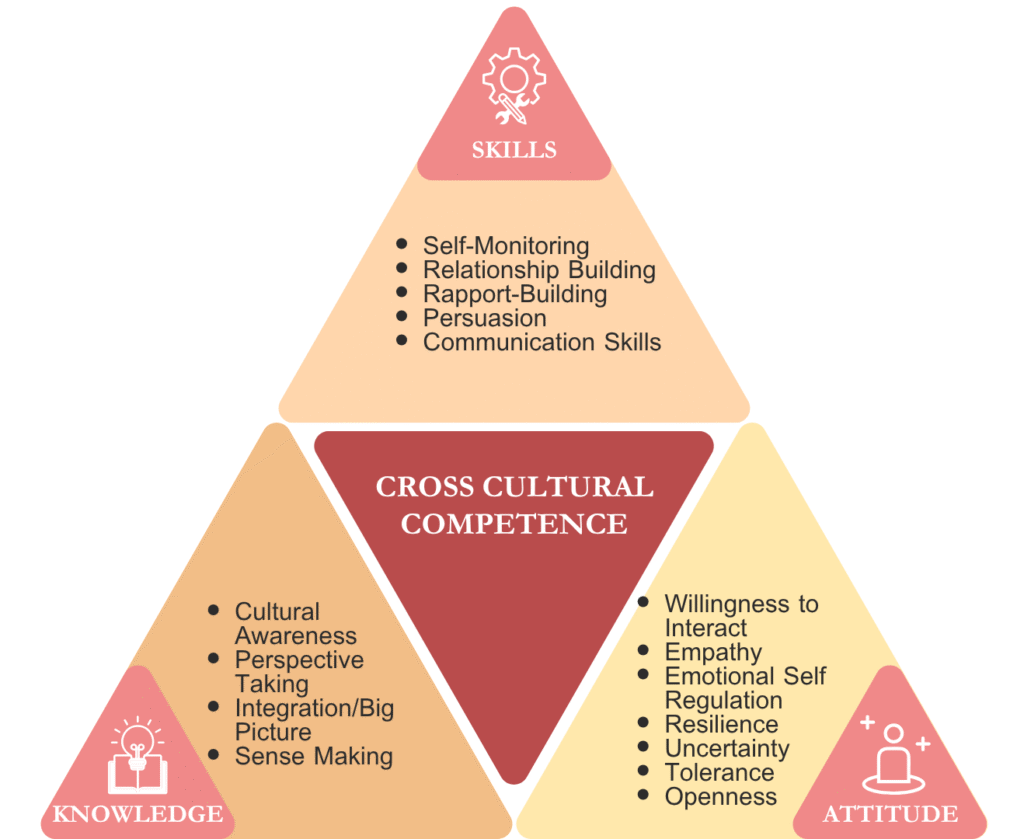
Based on the competence model that underpins the European higher education area and on the pedagogical tradition, we will, taking up Pestalozzi’s posse, nosse and velle, structure the contents of the cultural competence that professionals who work with migrant’s need in terms of attitudes, knowledge and skills, in relation to what experts say about cultural competence, which refers to awareness, knowledge and skills. Since awareness is the most complex aspect, we will integrate skills training and knowledge acquisition, adding cultural encounters and community cultural experiences as a path towards transformation and personal commitment, which means becoming aware of other cultures as an opportunity to inhabit the world in a different way.
Tactically, we will reverse the sequence proposed in the dimensions of Campinha-Bacote’s cultural competence and begin with seduction, by awakening interest and curiosity through attractive elements of other cultures, of an artistic, playful and festive nature, taking advantage of the power of cultural encounters as spaces and times to share positive and enriching, healthy and fun experiences, to promote a work environment suitable for training the skills that involve the need, on the part of professionals, the desire to explore other cultures and learn from them and progressively become aware of their own cultural situation in a diverse world, their shortcomings and the educational challenges they need to face in order to acquire the cultural competence that deconstructs the policy of hosts to generate a community of guests. Hence, ecology and hospitality, sustainability and cultural competence, go hand in hand.
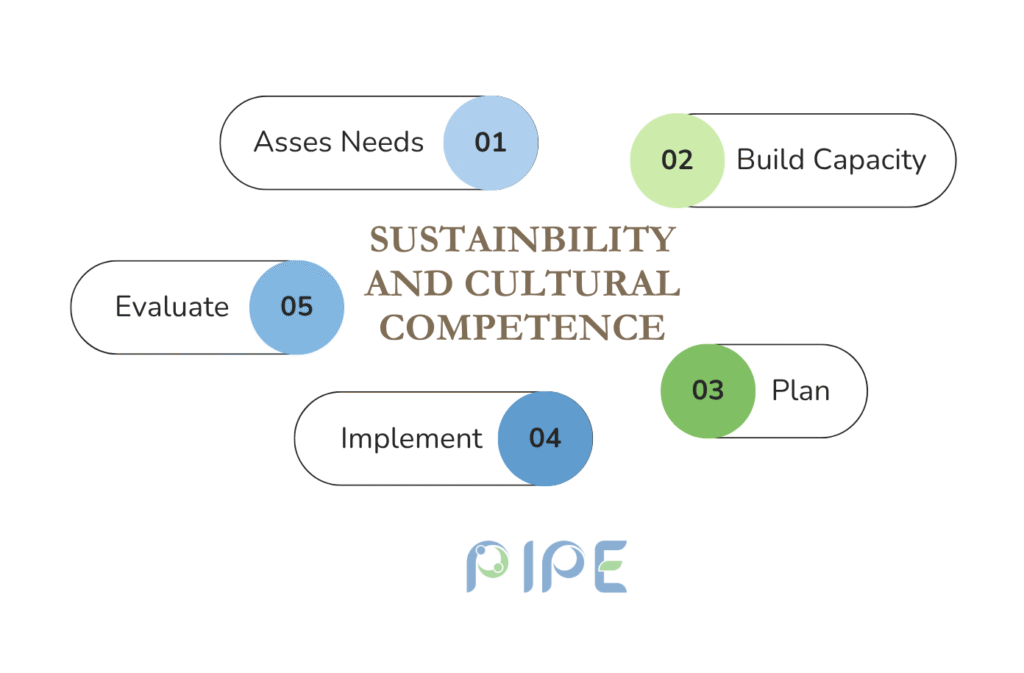
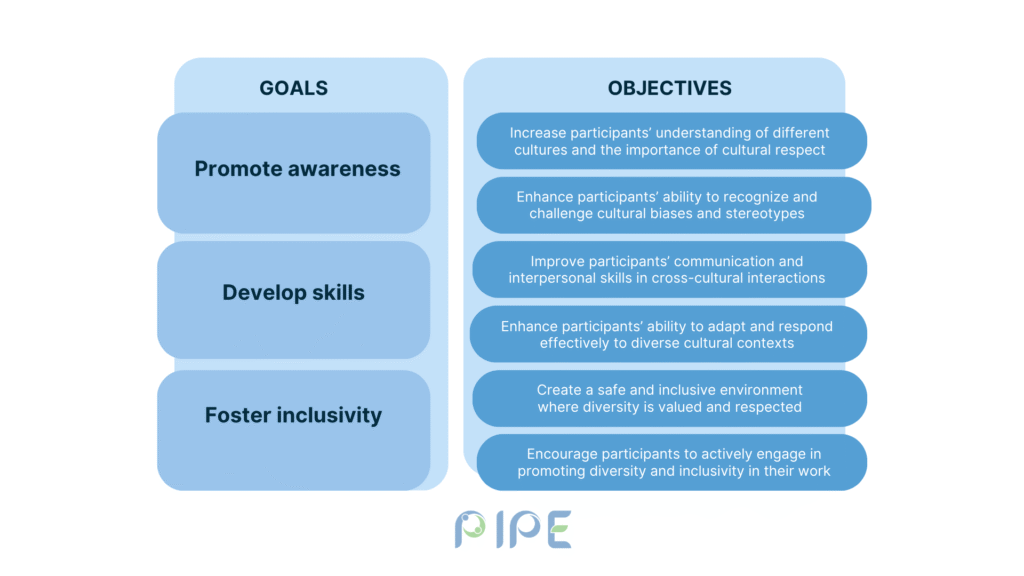
Thus, as a starting point for an action plan for training in cultural competence for professionals who work with and for migrants, the objectives will be the following:
- General objective: That professionals acquire the skills and knowledge necessary to develop in their life and in their professional work the cultural sensitivity that allows them to become culturally aware.
- Specific objective 1: That professionals wish to discover the cultures that migrants Developing positive attitudes towards cultural differences.
- Specific objective 2: That professionals are introduced to and trained in the cultural skills necessary to acquire cultural Developing skills for communication and interaction across cultures.
- – Goal 1: Learn the techniques of learning about migrant cultures.
- – Goal 2: Train the ability to communicate accurate information about migrants to the host community.
- – Goal 3: Improve the ability to openly discuss ethnic issues/differences and respond with examples based on culture.
- – Goal 4: Know how to evaluate the meaning that ethnicity has for migrants.
- – Goal 5: Understand human rights.
- – Goal 6: Be able to discern between symptoms (problems) that have their cause in the migrant and those that derive from the social structure.
- Goal 6: Learn the various interview techniques that help the professional understand and adapt the language to the culture of the migrant person.
- – Goal 7: Favourable and proactive disposition to use the concept of empowerment in favour of migrants and their communities.
- – Goal 8: Know how to use public resources in favour of migrants and their communities.
- – Goal 9: Raise awareness to recognise and combat racism, ethnic stereotypes and myths among individuals and institutions.
- – Goal 10: Know research and evaluation techniques applied to work with migrants.
- Specific objective 2: Learn about the cultures that are hosted in the host community to acquire cultural competence. Gaining knowledge of different cultural practices and world views.
- Specific objective 3: To become aware of otherness and the need for a dialogue of knowledge to generate new epistemologies to generate a culture of peace and sustainability. Being aware of one’s own world view.
Where to start: three entry points into the Action Plan
Where to start: three entry points into the Action Plan
The Cultural Competence Continuum is a progressive journey, but not every organisation begins from the same place. Before consulting the decalogue and designing your own plan, use the table below to identify your starting point based on your organisation’s current situation and available resources.
Basic level
Intermediate level
Añade aquí tu texto de cabecera
Profile
Small organisation or team with no prior intercultural training, limited time and budget
Organisation with some experience in diversity or inclusion work, dedicated staff or coordinator
Institution with an active diversity or inclusion policy, internal training capacity, structured HR processes
Recommended starting phase
Cultural Awareness (Phase 1)
Cultural Knowledge (Phase 2)
Cultural Skills (Phase 3) or Cultural Meeting (Phase 4)
Priority actions
Diagnostic questionnaire with the team · Awareness session using national resources from Phase 1 · Identify one cultural encounter opportunity
Review Phase 1 outcomes · Deepen cultural knowledge using national resources from Phase 2 · Design first training session
Run structured training on cultural skills · Organise regular cultural encounters · Begin community-level engagement (Phase 5)
Suggested time horizon
3–6 months for Phases 1–2
6–12 months for Phases 2–3
12 months and beyond for Phases 4–5
Minimum resources needed
1 coordinator · 2–4 hours/month per participant
1 coordinator + 1 trainer · Half-day sessions quarterly
Dedicated staff · Budget for external encounters and events
Whichever level you start from, the goal is the same: progressive movement along the continuum. There is no shortcut to cultural proficiency, but there is a sensible entry point for every organisation. The decalogue that follows will help you design your plan from that point onward.
Decalogue for thinking before designing a plan to support professionals working with migrants in the development of cultural competences.
Decalogue for thinking before designing a plan to support professionals working with migrants in the development of cultural competences.
1
Assessment of cultures (host and guest).
Before designing a cultural competence training programme, it is essential to assess the cultures interacting in the same territory. This assessment will provide valuable information about the prevailing norms, values and behaviours in each Tools such as surveys, interviews and focus groups can help collect data and identify areas that require attention. Assessing cultures helps to identify the possible cultural distances we need to imagine the communicative and convivial bridges we need to build together.
2
Identify training needs in each territory and among specific cultures living together in that territory.
Once the host and guest cultures have been assessed, it is essential to identify specific training needs related to cultural competence. This involves determining the main cultural challenges faced by professionals and the areas in which cultural competence can be improved. Analysing practitioners’ previous experience, identifying prejudices, stereotypes and intercultural incidents they carry in their background can help to accurately identify these needs. Training helps to decipher cultural nuances and provides strategies to overcome diversity-related challenges. It also helps professionals develop skills in cultural self-awareness, communication and collaboration that are essential for intercultural coexistence in a global environment.
3
Establish links with civic associations of cultures hosted in a common territory.
To develop a solid intercultural training programme, professionals need to know first-hand the feelings of the other cultures with which they live. Listening to their concerns, motivations or expectations not only allows them to deepen their contextual knowledge of the other cultures but also involves them in the training process. The participation of the host cultures is fundamental for the design of a cultural competence training plan based on an ethic of miscegenation. It will allow us to adjust the plan in a personalized way to the unique reality represented by the interaction of cultures in each territory.
4
Set clear objectives.
Before you dive into designing your training program, it’s critical to set clear objectives. What are the desired outcomes of the training? Are there specific cultural competencies that need to be developed? Setting measurable objectives will help you evaluate the program’s effectiveness over the long term.
5
Design engaging training content.
The success of a cultural competency training program depends largely on the quality of the content. It is important to develop engaging, interactive, and relevant training materials that address identified needs. These materials can include case studies, role plays, videos, and real-life examples that facilitate intercultural understanding and communication.
6
Incorporate experiential learning.
Experiential learning is a powerful technique for enhancing cultural awareness. Including activities such as simulations, cross-cultural encounters, and immersive co-working experiences can give professionals first-hand knowledge about different cultures and help them develop empathy and adaptability.
7
Offer training in multiple formats.
To cater to different learning styles and preferences, it is important to offer the cultural competency training program through multiple formats. This can include in-person workshops, virtual training sessions, e-learning modules, and ongoing mentoring or coaching. Offering flexibility in the delivery format ensures broader participation and engagement.
8
Promote intercultural communication as a key to developing cultural skills.
Communication is essential for effective intercultural interactions. In the training program, emphasize the importance of active listening, using non-verbal cues, and adapting communication styles to different cultural contexts. Encourage professionals to share their experiences and challenges, fostering an environment of open dialogue and learning.
9
Evaluating the effectiveness of the training action plan for developing cultural competence.
Periodic evaluation of the training program is essential to measure its effectiveness and make necessary improvements. Collect feedback from participants through surveys or interviews and analyse key performance indicators to measure the impact on the behaviour of professionals, engagement with the cultures with which they interact.
10
Continuous improvement and reinforcement.
Cultural competence training should be an ongoing process and not a one-time event. Encourage ongoing learning and reinforce cultural competence through follow-up sessions, intercultural encounters of all kinds, ongoing coaching, attendance at performances or artistic events of different cultures, mentoring, and integrating intercultural awareness into performance evaluations and socio- educational project development initiatives
The structure of the cultural action plan for professionals working with migrants based on Continuum Cultural Competence.
The structure of the cultural action plan for professionals working with migrants based on Continuum Cultural Competence.
(…) emerged at the end of the 20th century as a complement to the Communicative Approach to the teaching of foreign languages, (…) focuses its main task on promoting the harmonious development of the student’s personality and the recognition of his or her identity. Through this approach, the analysis of cultural content, values, beliefs and ideas intrinsic to language learning is achieved, it addresses affective, cognitive and situational factors and fosters intercultural competence with which the individual can develop the coexistence and cultural skills necessary in our case to achieve the formation of true intercultural mediators (Valdés, 2010: 89)
For professionals who are going to work with migrants, we propose a journey guided by the Continuum Cultural Competence. This means analysing and detecting the spaces of cultural destructiveness that promote forced assimilation, suggestion and that violate human rights exercised in a clear or veiled way by the host cultures, which we understand as processes of cultural colonization. To move forward to confront the cultural incapacity of racism and the cultural blindness that comes from ignorance and fear of the unknown. It is also important to recognise what we understand as cultural pre-competence and that explains through symbolism, advertising or superficial actions that have to do with tolerance in its strictest sense, admitting what is different if it does not bother us, as if it were an act of charity towards an inferior culture.
1st
And for this we are going to propose an educational journey towards the knowledge of other cultures and the understanding of our own as a dialogue of knowledge that needs to advance from the cultural awareness that could mean our awakening towards other ways of being in the world from curiosity. In this way, a cultural training plan for professionals who are going to work with migrants should address a FIRST PHASE, located between the levels of pre-competence and cultural competence, to favour the first steps that migrants must take in their process of knowledge towards their participation and empowerment in the community that welcomes them:
- – Understanding local customs and traditions: Knowing local customs, traditions and social norms can help immigrants navigate everyday interactions and avoid misunderstandings.
- – Language skills: Mastering the local language is essential to communicate effectively and access services such as health, education and employment.
- – Participation in cultural activities: Participating in local cultural activities can foster a sense of belonging and mutual respect.
- – Education and training: Educational programmes that include cultural awareness training can help immigrants understand the historical and cultural context of their new environment.
- – Community support: Creating a support network in both the migrant and local communities can provide emotional and practical help.
- – Respect for diversity: Both migrants and host communities benefit from recognising and valuing cultural diversity, which can lead to more inclusive and harmonious societies.
As you can see, the aim is to provide knowledge and experiences that create an educational demand in migrants for what they need to learn to be able to participate positively and peacefully with other cultures, both host and migrant.
2nd
The SECOND STAGE of our journey towards cultural expertise has to do with the training that professionals have and need, we talk about cultural knowledge that we can structure in four levels, from the syndrome of cultural blindness that occurs when the professional is not aware of his or her lack of knowledge to actively responding to marginalization and social injustice, that is to say that the professional needs to know elements of the cultures that coexist to be able to make a reflective and critical evaluation of society and cultures in order to change power structures.
As a guideline, we will list the knowledge that favours the development of the cultural competence of professionals working with migrants:
- – Culture of migrants: (history, traditions, values, family system, religion, artistic ..).
- – Impact of racism and poverty on behaviour, attitudes, values and disabilities.
- – Patterns of help-seeking behaviour of migrants.
- – Role of language, speech patterns and communication styles in the host and migrant community.
- – Impact of public service policies on migrants.
- – Resources (centers, individuals, informal support networks, ) available to minority groups and communities.
- – Migrant individuals and communities.
- – Recognise how the values of professionals may conflict with or adapt to the needs of migrants from different cultures.
- – Know how power relations in communities or institutions impact on different cultures.
3rd
The THIRD STEP has to do with the skills needed to accompany migrants and mediate in the intercultural interactions that inhabit each society; cultural skills focus on the personal development of professionals to adjust their actions to the cultures that interact in each territory. Without the previous stages, intercultural awareness and knowledge serve to develop multicultural competencies, i.e. culturally appropriate behaviours and interventions, cultural skills mean an awareness of professionals about their own ideas, values, stereotypes, so that these do not interfere in a negative way in their professional performance. The cultural skills that a professional working with migrants needs to train could be abstracted as follows.
- – Techniques for learning about migrants’ cultures (intercultural awareness).
- – Skills to communicate accurate information about migrants (intercultural communication)
- – Ability to openly discuss ethnic issues/differences and respond with culturally based examples.
- – Ability to assess the significance of ethnicity for Understanding of human rights.
- – Ability to discern between symptoms (problems) that have their cause in the migrant and those that derive from the social structure.
- – Interview techniques that help the professional to understand and adapt the language to the culture of the migrant (respect for privacy and confidentiality).
- – Ability to use the concept of empowerment in favour of migrants and their communities.
- – Ability to use public resources in favour of migrants and their Clear understanding of organizational values and professional ethics.
- – Skills to recognise and combat racism, ethnic stereotypes and myths among individuals and institutions (self-awareness).
- – Skills to develop and validate new research and evaluation techniques applied to work with migrants (Ability to keep accurate records and write effective reports).
4th
The FOURTH LEVEL of the journey leaves the classroom or the usual training processes, we are talking about cultural encounters, the space shared with other cultures that can consolidate what has been learnt in the three previous stages or without which they remain incomplete, they remain on paper. It is the ideal place to study the professional practices of a country from one’s own shared experience. In cultural encounters, prior preparation is necessary, which has to do with what has been indicated in the three previous phases, it is necessary to know key aspects of other cultures and to have an open mind and a good knowledge of human rights as a common place for all cultures, from there, in significant cultural encounters we can develop:
- – Redefining one’s own perception of the group.
- – Preventing and dismantling false stereotypes.
- – Obtain a wide range of first-hand answers on how the other perceives the same reality.
- – Develop intercultural communication competence by observing not only the meaning of words but also by learning to identify appropriate or offensive verbal and non-verbal messages.
- – Understanding the other culture in everyday life offers closeness and depth beyond the elements that we have discovered at the stage of cultural knowledge, which is always generic and not always representative of the differences that inhabit each culture.
5th
Finally, the FIFTH STAGE that leads us to cultural expertise has to do with the political, with the common, with generating community between cultures, for this, together with the public institutions that provide different services to migrants and, in general, together with public services, to be able to generate socio-educational intervention programmes for and with migrants that take into account the following principles:
- – The groups involved must identify a common problem and set to work cooperatively and democratically, defining objectives and operational strategies to achieve them. These objectives should be well defined, sufficiently attractive and achievable; it should be clearly specified how each group contributes and stressed that they cannot be achieved without the participation of all of them.
- – It is important that individuals and/or organizations representing different groups in the community are on an equal footing of power, respect and importance.
- – Community activities should be designed to give members of different groups the opportunity to get to know each other as individuals.
- – Activities should be designed in which, through interaction, individuals from different groups identify what they have in common and recognise the positive elements of other groups: culture, language, etc.
- – Conflicts should be identified, respected and managed to improve inter-group relations.
- – Successful joint activities should be celebrated, as they not only improve the communities in which the groups live but also strengthen their relationships.
- – Interaction situations that are sustained over time and have institutional support strengthen inter-group relations.
- – To be effective, relationships between different groups in a community must function at multiple levels: personal, relational and institutional.
By way of mapping a pedagogy of hospitality, we are going to offer an example of how an introductory session could be designed to arouse the interest of professionals who are going to or who already work for and with migrants, in order to provide a panoramic view of the itinerary they must follow throughout their personal and professional development in order to bring about significant changes that will allow cultures to move from being seen as potential enemies to being protagonists in the construction of a culture of peace.
Suggested implementation timeline
Suggested implementation timeline
The following roadmap offers a reference framework for organisations implementing a cultural competence training plan for the first time. Timings are indicative and should be adapted to your organisational context, capacity, and entry level.
Months 1–3
Months 4–6
Months 7–12
Focus
Diagnosis and awareness
Knowledge and first skills
Skills consolidation, encounters and community action
Key actions
- Apply the Diagnostic Tool with the whole team
- Identify entry level and priority phases
- Run a first awareness session (Phase 1 resources)
- Share results and agree on training objectives
- Deliver cultural knowledge sessions (Phase 2 resources)
- Introduce first cultural skills training (Phase 3)
- Establish contact with migrant community associations
- Plan first cultural encounter
- Organise at least one structured cultural encounter (Phase 4)
- Consolidate skills through practice and peer reflection
- Begin community-level initiatives if capacity allows (Phase 5)
- Evaluate impact and adjust the plan
Progress indicators
Team has completed the diagnostic · Entry level identified · At least one session delivered
At least two training sessions delivered · First encounter planned · Team can name key elements of the cultures they work with
Cultural encounter held · Team self-assessment shows movement along the continuum · At least one community initiative launched or planned
Evaluation moment
End of month 3: review diagnostic results as a team
End of month 6: mid-point check — what has changed in daily practice?
End of month 12: full plan evaluation — repeat the diagnostic and compare results
Cultural competence training is not a one-off event but a continuous process. This roadmap is a starting point, not a finish line. We recommend repeating the diagnostic questionnaire at 6 and 12 months to track progress and identify new priorities as the team develops.
Annex:
Elements to be considered when designing a Cultural Action Plan based on the cultural competence continuum